This article was also published in issue 152 of Marina World magazine. Click here to read the online version.
2025 was the year when it became undeniable that marinas have emerged as a valuable and lucrative asset for investors and property developers. The year was defined by big acquisitions, appointments and announcements with major players looking to consolidate and expand their portfolios. There is still plenty more room for this evolution to continue into 2026. The marina industry remains diverse and fragmented with plenty of new projects underway in exciting, emerging markets.
The Americas & Caribbean
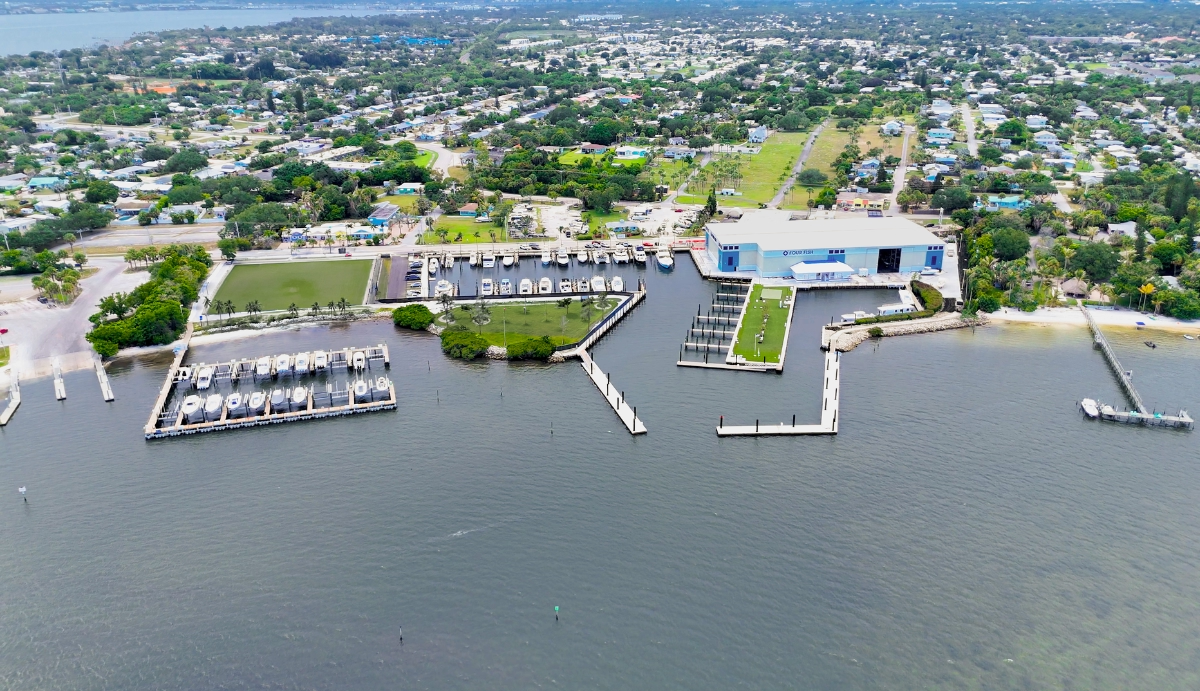
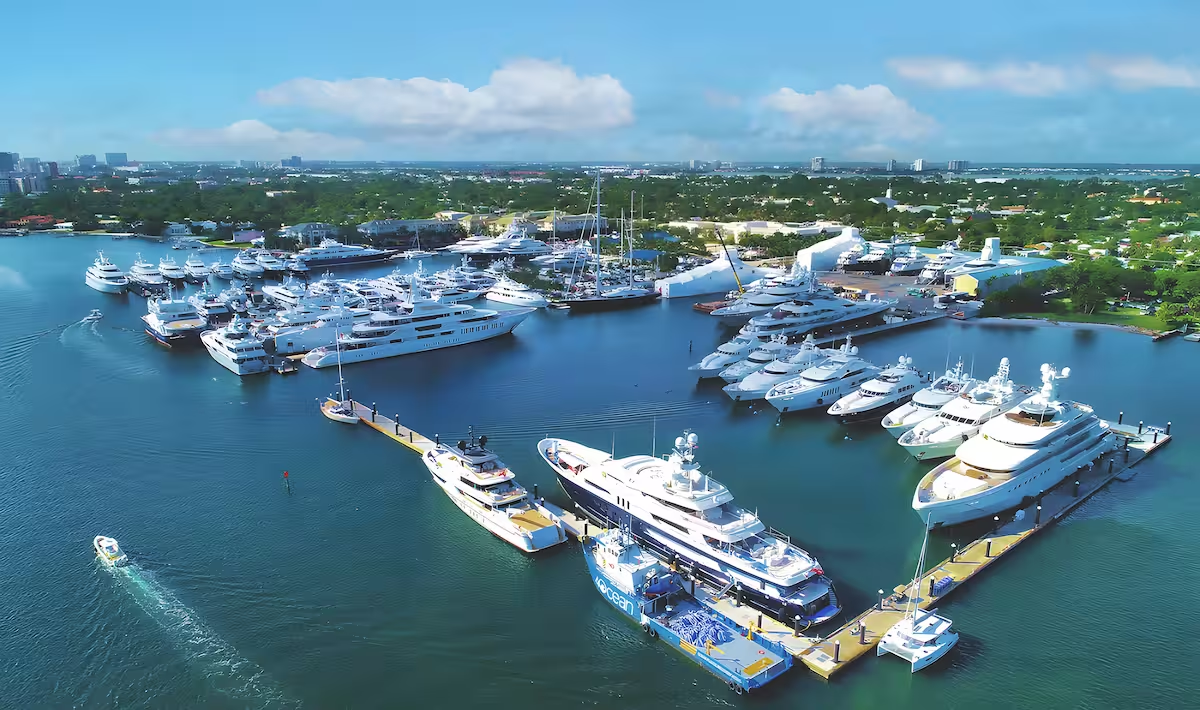
Undoubtedly the biggest news of the year came in the form of the global alternative asset manager Blackstone Infrastructure buying Safe Harbor Marinas for a whopping $5.65 billion USD from Sun Communities. Commenting on the announcement in the spring, Heidi Boyd, the senior managing director of Blackstone’s infrastructure business, gave a few hints of the rationale and direction of travel:
“Marinas benefit from key long-term thematic tailwinds including the growth of travel and leisure as well as population inflows into coastal cities. We believe Safe Harbor is the best positioned company in this sector and we look forward to working with their terrific team to invest behind their existing marinas and to expand their footprint.”
At the time of the acquisition, Safe Harbor owned and operated 138 marinas across the USA and Puerto Rico. Since then, however, this number has jumped to over 150 locations with the further acquisitions of Christophe Harbour on St. Kitts and Los Sueños Marina in Costa Rica. The acquisition of Monaco Marine’s nine yacht service locations across the south of France and Monaco in the summer was another huge moment for Safe Harbor, transforming the company from a North American titan to a truly global player.
There were plenty of other sales and acquisitions across the Americas and Caribbean that were also noteworthy, with marinas changing hands almost every week. Many more examples can be found on the Marina World website.
In the Bahamas, Legendary Marina Resort at Blue Water Cay took shape and marked its grand opening on 1 December. Meanwhile, Nanny Cay Marina in the British Virgin Islands began an expansion to add a further 112 slips. Anguilla’s Port Nimara project developed by the SF Group is also beginning to take shape, with its first vessels expected from 2027.
South America started to take firmer steps towards establishing itself as a more attractive and well-developed boating destination and is gaining the recognition it needs and deserves. Guyana announced their intention to construct a tourism marina in Bartica and Marina Coast Peru in Punta Sal announced their partnership with the SF Group. BR Marinas captured hearts and minds at the fifth Monaco Smart & Sustainable Marinas Rendezvous, with their Marina da Glória in Rio de Janeiro being recognised with a “Coup de Cœur” award.
Europe
The fever for marina and waterfront real estate also took hold in Europe. Aside from Safe Harbor’s entrance into France and Monaco with their acquisition of Monaco Marine, another big story was the acquisition of Boatfolk by Premier Marinas, doubling their portfolio to 22 marinas across the United Kingdom. Tingdene Group continued their expansion by acquiring Farndon Marina near Newark-on-Trent and Holy Loch Marina in Scotland. The residential leisure and mooring provider Aquavista acquired three marinas in north-east England.
It was a particularly busy year for the Turkish marina industry. New marinas were opened in Demre and Gazipaşa, with the latter being the country’s sixty-fifth. Koç Holding acquired two marinas and hotels in Göcek for a combined cost of $157.7 million USD and the country established a Marine Spatial Planning Coordination Board responsible for determining suitable locations for marina investments and accelerating related projects.
Greece has also seen a number of developments, including SF Marina upgrades at Marina Gouvia, the announcement of a new superyacht marina in Corfu, the opening of a new marina in Lefkada and a new board at the Greek Marinas Association. Across the border in Albania, a fledgling marina industry is taking shape with enthusiastic governmental backing.
Two notable news stories came out of Scandinavia at the end of the year. The Nordic market is particularly fragmented with boating remaining quite simple, local and small scale when compared to the south of Europe. However, Port Adhoc acquired its second marina in Sweden and Norvestor launched Marina Group with the acquisition of five marinas in Sweden and Norway. Whether further consolidation comes to Scandinavia is one to watch for 2026.
.avif)
Africa
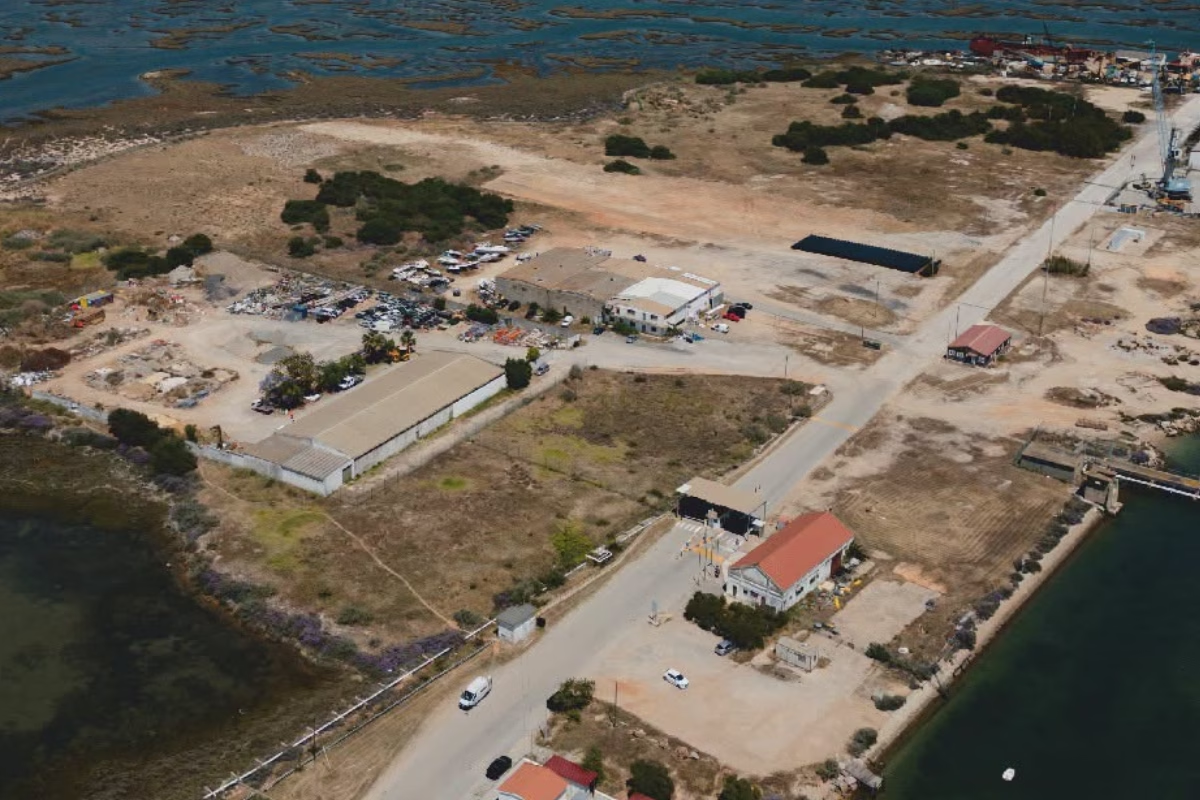
The marina industry on the southern shore of the Mediterranean is of course diminutive when compared to its northern shore and it will remain like this for many decades to come. That said, Africa saw some notable moments in 2025 and the prospect of greater boating for the world’s second largest continent by both size and population is intriguing.
Egypt has announced a couple of big marina and waterfront real estate developments with Gulf Arab partners, including a $29.7 billion USD north coast tourism project and an $18 billion USD Red Sea resort deal. A new project is taking shape in Tangier, Morocco, and is another one to watch for 2026.
At the other end of the continent, the first ever African Boating Conference was held in Cape Town in October, representing the start of a new chapter in boating in the southern hemisphere. The founder of Superyacht Cape Town, Veda Pretorius, told Marina World: “The energy in the room was electric as people from across the boating sector came together to discuss how we can maximise Africa's potential.”
“We started a superyacht working group which will be driving an action plan to get our region on the map as a superyacht destination. We will be hosting it again in 2026 and we are already excited about all of our plans.”
.avif)
Middle East
While 2025 in Europe and the Americas was defined by acquisition after acquisition, the Middle East continued construction on megaprojects and announced new initiatives to try and stand out amidst the dense but lucrative Gulf market.
Some of the biggest stories naturally came from the United Arab Emirates, with IGY Marinas being appointed the marina operator for Wynn Al Marjan Island, set to open in 2027. Bvlgari also entered into a long-term agreement with Eagle Hills to launch a new resort and residential project featuring a 40-berth marina from 2030. Dubai’s new “Dock & Dine” initiative across 20 marinas gives owners, guests and crews greater flexibility and access to facilities and experiences across the city, while the new “Marsa” platform automates the entire leasing process, covering online berth bookings, automatic fee calculations, invoicing and smart payments.
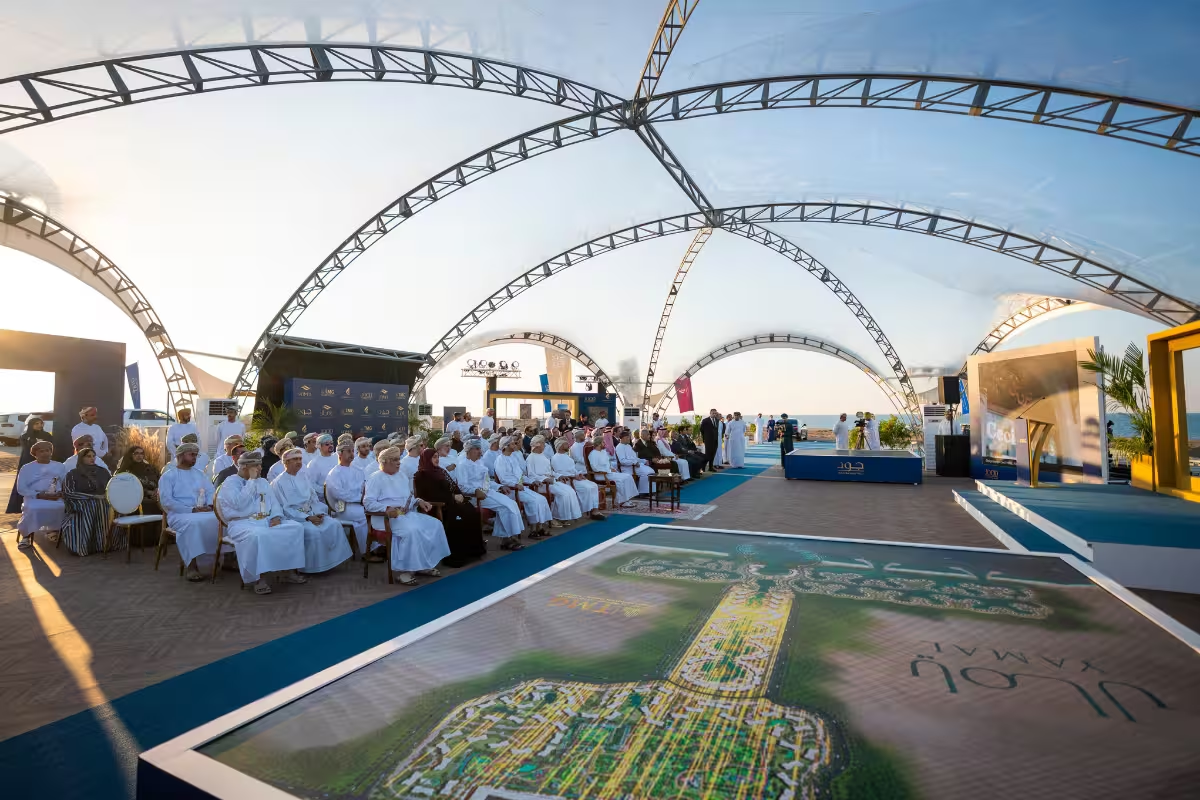
Meanwhile, Bahrain is investing in a network of marinas to capture some market share, Old Doha Port launched the Mina Corniche Marina and Oman embarked upon a flurry of projects including in Khor Grama and Al Manuma.
On the other side of the peninsula, however, lies perhaps the most eagerly anticipated marina and waterfront development in the Middle East, AMAALA Triple Bay in Saudi Arabia. With opening scheduled to take place in phases from 2026, next year will reveal whether the Red Sea can indeed attract the number of visitors it needs to turn a bold vision into workable reality.
Asia-Pacific
The Asia-Pacific region has huge potential but is still a small industry when compared to the likes of the Middle East. With an abundance of iconic coastlines it is hardly surprising that many countries are now entertaining and indeed embarking on new marina projects of their own. The vision is a long one, though, and patience beyond 2026 will be needed to see if the Asia-Pacific can realise its potential.
The world’s largest archipelagic nation, Indonesia, is finally making its mark on the global yachting map with the construction of the country’s first full-service, international standard marina in Bali. The development, called Bali Gapura Marina, is being constructed at breakneck speed and marked the start of its commercial pilot phase in November. India announced bold new plans for the country’s first marina project in Mumbai, while construction on a new superyacht marina in Sri Lanka began. Vietnam also launched its first international standard marina in Nha Trang.
Further to the north, Hong Kong’s Lantau Yacht Club received the 5 Gold Anchor platinum accreditation and South Korea reflected rising domestic interest in boating with its revised marina port plan, featuring 40 planned zones across nine regions. Fiji’s Port Denarau also completed a landmark $6 million USD extension in September.
.avif)
Australia & New Zealand
Australia and New Zealand saw a handful of notable stories that would suggest similar trends of acquisition and expansion in Europe and the Americas, but perhaps not quite as feverish. Spinnaker Sound Marina in Queensland was sold for $12.25 million AUD, while Blakehurst Marina and the Cruise Whitsundays marina and terminal were put up for sale.
New berths were opened at Pacific Point Marina & Boatyard, a $3.3 million AUD berth project was completed at Batavia Coast Marina and Coffs Harbour Marina replaced five marina arms and added 143 berths in partnership with Marine Structures. Swan Yacht Club expanded by 32 berths and October saw the approval of a $100 million AUD mixed-use precinct featuring a marina at The Spit in Queensland.
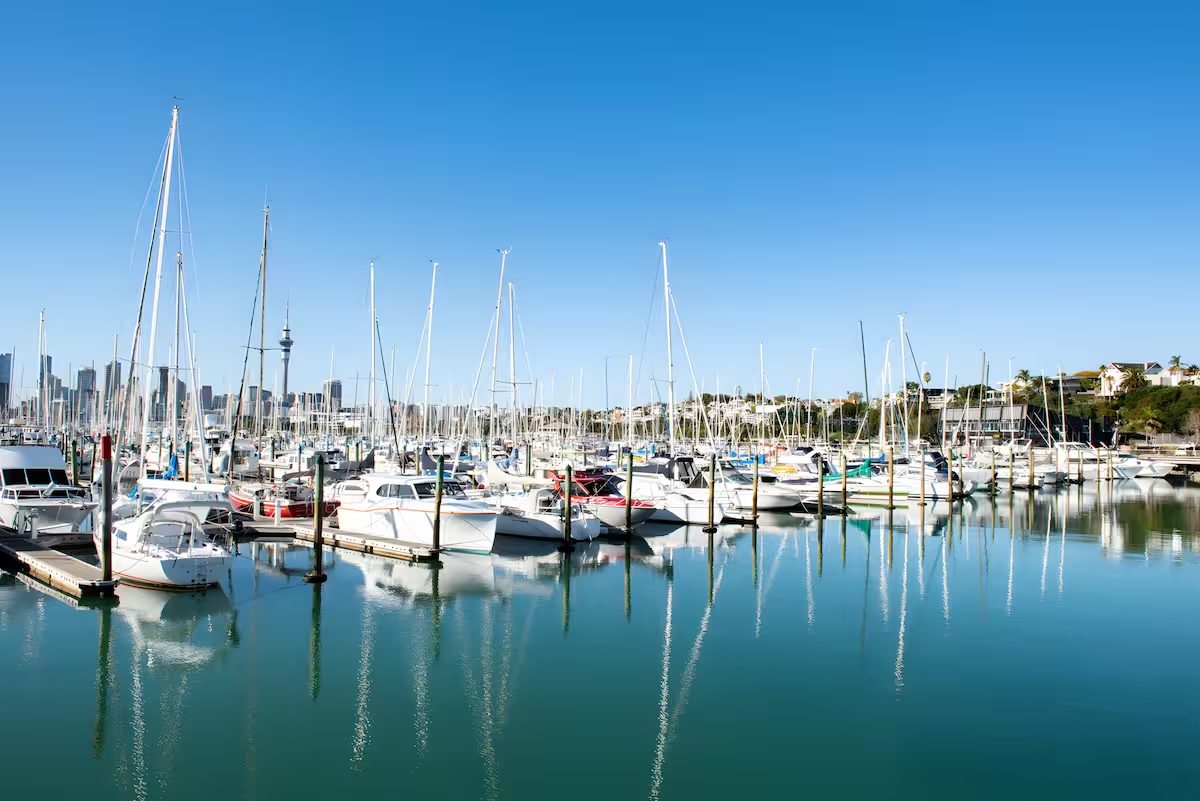
On the other side of the Tasman Sea, the largest yacht marina in the southern hemisphere, Westhaven Marina in Auckland, completed a full replacement of its L pier, and Brunswick Corporation’s Freedom Boat Club opened a new location at Te Ana Marina in Lyttelton, Christchurch. Meanwhile, the Waipiro Marina project in the Bay of Islands would be fast-tracked through the governmental review process despite opposition from local groups, and SF Marina installed a new arc-shaped floating breakwater at Waiheke Island Marina.

Anyone for bingo?
2025 has been a fast-paced, dynamic year in an industry that otherwise moves slowly. The pace and frequency of acquisitions especially in the Americas and Europe is evidence of healthy tailwinds from institutional investors who are recognising marinas as valuable real estate properties. I expect this to continue in 2026.
The Middle East will no doubt continue marketing themselves as “the next big superyacht destination”, but the proof of the sailing will be in the berthing, so to speak. The Asia-Pacific region will likely continue investing in this new arm of what are often already highly popular tourist destinations, but the realisation of its full potential is still several years away.
South America and Africa have their own new projects underway and I look forward to seeing some flesh emerge on the bones of their future boating industries. Needless to say, Brazil is already comparatively well established and has huge potential as a local and international boating hub in the southern hemisphere.
Especially when it comes to sales and acquisitions, I am sure the imaginative industry observer would enjoy playing some “2026 Marina Movement Bingo”. Anyone fancy a game?