Belfast Harbour has launched a £1.3 billion (about $1.7 billion USD) investment masterplan that will guide development across its port, marina and wider estate until 2050. The plan outlines phased works aimed at increasing capacity, meeting rising trade demand and supporting economic growth across Northern Ireland and the broader maritime region.
.avif)
Belfast Harbour handles around 70 percent of Northern Ireland’s seaborne trade. It supports about £26.7 billion ($35.7 billion) in annual trade activity and contributes around £8.8 billion ($11.7 billion) in gross value added.
Dr. Theresa Donaldson, chair of Belfast Harbour Commissioners, said: “Belfast Harbour has served the regional economy for nearly two centuries as a Trust Port – adapting, investing and growing as trade has evolved and the city around us has changed. The port is not simply a feature of Northern Ireland’s economy – it is a cornerstone of it.”
The investment plan runs for 25 years and covers the harbour’s 2,000-acre land area and 1,000 acres of water. Work is planned in three stages, starting with early infrastructure upgrades and continuing into longer-term expansion and redevelopment across port and waterfront spaces.
Projects include completion of the £90 million ($120 million) D3 deepwater cruise terminal, redevelopment of Stormont Wharf, extension of container capacity, construction of a logistics park and a clean energy hub. A land reclamation project at West Bank Road, the first in 25 years, is also included to create an additional freight terminal area.
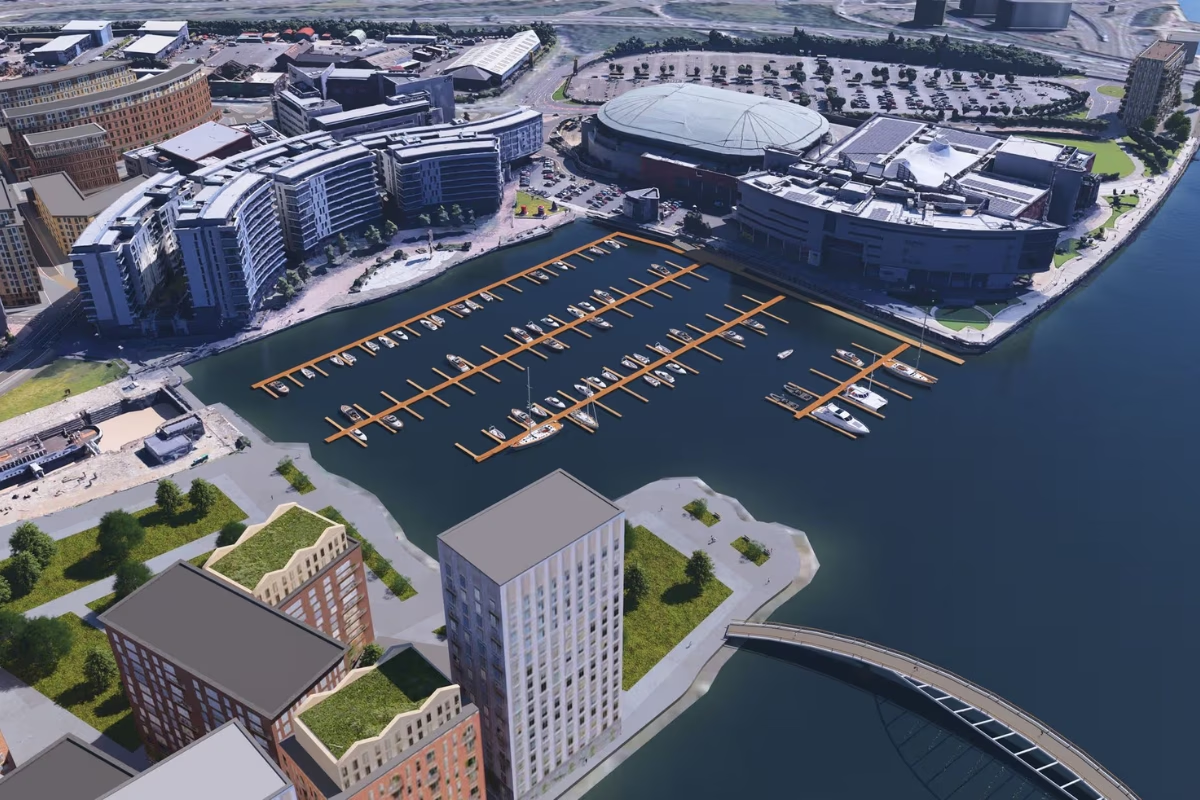
Recently reopened after refurbishment, Belfast Harbour Marina is located between the Titanic Belfast visitor attraction and the SSE Arena. Berth capacity has increased to more than 60, while pontoon length now extends beyond 807 metres.
Further expansion of the marina is planned in phases over the coming years. Belfast Harbour chief executive Joe O’Neill said in a BBC report: “Phase one caters for around 65 vessels, by the end of this plan we should have a marina that can accommodate up to 175 vessels.”
Environmental work is also included, with plans for green corridors, biodiversity areas and public waterfront spaces across redevelopment zones. The harbour will also work with the Department for Infrastructure on active travel routes, including potential cycling links and a coastal-to-city route.
Images courtesy of Belfast Harbour.