The States’ Trading Supervisory Board (STSB) is looking at options to repair or replace the 40-year-old gate system at the entrance to the Queen Elizabeth II (QEII) Marina in Guernsey after surveys showed a high risk of failure. The marina serves as the largest berthing facility on the island, supporting hundreds of local vessels and regular marine activity.
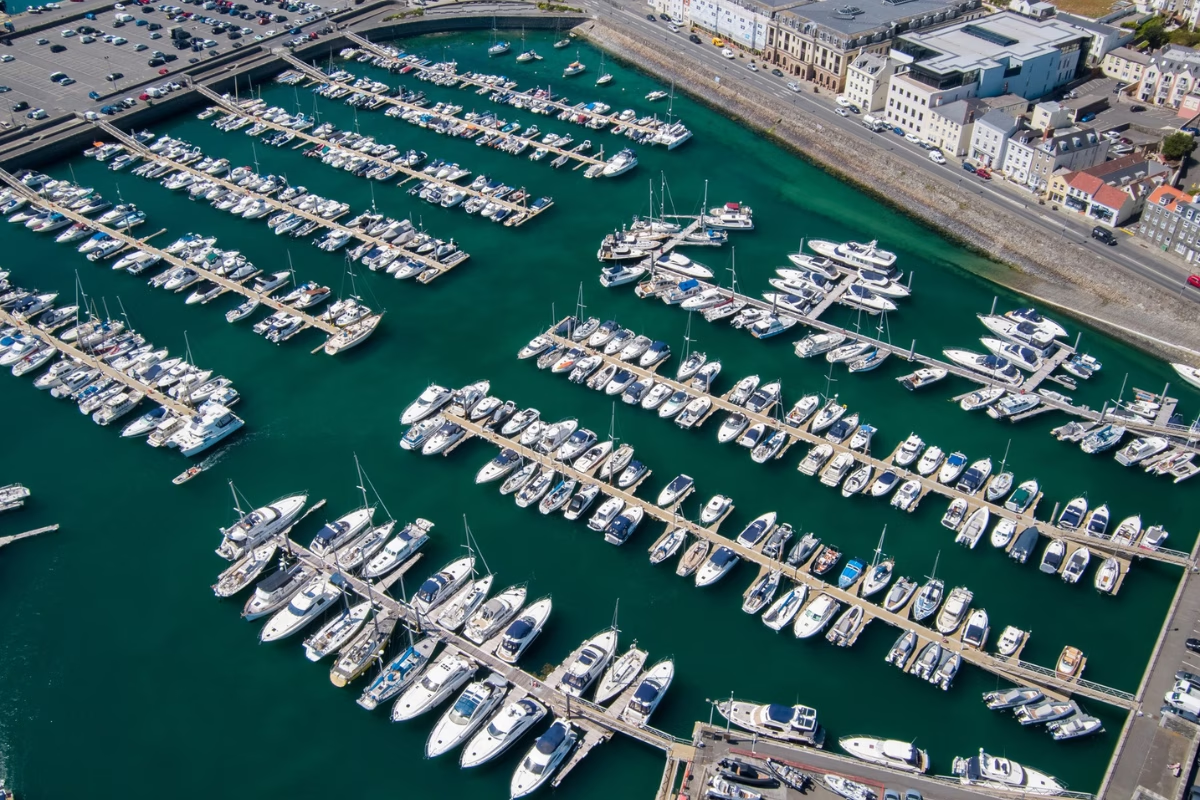
In place since the mid-1980s, the structure controls water levels inside the marina and allows vessels to pass in and out through the Little Russel. It also regulates tidal water so vessels remain afloat at low tide.
Condition checks in 2022 and 2026 found a high risk of full failure due to age and wear. If the system fails, water depth could drop by about one metre at low tide, and access would only be possible during short high-tide windows, with estimates that more than a third of the marina’s over 700 vessels would be left aground.
Replacement is estimated at £5.2 million to £10.7 million ($6.9 million to $14.3 million USD). Repair work is estimated at £5.4 million to £8.4 million ($7.3 million to $11.2 million). Instead of choosing one option in advance, the board plans to invite contractors to submit their own design-and-build proposals.
Funding is a concern for Guernsey Ports, as current income would not cover the full cost without affecting other maintenance work. The proposal is to fund half of the cost through a state loan repaid via harbour charges, and half from the General Revenue Reserve.
STSB president, deputy Mark Helyar, said: “We currently do not have sufficient berths to meet demand for moorings, and if the QEII gates were to fail that situation would become much worse. It would seriously impact the provision of facilities for local boat owners, and the effect of that will be felt more widely within the island’s marine services sector.”
QEII Marina provides about 750 berths across 13 pontoons and has capacity for vessels up to 30 metres. It sits within Guernsey’s wider marina network, which includes facilities in St. Peter Port and St. Sampson.