





This article was also published in issue 153 of Marina World magazine. Click here to read the online version.
A relatively new marina with a fascinating history has persevered through adversity to emerge as a challenger to the heart of Thailand’s boating industry in nearby Phuket.
.avif)
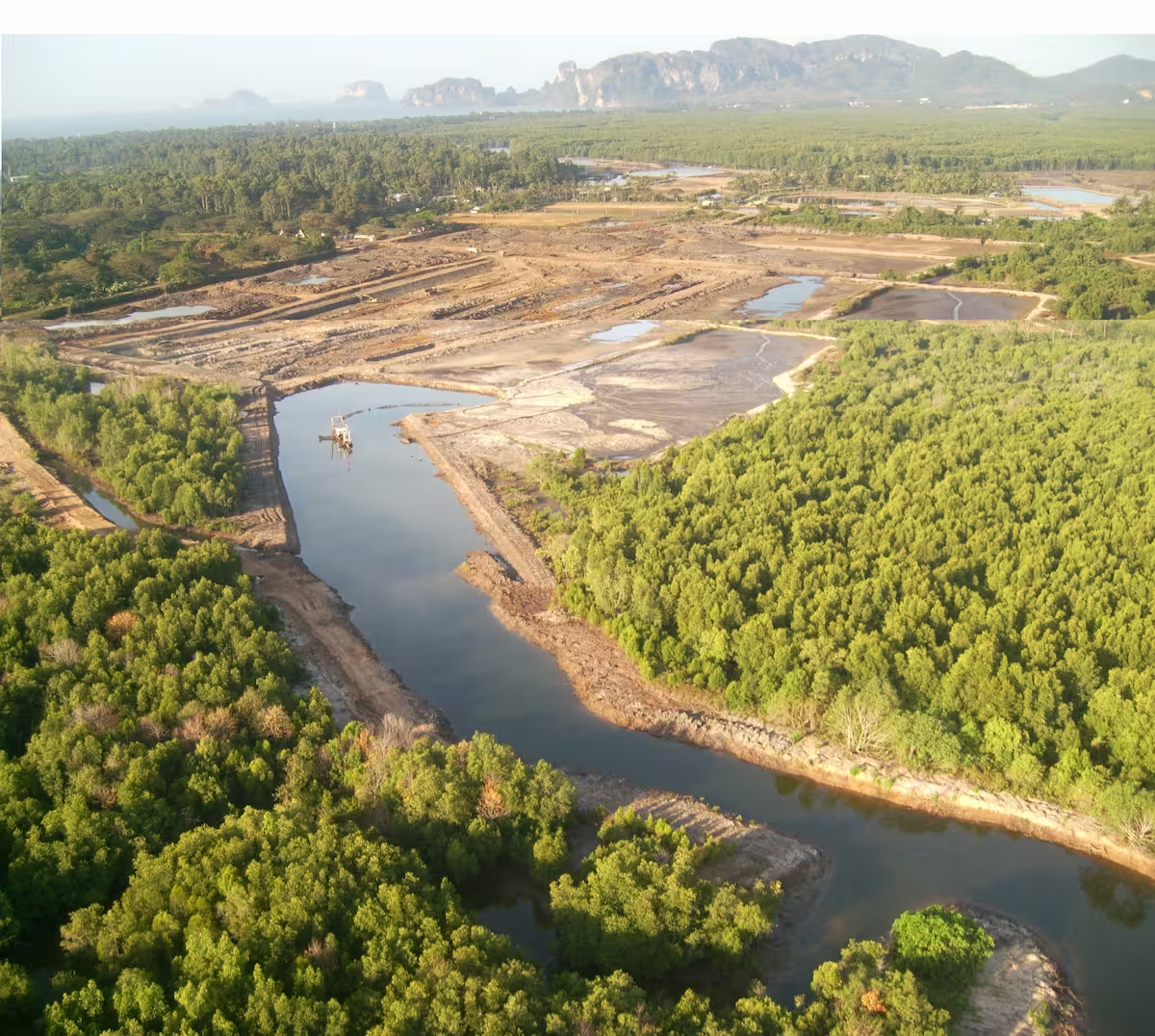
The estate on which Port Takola in Krabi province, southern Thailand, was constructed has been in Matthew na Nagara’s family for over 100 years. In this time it has been a coconut plantation, shrimp farm, abandoned wasteland and, now, a full-service marina some 30 nautical miles east of Phuket.
“It was first established by my great grandfather, Phya Gangadharadhipati, who was the governor of Krabi and many other provinces in southern Thailand. When he retired in 1912, there was a large coconut industry that produced coconut oil for international export. So he decided to acquire the estate and start his own coconut plantation,” na Nagara, general manager of Port Takola, told me.
In fact, while Gangadharadhipati was governor of Krabi, one of his main achievements was to move the town from an area now known as the “old market” closer to the waterfront, mostly to support the export of coconuts to Penang, Malaysia, via Chinese junk.
“The location of the estate was ideal for export because it was just on the other side of the river from Krabi town and had a natural deep water channel where the junks could sail,” na Nagara said.
However, in the 1950s and 60s, it became known that coconut oil is very high in saturated fats that can lead to increased cholesterol levels in the blood. The price of coconut oil subsequently plummeted and since then has never really recovered. During that period, part of the land on the estate was let out as a shrimp farm as a large area of the property was ideal for farming shrimp due to the brackish water. The Thai government was also promoting the export of shrimp at the time.
“But then at some point the shrimp caught a disease, which, once caught, is very difficult to get rid of. So that put an end to the lease of the land for shrimp farming. After that, the area was abandoned and turned into a wasteland because the shrimp farming had damaged the earth so that it was no longer suitable for any kind of agriculture,” na Nagara said.
A marina was born
With his father and grandfather having respectively served in the Royal Thai Navy as an orthopaedic surgeon and a brain surgeon, they both had an affinity to the sea. Matthew na Nagara’s father, Suriya na Nagara, was aware of Phuket having responded very strongly to the growth of yachting and marinas in the region, and, because of this navy background, he thought the location was ideal for a marina. Construction began in 2009, but was not without its challenges.
“Initially we thought it would be easy to convert a former shrimp farm into a harbour. We realise now that we were a bit naive. We thought you would just dredge two to three metres and that’s it, then the boats can come in. But we weren’t aware of the tidal difference at the time, so we had to end up excavating much more than initially planned,” na Nagara recounted.
The tropical climate also posed some problems. With the rainy season potentially lasting for as long as eight months of the year in that part of Thailand, their annual construction window was reduced to only four months. Much of the heavy equipment they were using simply could not work in such wet weather and construction faced considerable delays. Nevertheless, through perseverance and a chance meeting with a leading figure in the marina industry, the first round of construction was completed in 2016.
“It was by sheer chance via a mutual acquaintance that we ended up being introduced to Simon Arrol, the former managing director of Camper & Nicholsons marinas, who owned Arrol Consultancy, based in Dubai at the time. When we met him, we were convinced that he would be the one to help us design something long-term and of the right size to make an impact in Krabi province. All of this happened between 10-12 years ago,” na Nagara said.
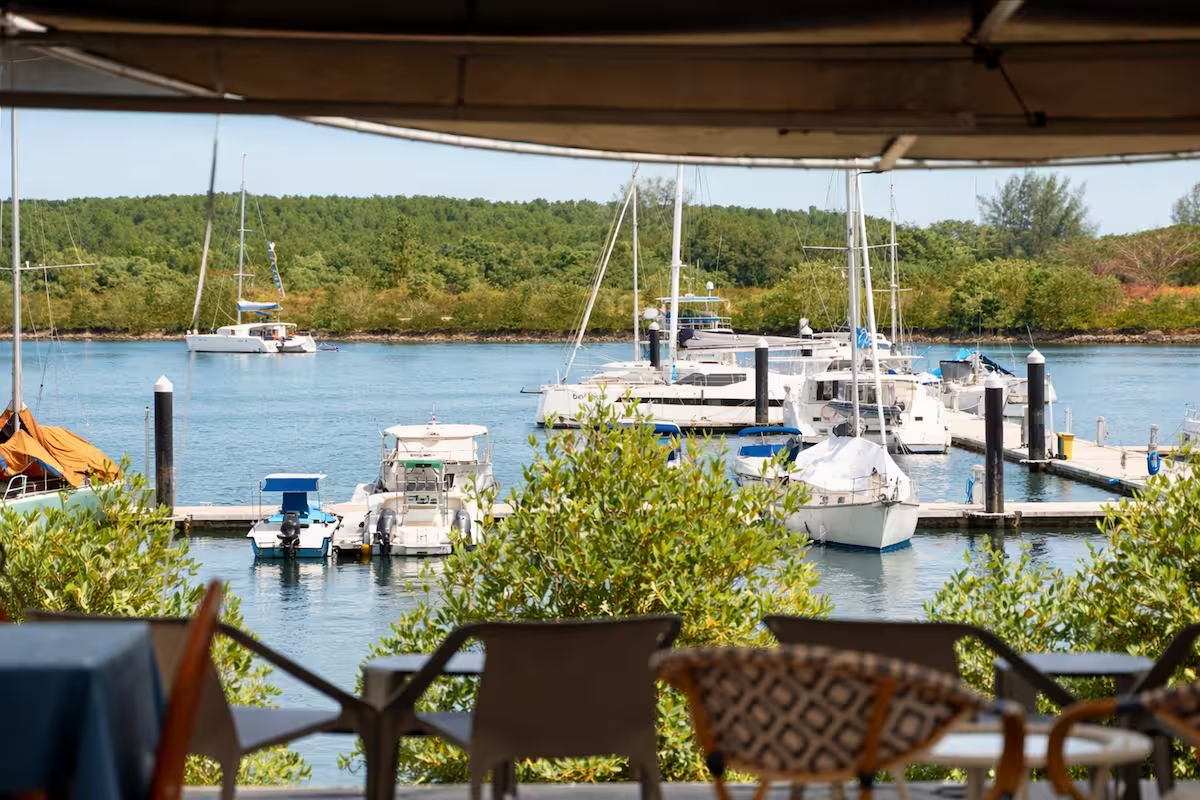
Simon Arrol subsequently designed an expanded marina, with capacity growing from 150-200 berths to around 300, able to accommodate superyachts up to 45 metres long. To make the marina a more attractive natural environment rather than being surrounded by property developments, Arrol recommended building a marina that is low density and low rise, similar to Port Göcek in Turkey. Port Takola is still following that philosophy to this day.
Military coups and COVID blues
More or less as soon as Port Takola started operations in 2016, however, they were accused of having encroached into a protected area of mangrove forests during dredging despite having received all the necessary permits for the marina’s construction.
“This happened completely out of the blue during a military coup in Thailand,” explained na Nagara. “Although we were the first in Krabi province to get a dredging permit, there were a lot of misunderstandings with the government and we had to suspend our operations for two years. For us it was a major setback.”
The marina opened after the permitting issue was resolved but without water and electricity supply, and only after two to three years of successful operation did Port Takola begin investing in utilities. However, two years after that, the COVID pandemic threw yet another spanner in the works.
“It was also around the time that we signed the pontoon expansion contract with Marinetek,” said na Nagara. “But after the pontoons had arrived and had cleared customs after a delay, we then couldn’t install them because of lockdown. We weren’t allowed to do anything construction-wise. So instead we used that time to get the environmental impact assessment approved by the Thai authorities. In a way it was good that we could use this time to focus on the environmental impact assessment because as soon as it was approved we could install the pontoons.”
“We looked at the options and we chose Marinetek pontoons for their robustness and longevity. We had planned to install a 110-ton travel lift, however with the growth of catamarans in the region we instead decided to construct a slipway with a 12m span capable of launching up to 80-tons. This can accommodate up to 95 percent of the vessels in the marina.”
The Bangkok-based Harin Shipyard will also set up a location in Krabi in 2027, including a facility that can accommodate up to 600 tons. “Once we knew this, we saw that it was not worth investing in our own superyacht lift,” said na Nagara. “But if there is the demand in the future, we can still expand that lifting capacity if we need to.”
Expanding into the future
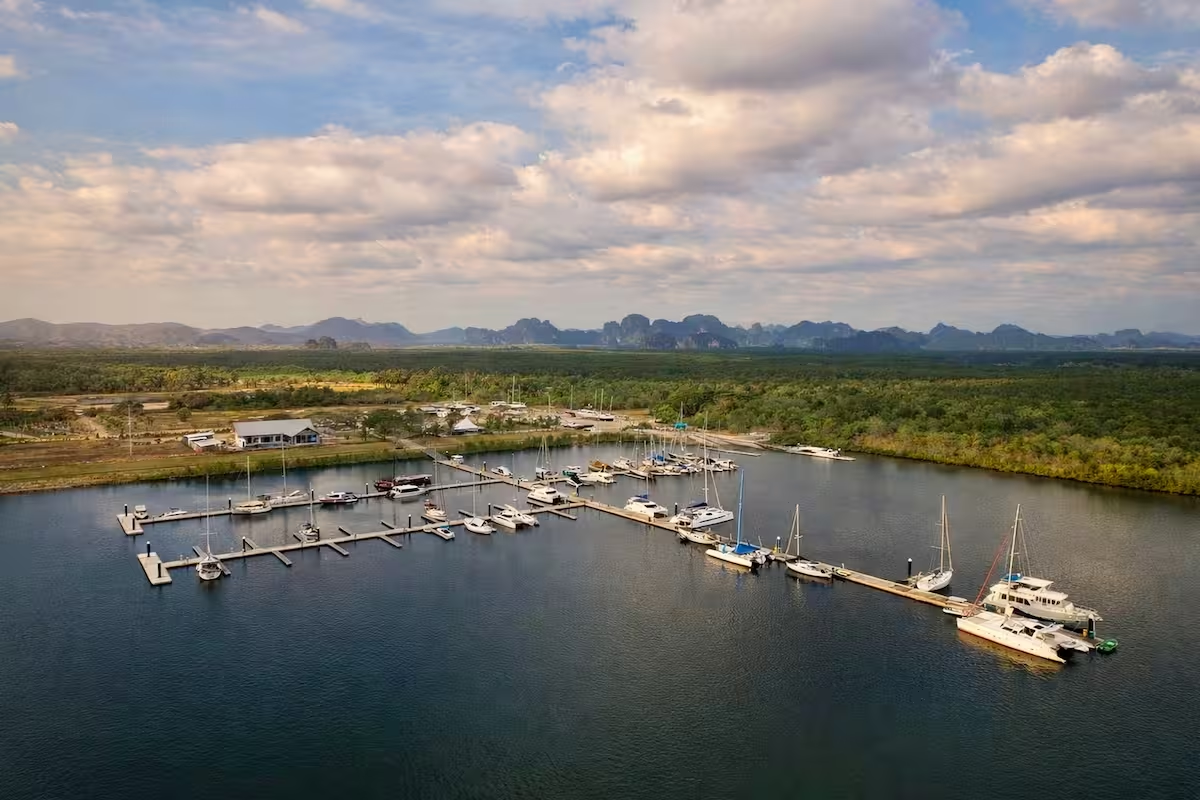
“We have to go slowly with the expansion,” he explained. “Firstly, it’s a family venture and we have to expand sustainably. Secondly, Krabi is a new destination and is not known by many people. When people think about sailing to Thailand they mostly think about Phuket. There are about 2000 boats in Phuket but only 200 in Krabi.”
“Although you can get a full refit done in Krabi, the availability of services here is not as high as in Phuket. Rigging is the main one that we are lacking, for example. But aside from that, people are now much more confident about keeping their vessels in Krabi than they used to be.”
“The aim with this next investment is to bring the marina to a new standard of service,” he said. “The major investment is the capitainerie, which will focus on providing greater comfort to tenants with upgraded toilet and shower facilities, as well as a swimming pool, marina office and chandlery. We also have space for yacht brokerage, if someone wants to take that opportunity and start that business.”
With a marina now capable of berthing around 300 boats, Matthew na Nagara hopes that enough of a market impetus will be generated for other marine businesses to emerge around the marina and in Krabi itself.
What’s more, with Krabi being an official port of entry and with the industry pushing for relaxed entrance rules for yacht crew, the groundwork is being laid for a decade of perseverance to finally pay off for Port Takola in Thailand.


.avif)


