This article was also published in issue 155 of Marina World magazine. Click here to read the online version.
Imaginative and innovative technology can be used to overcome complex optimisation problems and maximise revenue from dry stacks.
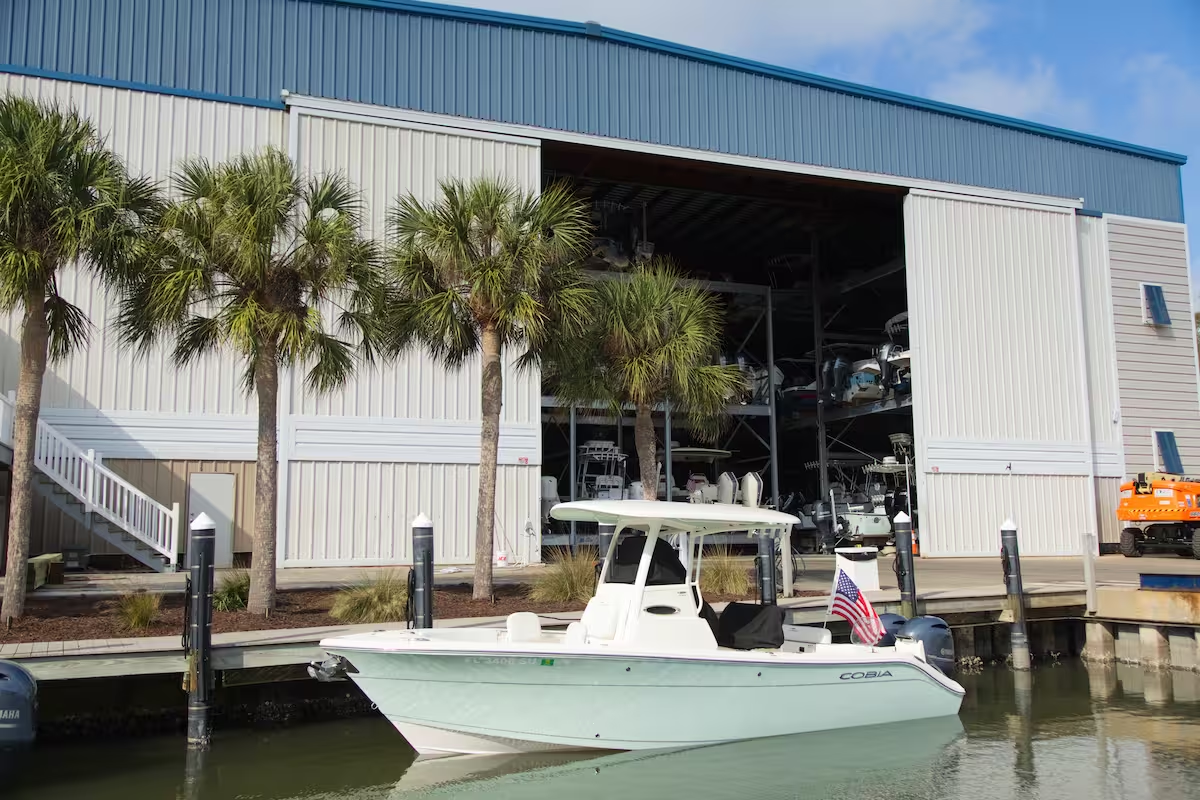
As boat ownership in the United States continues to grow and developable waterfront land remains scarce, dry stack marinas are becoming an increasingly important segment of the industry. The appeal of this storage model for marina operators is obvious. It achieves a more efficient use of available land and offers a scalable way to meet rising demand. As a result, dry stack development is increasing and many owners and operators are focused on ways to improve throughput, shorten launch times and streamline daily operations to deliver a better customer experience.
Yet for all the attention given to operational efficiency, revenue optimisation is often a second thought. While the two are closely linked, there are some key differences. A marina can be efficient operationally but still fall far short of its revenue potential. Maximising the revenue potential of a dry stack facility requires more than moving boats quickly; it requires a deliberate approach to how each slip is allocated across the entire rack system.
Using tech to solve complex optimisation problems
The challenge is balancing two distinct priorities. On one hand, operational efficiency favours placing the most frequently used boats in the easiest-to-access locations, with less active vessels stored in less accessible positions. On the other hand, revenue efficiency means maximising the earning potential of every available space in the marina. The ideal layout is not simply the one that fits the most boats or the one that allows the quickest launches. It’s the one that balances access and earnings across the facility. This is where new technology can have a big impact, allowing operators to quickly model different placement scenarios and making those tradeoffs more visible and actionable.
Back in 2011, engineer and marina consultant Tim Blankenship suggested in a Marina World article that dry stack marinas could improve lease revenue by optimising rack layouts without necessarily adding slips. He advised operators to plan around revenue per cubic foot, not simply boat count. At some facilities, for instance, a handful of larger, taller vessels can out-earn a greater number of small, low-profile boats occupying the same space, depending on the rate structure. That advice is even more relevant today as vessel profiles have shifted in many US coastal markets, with larger boats with T-tops becoming more popular.
From theory to practice
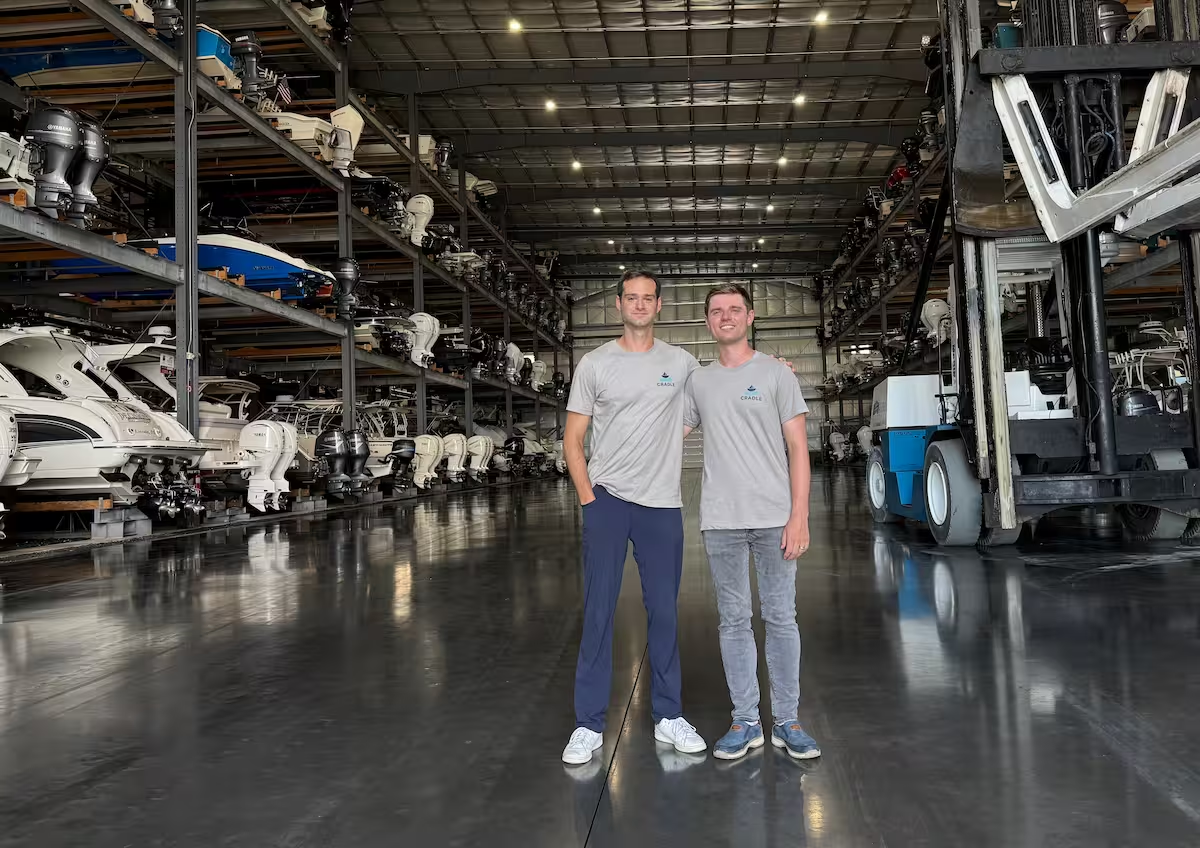
The difficulty, of course, lies in turning Blankenship’s concept into a daily operating system. A complete optimisation model must take into account a wide range of variables, including existing boat dimensions, slip dimensions, physical constraints of the facility (such as forklift turning radius limitations), beam adjustment flexibility, current and future demand, rate structure and launch frequency.
The goal is a layout that maximises both revenue per cubic foot and operational efficiency. Historically, that level of analysis has been difficult to apply consistently in a live marina environment. Even the most experienced operators are unlikely to have the time or ability to run these calculations by hand on an ongoing basis, particularly as demand changes and new vessels enter the system.
That is beginning to change as operators adopt new technology to model the mathematically optimal layout of boats and slips: one that maintains operational efficiency, maximises available space and preserves premium slip inventory for vessels commanding the highest rates. A process that took weeks can now be done in seconds and easily recalculated as needs change.
Case study: Harbor at Lemon Bay
Harbor at Lemon Bay in Englewood, Florida, is one of several dry storage facilities in the Bluewater Marinas portfolio currently using optimisation technology from Cradle, a US-based marina tech company, to increase revenue and efficiency. The marina has two storage buildings: an older, smaller one built in 1976 with 81 slips; and a larger, more modern building built in 2009 with 112 slips. Harbor at Lemon Bay’s operational challenge is making the most effective use of the smaller building while preserving premium inventory for the larger, taller vessels that are more common in the local market. The marina also needs to ensure that space in the modern building is being utilised in a way that maximises revenue.
Earlier this year the Harbor at Lemon Bay team began using Cradle’s proprietary software to evaluate placement simulations and identify layouts that improve both capacity and revenue. The software also helps determine the sequence of boat moves required to reach the preferred arrangement, making optimisation easier to implement.
Within a few months, Lemon Bay increased occupancy in its smaller building by 11 percent through more precise slip assignments for new arrivals and targeted relocation of existing vessels. That freed up premium slip inventory for larger boats that otherwise might have been waitlisted or turned away.
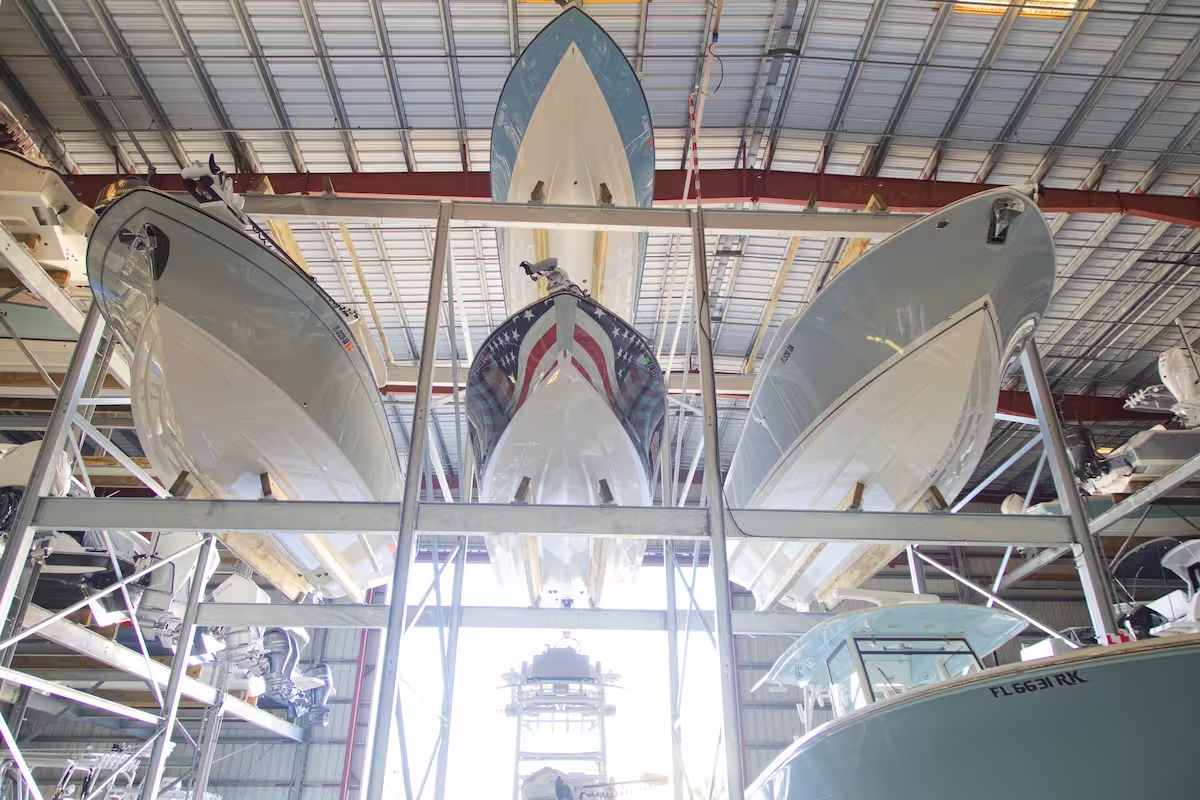
For BlueWater Marinas, the impact of the software on Lemon Bay’s storage operations is part of a broader effort to scale a more efficient operating model across its portfolio. Campbell Miller, the company’s director of investments and asset management, said that their “long-term goal is to build a best-in-class portfolio along the East Coast and become one of the premier owner-operators in the market”.
“Our team has spent decades building and operating marinas, and we understand the balance between growing revenue and continuing to deliver a high-quality boater experience,” he continued. “As we scale, Cradle has played an essential role in helping us operate more precisely and make better decisions across our marinas. At Lemon Bay, utilisation is up in both buildings, which has helped us adapt to where the industry is heading by creating more room for larger boats. The precision and granularity of the solution has essentially solved for slip obsolescence without requiring additional capital.”
The Lemon Bay team now uses the software to assign each incoming vessel to the most appropriate slip, ensuring that boats are placed in the optimal available location rather than simply the most convenient spot at the time. This helps to reduce the need for disruptive reshuffling when larger vessels arrive. It also eliminates situations in which boats are waitlisted despite there being a viable arrangement not immediately obvious to the human eye.
Increasing demand drives storage innovations
As boating demand continues to outpace supply and waterfront space grows more constrained, dry stack marinas are primed to capture a growing share of that demand. While facilities can expect higher occupancy and longer waitlists, the next stage of dry stack evolution is likely to be less about fitting in more boats and more about allocating space more intelligently. For operators, that means thinking beyond throughput and focusing on the balance between operational performance and revenue yield. After all, in a dry stack facility, “full” does not always mean optimised.