Dry stack storage has long been one of the most efficient ways to store boats, yet its adoption around the world remains uneven. In the United States, dry stacks have become a mainstream solution, especially in regions where waterfront real estate is scarce and storms are a persistent threat. Outside the US, however, they are still considered a relative novelty.
The gap between dry stack use in the US and elsewhere presents both a challenge and an opportunity. Global marina operators are increasingly pressed to maximise capacity, improve resilience and deliver higher returns on valuable waterfront sites. The US experience offers a blueprint: decades of innovation in dry stack design, operations and automation. The question is not whether these systems work, but how international markets can adapt them to local realities.
The US head start
The United States embraced dry stacks earlier and more aggressively than most other markets. Several factors drove this trend, namely growing boat ownership in coastal and inland regions diminishing slip supply as residential development consumed waterfront land. Storm exposure also underscored the value of indoor, hardened storage.
These pressures pushed developers, engineers and operators to look beyond the traditional slip marina model. By the early 2000s, dry stacks were no longer experimental. They were becoming a backbone of US marina infrastructure.
Today, the US boasts a range of dry stack models, from simple steel-rack warehouses to high-density, automated facilities that rival the efficiency of logistics hubs. This evolutionary arc is precisely what makes the US a useful case study for international markets just beginning to explore the model.
Why dry stacks work
The advantages of dry stack storage are clear and consistent, whether in Fort Myers or Fréjus:
Use of space: A single acre of land can store five or more times as many boats in a dry stack as it can in slips. For markets facing land scarcity, this is the most compelling argument.
Operational efficiency: Modern systems, especially automated ones, can deliver boats to the water in minutes with predictable turnaround times. That efficiency translates into a better customer experience and higher throughput on busy weekends.
Resilience: Dry stack structures, especially those built in concrete tilt-wall or similar robust systems, offer superior storm protection compared to open slips or steel racking. Tilt-wall has become a hallmark of US facilities seeking Category-5 resilience.
Financial performance: Higher density means more boats per square foot, which translates into stronger revenue per acre. Combined with value-added services, the return profile often outpaces that of traditional marinas.
Case study: Gulf Star Marina, Fort Myers Beach, Florida
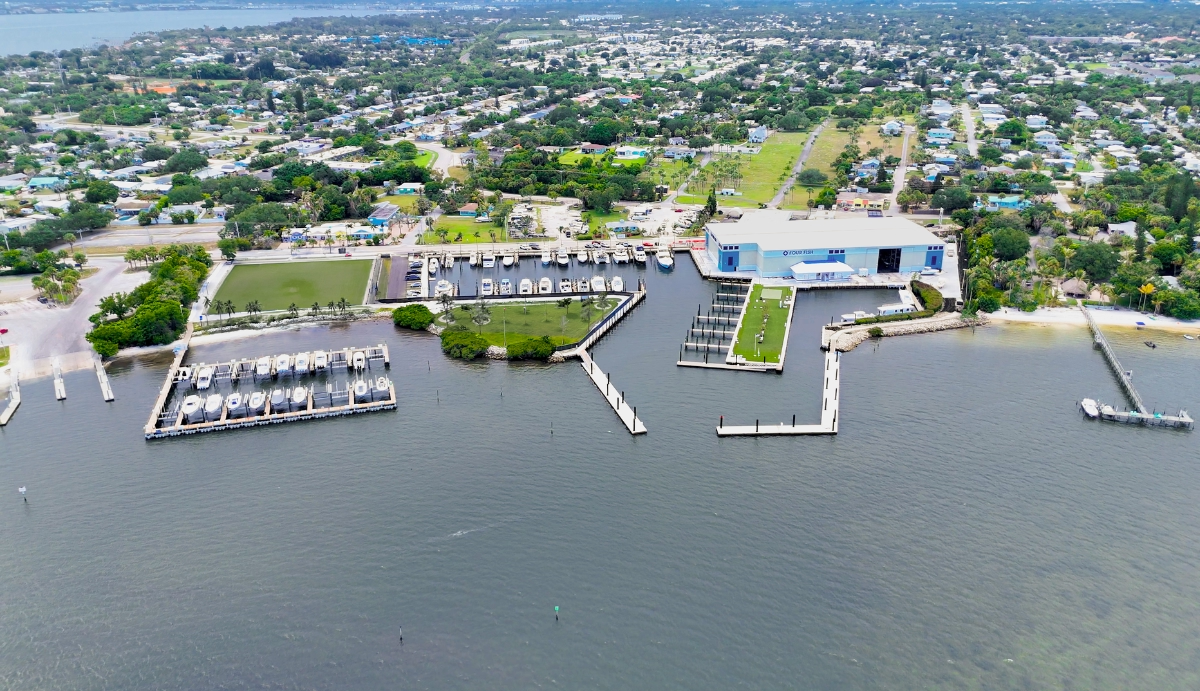
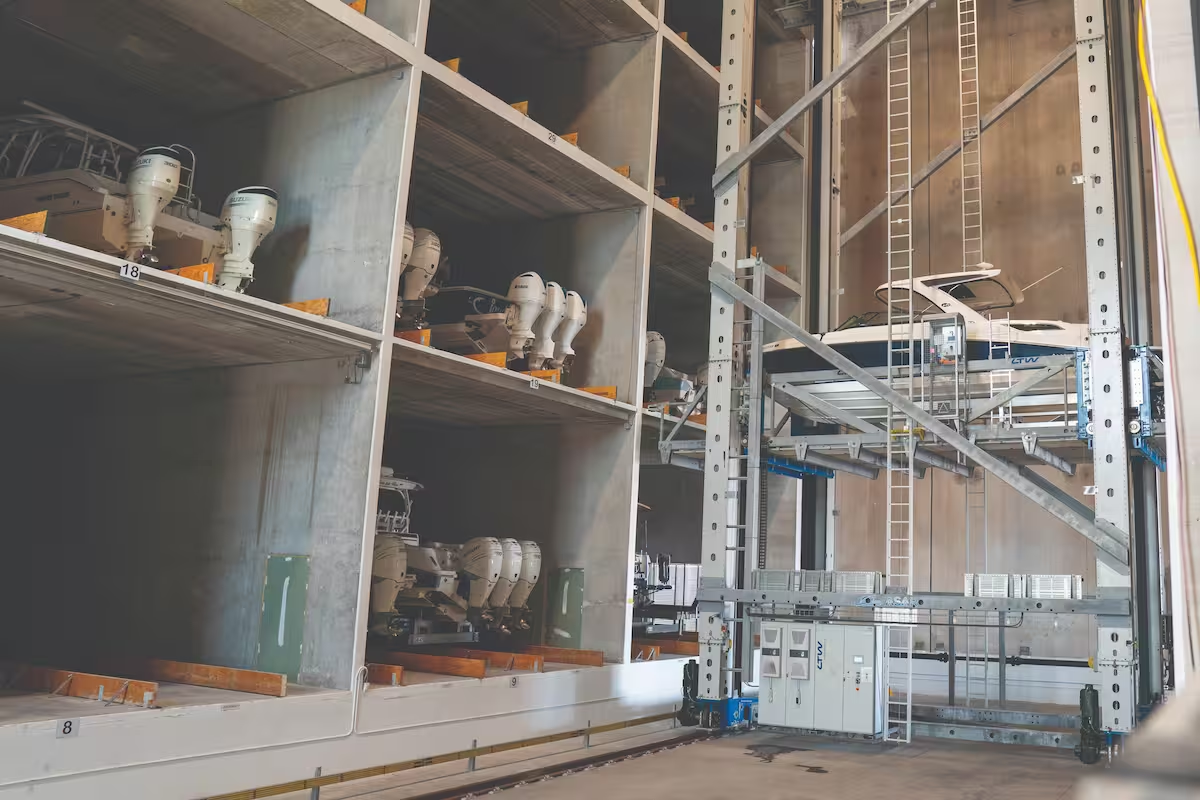
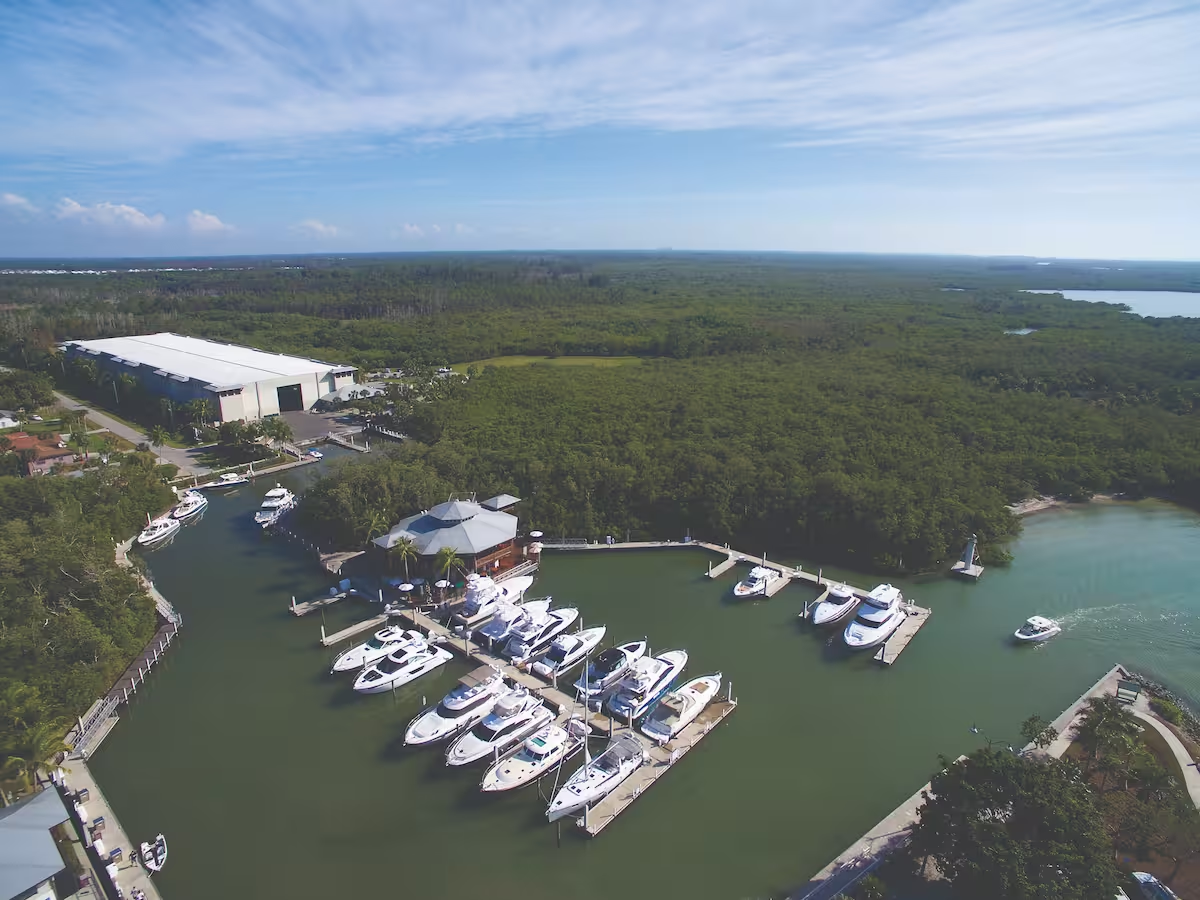
One of the clearest demonstrations of dry stack innovation is Gulf Star Marina in Fort Myers Beach, Florida. Completed in 2020, it is widely recognised as the world’s first fully automated dry stack, with multiple-vessel-deep storage.
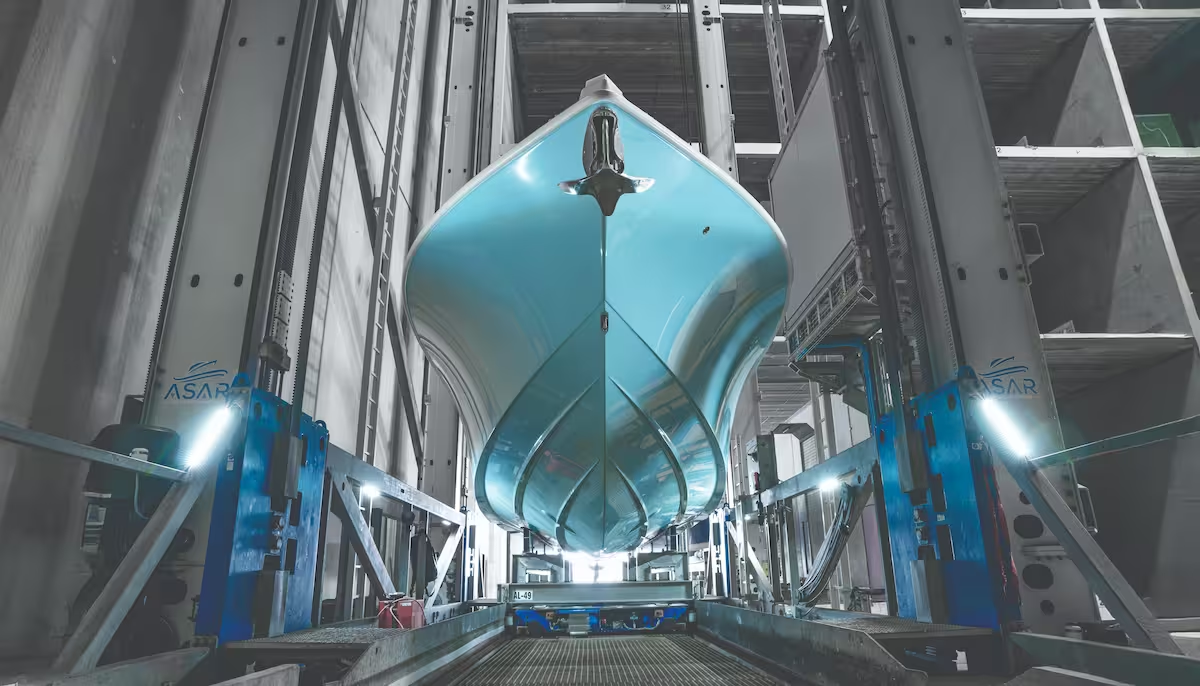
Instead of forklifts, Gulf Star employs an automated storage and retrieval system powered by a dual-lift, dual-travel crane. The system can deliver boats from rack to water in about seven minutes without diesel engines, operator error or weather delays and offers over 99 percent reliability.
The structure itself, built using tilt-wall concrete panels, an approach that has defined many resilient US marinas, was engineered to withstand Category-5 hurricane winds. It was the first to resume operation during Hurricane Ian and had zero vessel damage.
The benefits have been dramatic. Storage density increased by more than 250 percent compared to the site’s prior forklift-based configuration. The marina also added amenities such as valet parking, a ship store, refuelling and a bait shop that transform the facility into more than just a storage building.
Gulf Star is not meant to be copied wholesale everywhere, but it provides a compelling benchmark for the industry when automation, density and resilience converge.
Global market realities
If the US has shown the way, why hasn’t the rest of the world followed as quickly? The answer lies in a mix of regulatory, financial and market factors.
Firstly, in many markets, governments control most waterfront land, making zoning, leasing and environmental permitting the single biggest hurdle. What is permissible in Florida may face years of review in Australia or Italy, slowing development and adding uncertainty.
Secondly, automation and concrete construction require significant capital costs and upfront investment. In markets with lower berth fees or less concentrated demand, the financial case can be harder to make. Finally, in emerging boating regions, the market may not have matured and demand may not yet justify the density of a dry stack, particularly one with automation.
Adapting the model globally
For international marina operators, the key is not replicating US dry stacks but adapting the principles to local contexts. Four areas stand out:
Automation and sustainability as force multipliers: Labour costs and availability vary globally, but automation offers consistent benefits such as predictable efficiency, reduced liability and higher throughput. Today’s systems are all-electric, further reducing operating costs and supporting sustainability goals. In regions with expensive or scarce labour, automation paired with sustainable operations may be the single most important driver of viability.
Density and urban integration: Waterfront land is increasingly part of mixed-use developments. Dry stacks can be integrated with retail, hospitality or residential components, adding both financial and community value. In some cases, conversions of underperforming dry stacks into hotels or lifestyle spaces, as seen in Florida, suggest future hybrid models.
Resilience and sustainability: Climate risk is not unique to the Gulf of Mexico. Typhoon exposure in Asia, cyclones in Australia and flooding in parts of Europe all underscore the value of hardened, storm-rated structures. For many, tilt-wall concrete offers a proven path to both resilience and long-term durability. Its ability to integrate solar arrays and efficient mechanical systems also supports the global push toward environmental responsibility and sustainability, which is increasingly a regulatory requirement in many regions.
Lifestyle and mixed-use pairings: International developers should not underestimate the appeal of fully mixed-use marina living. Pairing storage with lifestyle amenities such as residential, hotel, retail or club components creates destinations that are both profitable and appealing. Gulf Star’s valet parking and retail spaces are one example, but future developments may include marina villages where storage, living and leisure are seamlessly integrated.
Lessons for international operators
The US dry stack story offers three clear lessons for operators abroad. Firstly, one should adopt innovation early. The markets that embraced dry stack first are now reaping the rewards. International operators should not wait until finding slips becomes impossible before exploring alternatives.
Secondly, one should build for resilience and sustainability. Whether hurricanes, typhoons or regulatory pressure, designing for resilience and environmental sustainability will pay dividends over the long term. Structures that protect assets also protect operators’ reputations.
Finally, one should think beyond storage. The most successful dry stacks are more than racks and lifts. They are hubs of service, retail and lifestyle activity. This is particularly relevant in regions where marinas are cultural and social anchors.
Looking ahead
The global marina industry stands at an inflection point. Demand for boating access is rising, waterfront land is increasingly scarce and climate pressures are intensifying. Dry stack storage is not a silver bullet, but it is one of the most proven solutions available.
The US has shown what is possible when necessity meets innovation. Facilities like Gulf Star Marina demonstrate the potential of combining automation, density and resilience in one package. For international operators, the task is to adapt - not simply adopt - the US model, tailoring it to local cultural expectations, regulatory landscapes and financial realities.
The opportunity is enormous. By learning from US successes and avoiding its early missteps, international markets can accelerate their own adoption curve. In doing so, they will not just solve a storage problem; they will create a new class of marina infrastructure that is efficient, resilient and globally competitive.
This article was also published in issue 151 of Marina World magazine. Click here to read the online version.