Sustainability is not a trend, a one-off project or a problem to be “solved”. For us at Rolec and other businesses in the marina sector, it is a mindset and an ongoing commitment that combines ethical responsibility with practical business sense. Done properly, it is about anchoring changes that last and not simply ticking boxes.
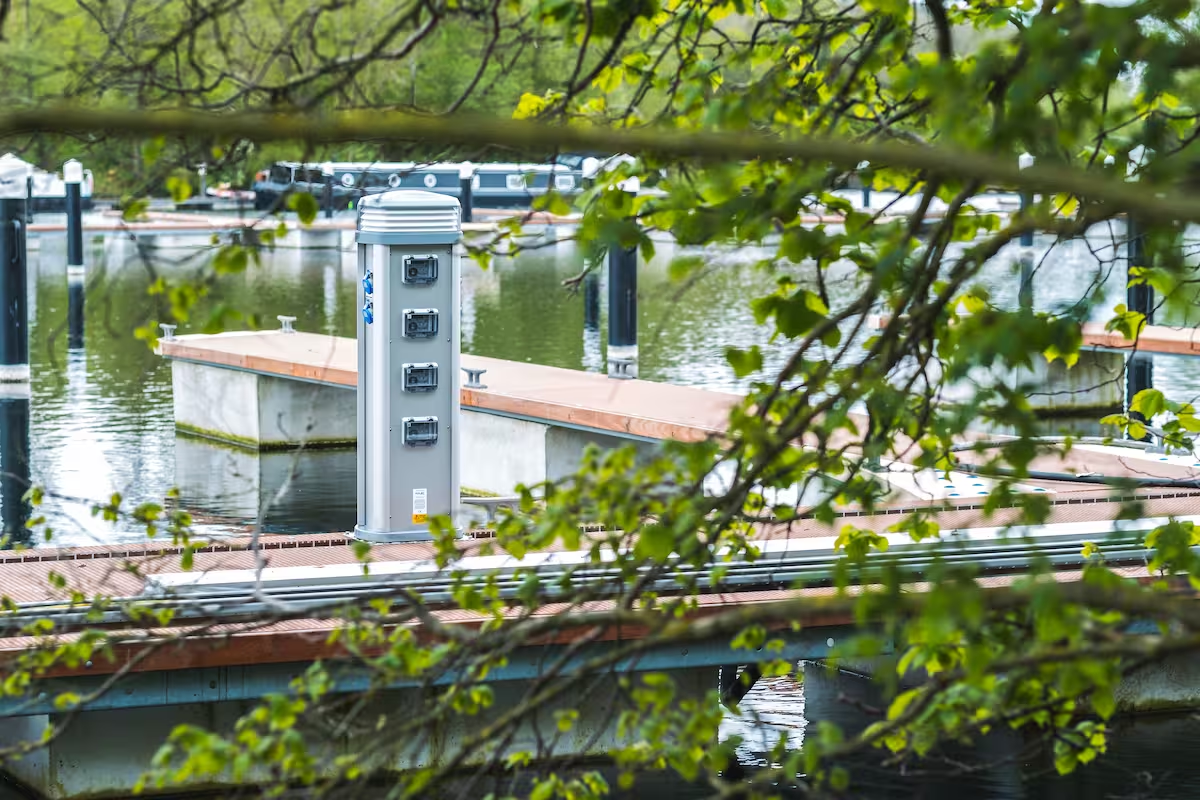
We all know that the marina sector is closely tied to nature. Coastal and inland waters are delicate ecosystems and those who manage, operate and develop marinas cannot ignore their duty to protect and preserve. Visitors increasingly expect clean energy, waste reduction and sustainable infrastructure and not as optional extras. The challenge is not whether we can afford to act, but whether we can afford not to.
A longstanding commitment
The most responsible companies were already taking steps that aligned with environmental stewardship long before “sustainability” became a boardroom talking point. At the time, many of these decisions weren’t branded as such, we simply viewed them as good practice.
For example, using local supply chains reduced unnecessary transport miles and supported regional economies. Engineering products for durability meant fewer replacements, lower material usage and extended product life cycles. Minimising waste was about efficiency and diligence. On Rolec’s part, these principles were quietly embedded into the company’s operations long before they became part of environmental, social and governance (ESG) checklists.
At its core, sustainability has always been about consciously building for the future. Decisions made in design, sourcing and manufacturing directly affect customers, industry and future generations. ISO 14001 certification - as we achieved in 2015 - can formalise our environmental management systems and give structure to future sustainability initiatives.
.avif)
The strength of manufacturing control
As UK manufacturers, Rolec maintains full control over the build and development of our core product range. This visibility across the entire life cycle - from concept to creation, delivery and ongoing maintenance - gives us opportunities to implement positive innovations at every stage.
For example, by upgrading our solar array and reducing our consumption of heating oil across the site, we achieved an estimated annual CO₂ saving of 76,410kg. Battery storage can also capture excess solar energy to power factories and charge electric vehicles without drawing from the grid. These steps not only reduce emissions but also improve energy resilience, something that many marinas are equally striving to achieve as energy prices fluctuate and sustainability targets tighten.
Reducing the size of packaging is another simple way that companies can become more sustainable. After we reduced the size of our packaging, we could ship 50 percent more products per pallet, which has cut transport-related emissions by 33 percent and lowered logistical costs. This benefits both our operations and operators who are conscious of supply chain impact. At the same time, we ensured all materials used in preparing products for shipping are certified by the UK’s Forest Stewardship Council and 100 percent recyclable. A switch to water-based inks further reduced our carbon footprint by nearly 40 percent. These measures may sound incremental, but collectively they demonstrate how small, thoughtful decisions build towards meaningful results.
Closing the loop
Waste is another area where continuous improvement can deliver change for sustainability-conscious companies across the marina industry. Not only should manufacturing refuse be diverted to recycling facilities, but any remaining waste can be converted into solid recovered fuel (SRF) to avoid sending things to landfill. At Rolec, at the time of writing, 70 percent of our manufacturing refuse is diverted to recycling facilities, and the remaining 30 percent of waste material is converted into SRF.
This approach reduces environmental burden while supporting a circular economy, meaning one where raw materials are continuously repurposed. For the marina sector, the concept of circularity has particular resonance. Marinas generate waste ranging from packaging and plastics to maintenance residues, and every site has a role to play in ensuring these materials are handled with care throughout multiple life cycles.
ESG beyond compliance
Today, ESG factors dominate the conversation around a green future. But the real test is ensuring that these commitments go beyond compliance. ESG for show does nothing to serve the long-term interests of businesses, communities or natural environments.For marinas, ESG must be genuine and measurable. Coastal protection, biodiversity, energy efficiency and the experience of berth holders all intersect in ways that cannot be managed through surface-level initiatives. Customers are discerning and regulators are watching.
The businesses that will thrive are those that view ESG not as a hurdle, but as an opportunity to enhance operations and work towards an ever more sustainable future.Our role as manufacturers is to align our processes and supply chains with these long-term goals. That means designing durable products, reducing emissions, managing waste ethically and providing infrastructure that helps marinas meet their own sustainability goals.
Looking ahead
No single company can claim to have “solved” sustainability. The nature of the challenge is that it demands constant progress, adaptation and shared responsibility. The real impact comes from working together, and collaborations across the industry can deliver holistic solutions that help marinas achieve better energy management, more effective solar initiatives, measured resource consumption and long-term strategic development.
As Rolec’s Commercial Director, Holly Brown, put it: “Sustainability in practice is about doing what’s right because we always have and because we always will.” That’s why sustainability efforts should not be a finite project, but instead an ongoing process. Each year brings new opportunities to reimagine, refine, reduce and renew no matter what the industry, and the marina sector is no different. The real measure is not in what one says, but in what one does. Only by prioritising substance over image can we ensure that progress is genuine and lasting, rooted in practice and not in PR.
This article was also published in issue 151 of Marina World magazine. Click here to read the online version.