For decades, marina construction has been guided by some exceedingly simple principles: one lingering example being that thicker, chunkier and heavier means better. More steel, thicker concrete and heavier decking have long been equated with strength, stability and longevity. Concrete pavers in particular have become the industry's decking of choice.
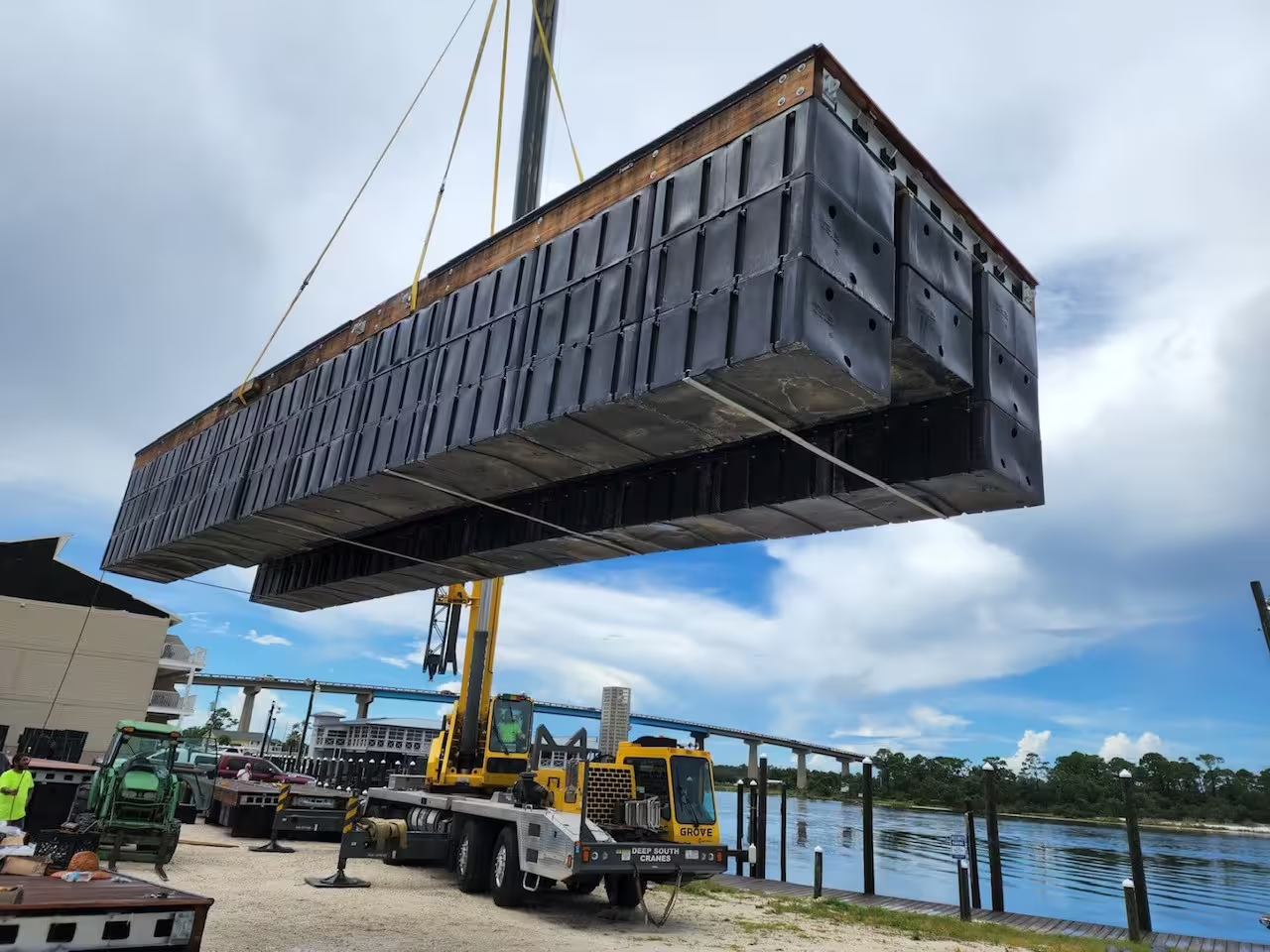
Just as other engineering disciplines have adopted efficiency and lightweighting, the dock industry is starting to question whether heft should remain a primary standard. A new generation of lightweight, panelised decking solutions is challenging the status quo, offering marinas and manufacturers a different set of advantages that one can no longer afford to ignore.
The weight equation
Weight reduction in engineering is not a new concept. Buildings, infrastructure, automobiles, aeroplanes and even spacecraft have all benefited from designs that use less mass to achieve greater performance, lower costs and improved efficiency. The same principles apply to docks.
Traditional concrete paver decking can weigh more than 78kg per square metre, while modern polymer-based decking panel solutions often weigh more than 90 percent less. On a marina pier with multiple fingers, this can translate into tens of thousands of kilograms removed from the structure.
For example, consider a marina dock configuration with ten 1x7m finger pontoons connected to a main 2.5x36m pier. That's 160m² of dock surface. With 60x60cm concrete pavers weighing 30kg each, the decking weighs in at 13,333kg. With lightweight, panelised decking at 7.32kg per m², the same amount of dock decking weighs just 1,171.2kg. That's a reduction of over 12,000kg.
The implications of these weight savings are enormous. Firstly, the reduced structural steel requirements and less dead load means lighter framing and less money in steel. This is especially relevant given today's tariff environment. Secondly, you have lower material and freight costs with more dock per truckload, fewer lifts and less fuel.
Other benefits include faster installation thanks to smaller crews, reduced handling risks and quicker project turn-over, improved modularity as lighter panels allow for pre-fabrication and higher quality control in manufacturing facilities, and
easier maintenance. Decking can be replaced, under-deck services inspected and repaired, or docks adjusted, all more easily. In short, less weight means more efficiency across the board.
Inertia: The hidden hitch
However, lightweighting introduces a challenge unique to floating docks: the issue of inertial mass as it relates to dock heave and sway with wave action. We know from secondary school physics that inertia is the tendency of an object to resist changes in its state of motion, while inertial mass is a measure of how much resistance an object offers to acceleration.
Essentially, inertial mass quantifies the inertia of a specific object. In general, the less mass a dock has, the more it will react to motion from waves. A heavy, concrete-decked dock resists movement simply because of its mass. A lightweight dock, on the other hand, responds more readily to waves and wind. For the end user, this can mean a dock that feels more active under foot.
This is why concrete, despite its inefficiency, has endured. Its sheer mass serves as a passive dampening system. Removing that mass requires rethinking how dock stability can be achieved.
From ballast to baffles
One obvious solution is to add ballast back into the system — but doing so undermines the very efficiencies gained by lightweighting. You can also moor the docks very tightly to the bottom, but this necessitates ongoing additional maintenance and is difficult with water level changes. The more elegant and less expensive approach is passive inertial dampening.
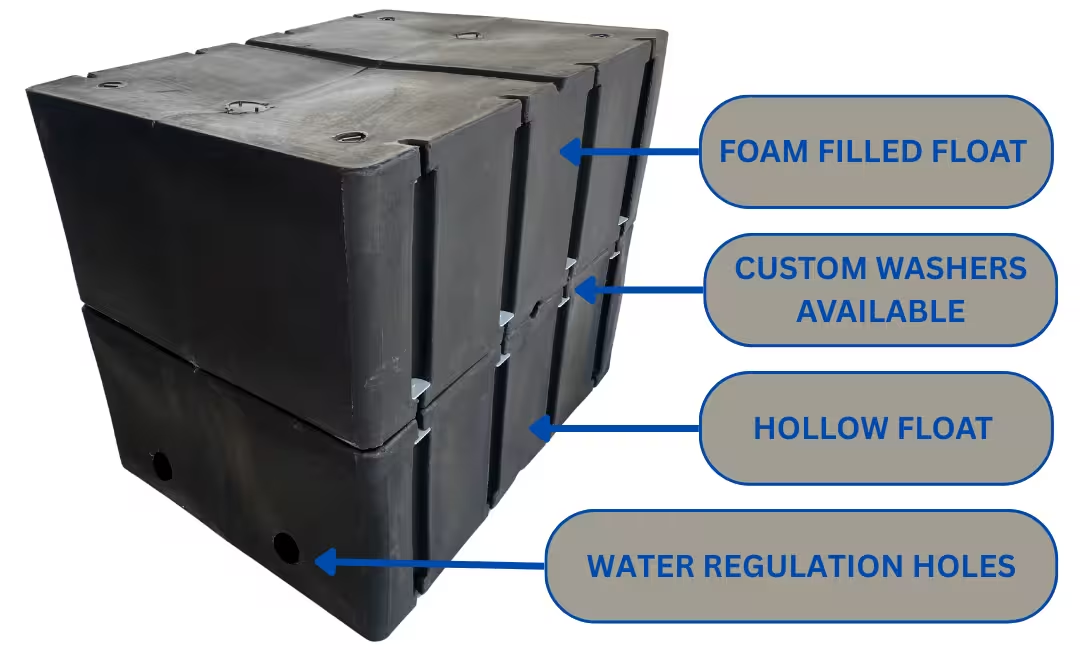
Rather than adding permanent weight, engineers are designing systems that use hydrodynamic resistance to reduce sudden motion, such as a hollow float drum perforated with holes and mounted below a standard float allowing water to fill the cavity. This water does not add any static weight but acts as a fluid baffle. When waves attempt to lift the dock, the resistance of the water inside the baffle slows the motion, effectively mimicking the stability of a heavier system without sacrificing efficiency. Commercially available products already apply this principle, providing dock builders with cost-effective, ready-to-use dampening solutions.
Lightweighting: The future of dock design
The trend is clear: lighter, more efficient structures are the future — not just in cars, planes and buildings, but in marinas as well. Engineered panelised decking solutions are unlocking significant cost savings, faster build cycles and improved lifecycle performance. In permanent dock construction, the benefits are immediate and virtually without compromise. In floating docks, inertial dampening technologies ensure stability without reverting to outdated heavy designs.
For marina owners and manufacturers, the opportunity is twofold. You can operate more efficiently by building faster, transporting cheaper and maintaining with less effort, and delivering more value with docks that are safer, cooler, disability-accessible, longer lasting and more sustainable.
The industry ethos that “heft equals best” is giving way to a new reality: lighter equals smarter. The docks of the future will not be measured by their mass, but by how effectively they balance efficiency, performance and user comfort.
This article was also published in issue 151 of Marina World magazine. Click here to read the online version.