This article was also published in Marina World'sThe State of Marinas 2026. Click here to read the online version.
Behind the sleek aesthetic and calming atmosphere of marinas is a heavy and resource-intensive industrial process. There are of course many constituent parts of a marina, but by far the biggest and most critical is the pontoons.
.avif)
To get a better understanding of the state of manufacturing and supply chains in the marina industry in 2026, I reached out to five leading producers of pontoons, each with a wide portfolio of products and projects across the world: Lindley Marinas (Portugal), SF Marina (Sweden), Marinetek (Finland), Poralu/Wearth Group (France) and Marine Structures (Australia).
Manufacturing and production environment
The manufacturing and production environment has experienced recent volatility and is currently enjoying relative stability, although this is not without certain complications. Forward-planning, nimble adaptation to market dynamics and continuous recruitment of skilled labour will be key in the coming years.
Luís Vasconcelos Dias of Lindley Marinas said that the sector is “unstable” and trends are “difficult to anticipate”. The volatility of raw materials and commodity prices puts direct pressure on costs, timelines and planning, thereby necessitating greater flexibility and risk to enhance operational efficiency. Meanwhile, Michael Sigvardsson of SF Marina said that there had indeed been significant recent disruption, although the market has “seemed to stabilise at a new level in the last couple of years”.
Valtteri Vauramo of Marinetek agreed, saying that it is currently relatively stable but “under continuous pressure to adapt and keep up”. He said that, in general, demand is growing steadily, however manufacturers continue to juggle higher cost volatility, longer planning horizons and stricter regulatory and sustainability requirements. Their production remains capital and resource intensive, meaning that predictability and risk management have become increasingly important.
“Companies that can combine industrial-scale production with flexibility and strong project management are currently best positioned. Being a global player with several manufacturing hubs certainly helps especially with larger projects,” he said.
John Hogan of Australia’s Marine Structures said that marina manufacturing is “moving decisively towards modular, repeatable and engineered production systems”, although he also recognised that marinas around the world are built to “vastly different standards”.
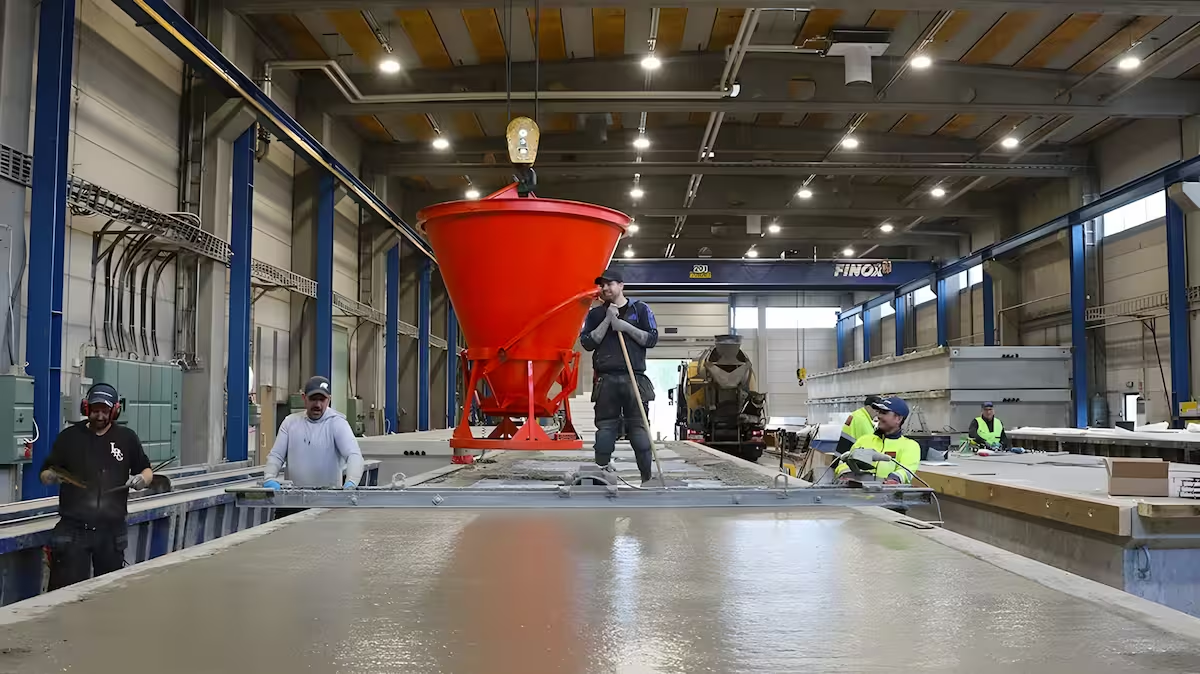
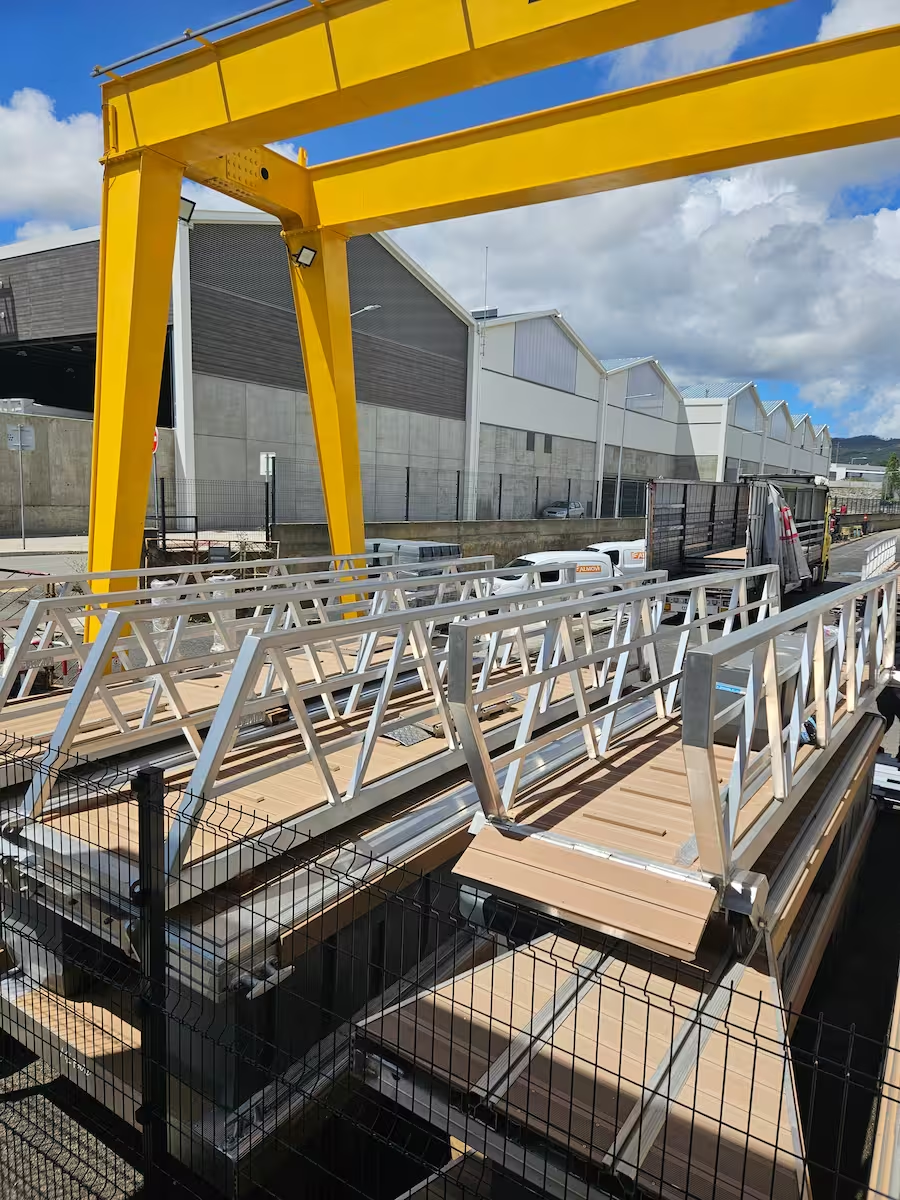
He noted that especially concrete pontoons pose greater manufacturing and logistical challenges compared to modular aluminium structures with polyethylene flotation, for example. The distance from manufacturing facilities to the end user often means that “manufacturers and developers are increasingly weighing not just structural performance, but also logistics, supply-chain resilience and constructability when selecting marina systems”, Hogan said.
“Overall, the current manufacturing environment reflects a balancing act,” he concluded, consisting of “higher expectations for performance and durability, set against the realities of global supply chains, transport constraints and differing regulatory frameworks across regions.”
Demand and supply pressures
There was a universal agreement amongst the five companies that the pace of growth and investment in the marina industry is directly translating into supply chain pressures. SF Marina is “experiencing pressure in more or less all sections of the manufacturing and supply chain process”, and Marinetek said that the growth, while of course positive, puts pressure on capacity planning, lead times, logistics complexity and skilled labour availability. Lindley added that these dynamics “make the market more aggressive, which compresses margins and forces manufacturers to make faster and riskier decisions”.
For Eric Cénart at Wearth Group, the general increase in demand is translating into increased pressure on certain raw materials, with sourcing responsibly harvested timber becoming increasingly challenging. “Lead times can now reach six to eight months for certain species,” he noted, adding that this reinforces the importance of diversified sourcing, long-term supplier partnerships and continuous exploration of alternative materials.
Meanwhile, Marinetek added that these demand pressures require manufacturers to “balance centralised production with localised delivery and installation”, with supply chain coordination and early procurement becoming more important to avoid bottlenecks during peak periods.
Raw materials
A number of participants identified similar criteria by which they continue to select raw materials, however cautioned against relying too heavily on a narrow source base.
Short delivery times and supply reliability stood out as a critical factor, resulting in pontoon manufacturers maintaining a diverse portfolio of providers to mitigate against disruptions. Michael Sigvardsson of SF Marina stressed that this means some of their components are sourced locally, while Valtteri Vauramo said that they “increasingly favour suppliers with predictable delivery and transparent sourcing over marginal short-term cost savings”.
Eric Cénart of Wearth Group said that diversification of supply sources is a major priority for them, adding that they actively avoid dependence on a single supplier or region, as responsiveness and flexibility have become critical. Similarly, Luís Vasconcelos Dias of Lindley Marinas said that their selection and procurement of raw materials is “primarily influenced by the need for supply stability, price control and rapid response”.
Cost and quality were of course other factors. SF Marina “tries to source cost efficient material of the right quality” and Marinetek similarly value “durability” and “lifecycle cost”. According to Eric Cénart of Wearth Group, cost remains a key factor for their sourcing strategy, “as the final investment decision for many clients and investors is still largely driven by price”.
Some participants - especially Wearth Group - also cited sustainability and minimising carbon footprints as being another factor, however this was generally not as critical a consideration when compared to supply reliability, cost or quality.
However, two suppliers suggested that client requirements and compatibility were also key in their selection of raw materials. Marine Structures’ John Hogan said that their selection and sourcing of raw materials “is influenced by a combination of client requirements, performance expectations, logistics and long-term asset strategy, rather than cost alone [...] which then cascades through the entire manufacturing and supply-chain process”. Lindley Marinas also noted that the “size, weight and compatibility of raw materials” have become decisive.
Hogan noted that aluminium marina systems with lower load ratings are typically more cost-effective, however concrete systems are better for environments with “higher loads, greater berthing forces and more demanding durability expectations”.
He said that while the upfront investment of concrete pontoons is higher, “the extended service life, reduced maintenance risk and improved asset performance make them increasingly attractive to developers and operators focused on long-term value rather than short-term cost”.
.avif)
Skilled labour
As well as noting the pressures resulting from increasingly specific technical, environmental and operational constraints, both Eric Cénart of Wearth Group and Valtteri Vauramo of Marinetek highlighted that the marina sector is experiencing additional pressure in terms of skilled labour. The former said that qualified manual and technical expertise is “increasingly difficult to find”, while the latter said that the general increase in demand is also putting pressure on skilled labour availability.
On their part, Luís Vasconcelos Dias of Lindley Marinas noted that the broadly positive manufacturing outlook puts stress on the availability of skilled labour. He noted that there is an increasing exposure to risk, “especially in the current context where production, logistics and labour availability do not grow at the same pace as demand”.
John Hogan of Marine Structures highlighted an additional risk of companies hiring additional skilled labour. “Demand is not smooth or continuous. Instead, it tends to be lumpy, with periods of intense activity driven by large, complex projects, followed by quieter phases, especially within local or regional markets,” he explained.
“Once large-scale projects conclude, demand can fall away sharply, leaving producers with substantial fixed infrastructure and labour costs that must be carried regardless of workload. Manufacturers who have invested heavily in plant, equipment and skilled personnel are exposed to cyclical demand risks. This creates stress within the industry and is likely to accelerate consolidation among producers.”
Managing supply shocks
The last few years have seen numerous events that have disrupted supply chains, including but not limited to the COVID pandemic, wars in Europe and the Middle East, tariffs and sanctions. In asking the question of how to manage these supply shocks, four companies agreed that diversification and stockpiling were critical.
SF Marina uses different suppliers in different geographical markets, while Lindley has established “wider and higher-volume supply contacts” and invested in stocks of critical components and materials. Marinetek similarly favours “diversification and transparency”, has reduced reliance on single suppliers or regions, and has also improved demand forecasting and buffer planning.
For Wearth Group, according to Eric Cénart, their strength lies in their global footprint, boasting several production partners for their newly released concrete pontoons. “We deliberately favour decentralisation over concentration,” he said.
John Hogan of Marine Structures, however, outlined a slightly different strategy for the Australian market. “The disruptions caused by COVID reinforced a critical lesson: price efficiency without resilience is a false economy. In response, we have deliberately shifted our focus towards building deeper, more transparent relationships with key stakeholders across our supply chain, rather than relying on fragmented or opportunistic sourcing models,” he said.
“In Australia, where we are based, we are fortunate to have access to a network of high-quality, technically capable suppliers who provide quality-assured raw materials. By maintaining close alignment with these suppliers — in terms of standards, documentation and performance expectations — we are able to pass that quality assurance directly through to our customers.
“This approach can result in higher upfront manufacturing costs, but we are firmly convinced that these are returned many times over through reduced risk, improved durability and lower total lifecycle costs. When marina infrastructure is engineered for a 50-year design life — which is increasingly becoming a standard component of serious engineering design — the value of resilient supply chains, consistent material quality and reliable manufacturing processes becomes self-evident.”
Recycled materials
Among a number of more targeted initiatives to reduce the environmental impact of heavy manufacturing, the emphasis on using recycled materials stood out.
John Hogan noted that both aluminium and concrete pontoons are high energy users in their initial production, and “therefore recycling and reuse are critical considerations in improving the embodied carbon profile of marina infrastructure”. Meanwhile, Valtteri Vauramo of Marinetek also said that they “increasingly use recyclable and recycled materials”.
Christophe Sauné of Poralu Marine, which is part of Wearth Group, said that they introduce recycling-oriented practices wherever possible and noted their new line of aluminium docks made from 80 percent recycled and bio-based materials. SF Marina similarly noted the importance of having a recycling process in place - which they do with their RE:dock process - but also highlighted how it is “equally important to build products with a long design life as this will reduce the environmental impact dramatically”.
John Hogan of Marine Structures agreed, saying that manufacturers who can demonstrate longer design lives and recyclability will be able to stand up to greater scrutiny around sustainability. Luís Vasconcelos Dias said that there is indeed an effort to “demonstrate to end users that an apparent higher upfront investment can, in the long term, prove to be worthwhile, bringing lower resource consumption, reduced equipment degradation and lower maintenance needs”.

.avif)