This article was also published in issue 152 of Marina World magazine. Click here to read the online version.
On a still July morning in Mallorca, a skipper of a 13-metre charter boat leans over the fuel dock and asks a question that would have been unthinkable just a few seasons ago: “Do you have HVO?”
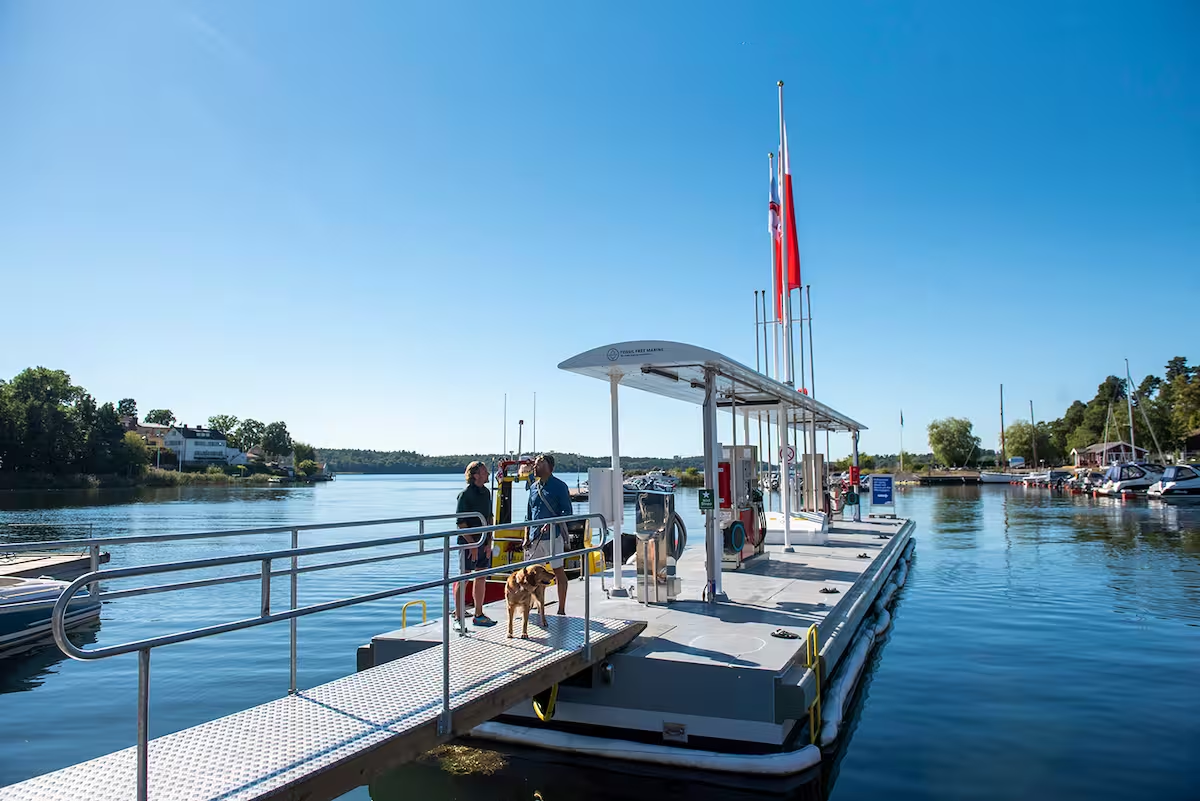
The dock attendant hesitates. The marina wants to offer renewable diesel. The owner and operator have read the same reports everyone else has: the EU wants to decarbonise leisure and maritime transport, charter companies are under pressure to show sustainability progress and boaters – especially the younger generation – are beginning to ask for low-emission alternatives.
But the answer, for now, is a shrug followed by an apology: “Hopefully next season.”
The fuel is available in the region. It’s being produced at scale, often from local waste streams. Engines are certified for it. Charter fleets are starting to adopt it. But the marina’s tank setup of old steel tanks of one or two grades with no flexibility simply can’t deliver it. And upgrading or replacing those decades-old in-ground storage tanks is like opening a can of worms.
And that is the central bottleneck almost no one in Brussels talks about: Europe can produce all the sustainable fuels it wants, but unless they can be delivered safely and reliably at the dock, adoption will lag years behind even the most progressive policy. The future of sustainable boating will be decided not by policymakers, not by refiners, not by original equipment manufacturers – but by marinas.
The marina at a strategic crossroads
For decades, fuel infrastructure in European marinas followed a simple model: one or two tanks, one or two products, seasonal throughput, manual operations, basic monitoring. It worked well enough for a world dominated by conventional diesel and gasoline. But the maritime energy landscape is changing faster than marina infrastructure is.
With the EU’s Sustainable Transport Investment Plan (STIP), Europe is paving the way for: a rapid ramp-up of drop-in renewable fuels like HVO/XTL; the emergence of synthetic fuels for hybrid and premium fleets, including superyachts; a steadily growing share of electric and hybrid craft; and commercial and charter fleets under sustainability mandates.
And yet, in many marinas – even large, modern ones – fuel infrastructure remains the limiting factor: minimal safety systems, inflexible storage, no digital monitoring and tightening regulatory expectations.
This creates a rare moment of both risk and opportunity. Those who modernise now will become the preferred hubs for a new generation of boaters and operators. Those who wait will face rushed retrofits under regulatory or competitive pressure.

Drop-in fuels: a game-changing path to decarbonisation
The good news is that the first major step in decarbonising boating requires no engine replacements, no new vessel standards and no cultural overhaul. The key lies in hydrotreated vegetable oil (HVO) and X-to-liquid (XTL), also known as drop-in fuels.
Not all sustainable fuels are created equal. But HVO and XTL can replace traditional marine diesel without any engine modification – hence the term drop-in – making them transformative for marina operators. This eliminates the need to retrofit every vessel in the harbour and provides an immediate path to decarbonisation.
For operational teams, the benefits are clear: these fuels can be stored onsite like conventional diesel (assuming adequate safety standards) and dispensed through existing pumps. Customers can use them instantly. The marina’s sustainability performance becomes visible and measurable, giving charter operators a powerful tool to meet their fleet commitments. This category of fuels is truly the low-hanging fruit of decarbonisation – available today, proven and fully compatible with existing fleets.
The infrastructure catch: the barrier to entry
But there’s a catch. Drop-in fuels require modern, multi-fuel-capable, compliance-ready infrastructure – not because HVO or XTL are tricky to store, but because many marina systems were designed decades ago for one or two single fossil grades. Limited tank flexibility, outdated spill protection, no leak detection and no capacity to introduce a new product safely are all common.
Crucially, these requirements aren’t unique to renewable fuels. They apply to any direct delivery of premium fuels from major suppliers. Fuel companies now impose strict standards for tank integrity, containment, monitoring and product segregation before approving deliveries.
This is where many marinas – especially around the Mediterranean – fall short today. The fuels are ready. Demand is growing. But without upgraded last-mile infrastructure, marinas simply can’t access these game-changing alternatives.
%20(1).avif)
Why the last mile is becoming the first priority
When policymakers discuss maritime decarbonisation, they focus on upstream challenges: production, refining, blending mandates, feedstock supply. But for leisure and light-commercial boating, the real question is much simpler: Can a marina safely store and dispense more than two, three, four – or more – fuel grades?
This “last mile” determines whether charter fleets meet sustainability KPIs, whether local authorities can report progress, whether boaters can choose sustainable options, whether marinas can compete on environmental performance and whether EU funding flows to one site or to a rival. In practice, the last mile is the first barrier to adoption – and the most overlooked.
STIP: A roadmap written for forward-thinking marinas
While STIP is often read as a policy for ports and commercial shipping, its underlying logic applies directly to marinas. It highlights four pillars that define whether a site is “future-ready”: safety, flexibility, digitalisation and environmental performance. These pillars also determine access to EU Green Transition funds, national innovation and decarbonisation grants, and regional tourism and sustainability financing.Marinas that cannot demonstrate environmental readiness will face increasing friction such as slower permitting, stricter inspections and weaker competitive positioning.
Conversely, marinas that upgrade early gain a powerful advantage. They become the demonstration sites that policymakers reference when discussing maritime decarbonisation done right.
From fuel dock to multi-energy hub
The marina of the 2030s will not look like the marina of the 2000s.
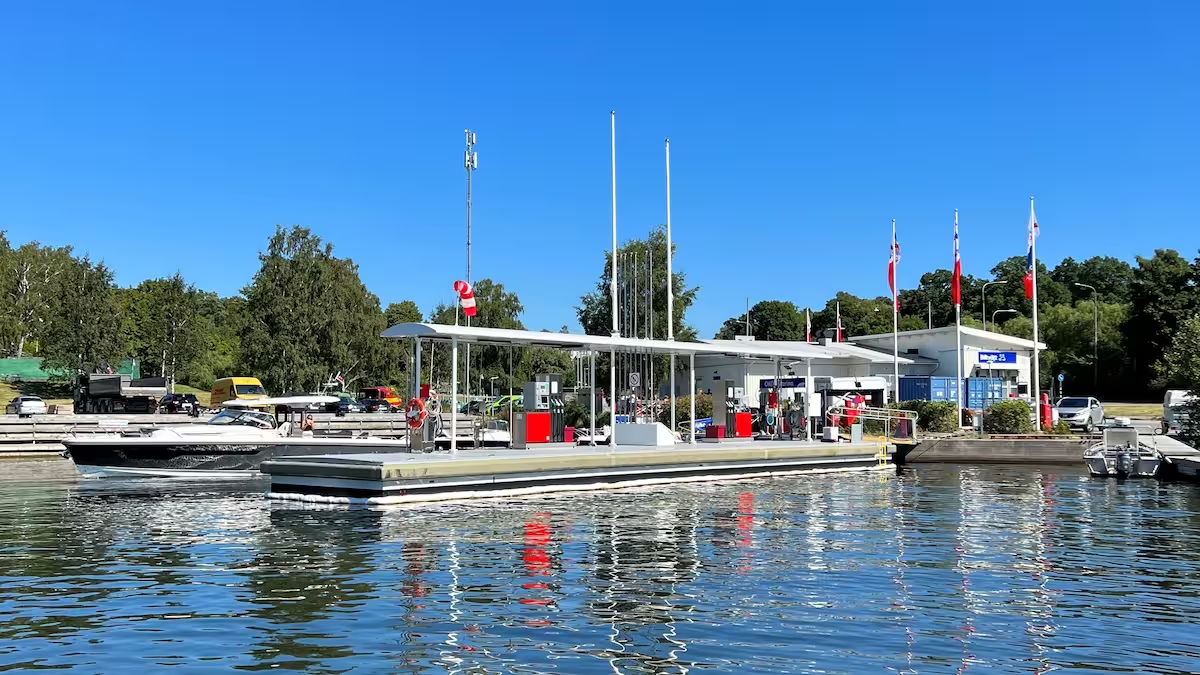
It will be a multi-energy micro-hub, blending fuels, storage formats and digital systems. There will be modular composite tanks with separation and inherent safety, with multiple sustainable fuel grades available in parallel. There will be dynamic fuel switching as markets evolve as well as integrated fire, spill, vapour and leak-prevention systems. There will also be digital telemetry and remote management for compliance, and shore power and charging for electric and hybrid craft. This isn’t futurism. The technology exists today. The demand exists today.
What’s missing, in many cases, is the willingness to invest in infrastructure.
Why leading marinas are moving first
Forward-thinking operators aren’t upgrading because they “have to.” They’re upgrading because the market is already rewarding them. Many calculate a three to five-year return on investment from new fleet partnerships and premium fuel margins.
Boaters increasingly choose marinas that demonstrate environmental responsibility and charter companies actively reposition fleets to compliant marinas. Commercial operators need sustainable fuels to meet corporate and regulatory commitments and they will migrate to marinas that can supply them. Furthermore, modern systems are not only safer but cheaper to run with automated monitoring, fewer spills and fewer staff hours. STIP and national programmes increasingly prioritise marinas with advanced multi-fuel systems, and authorities are tightening expectations across leak detection, spill prevention and environmental reporting. Modern systems make compliance seamless.
A new customer experience for a new generation
Decarbonisation isn’t only about emissions. It’s about modernising the boating experience. Imagine a boater pulling in, tapping a card at an unmanned station, choosing between multiple renewable fuels and receiving a digital receipt with environmental data. This is happening already – and customers love it. In an industry where experience is everything, modern fuelling becomes a differentiator.
Marina operators often voice concerns about modernisation: permitting, regulatory scrutiny, operational disruption, capital expenditure. But the landscape has shifted. Modular composite systems - deployable on land or water - dramatically reduce installation time, simplify permitting and integrate advanced safety systems aligned with regulatory expectations. All without consuming precious dock space or waterfront land. The risk is no longer in upgrading. The risk is in not upgrading – and being left behind.
Europe is entering a decisive decade for sustainable boating. Production of renewable fuels is accelerating. Policy momentum is strong. Boaters and fleets are ready. But the transition cannot happen without marinas. If the last mile is weak, the chain collapses. If the last mile is strong, adoption accelerates.
Marina operators now hold the pen in writing the next chapter of maritime sustainability. Those who move early will shape the market. Those who wait will inherit constraints instead of opportunities. The EU’s green maritime transition isn’t happening in Brussels. It’s happening at the dock – one marina at a time.

.avif)