





A new initiative by Cogea BIP Group, TransEurope Marinas and European Boating Industry (EBI) is bringing marina data to the European Marine Observation and Data Network (EMODnet), with the first contributions now on the platform.
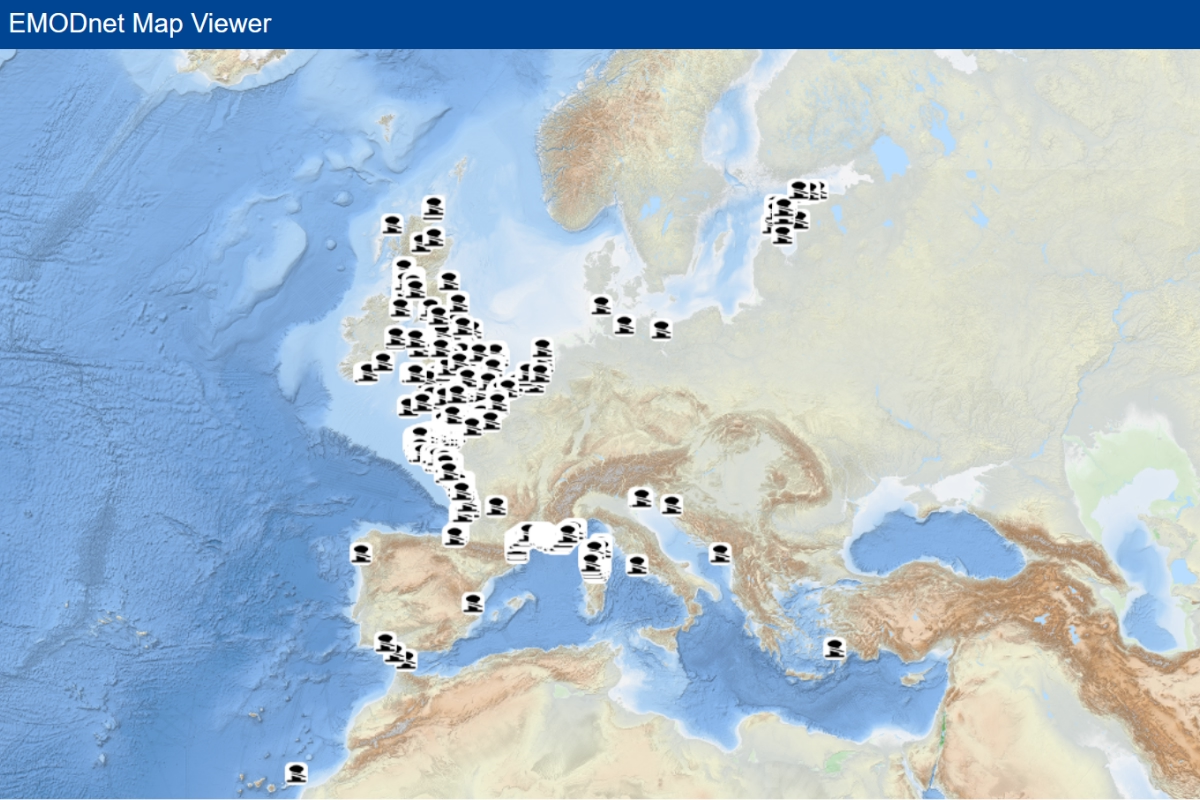
EMODnet is an EU-funded network made up of national data centres, hydrographic and geological surveys, marine research institutes and biodiversity organisations from across the continent. The network collects and standardises marine data and makes it available to users at no cost, covering bathymetry, biology, chemistry, geology, physics, seabed habitats and human activities.
The platform already includes information on ports, offshore wind farms, commercial shipping lanes, aquaculture and protected natural marine areas, alongside physical oceanographic data such as bathymetry and sea-level trends. Together, these datasets provide a comprehensive reference for mapping different uses of coastal and marine space.
Marina data, however, is spread across proprietary navigation apps, national registries and regional bodies, with different measurements, formats and languages used between sources. According to EBI, the lack of consistent marina data across countries could leave recreational boating underrepresented in maritime spatial planning, reducing available space, limiting access to the water and affecting both boaters and the industry.
To improve marina data coverage, Cogea BIP Group, which leads EMODnet’s human activities theme, is working with TransEurope Marinas, a marina network spanning 11 countries, and EBI, which represents Europe’s recreational boating and nautical tourism sector.
EBI estimates that the sector includes about 32,000 companies and more than 18,000 marinas. For the marina data, the partners agreed to include relevant dry-stack sites with pontoons while excluding harbours without facilities, with a threshold of more than 50 berths applied to identify significant locations.
The agreed definition describes a marina as “a sheltered harbour or basin primarily intended for the secure berthing and landing of leisure craft. While occasionally accommodating commercial vessels, its main purpose is to serve recreational boating with tailored land and water facilities for participants.”
The Association of Estonian Marine Industries, the Fédération Française des Ports de Plaisance, The Yacht Harbour Association and TransEurope Marinas were the first associations to contribute to the dataset, which can now be viewed on EMODnet with OpenStreetMap points and polygons.


