This article was also published in issue 154 of Marina World magazine. Click here to read the online version.
Long regarded primarily as a gateway between the Mediterranean and the Indian Ocean, Egypt is increasingly becoming a destination in its own right for yacht owners and charter operators despite Red Sea security concerns, infrastructure gaps and growing competition from established Mediterranean destinations.
.avif)
The past several years were exceptionally good for established Egyptian marina operators. For example, business performance at Hurghada Marina has shown steady growth, particularly after the recovery of international tourism and the increasing interest in the Red Sea as a yachting destination.
“Demand for berthing services, especially during the high season, has increased noticeably with stronger occupancy rates from both private yacht owners and visiting international vessels,” commented Ahmed Nazeh, marina manager at Hurghada Marina.
One of the key indicators of growth, Nazeh continued, is the rising number of transit yachts choosing Egypt and the Red Sea route as part of their cruising itineraries between the Mediterranean, the Gulf region and Asia. In addition, local interest in recreational boating and marine tourism has also started to expand gradually.
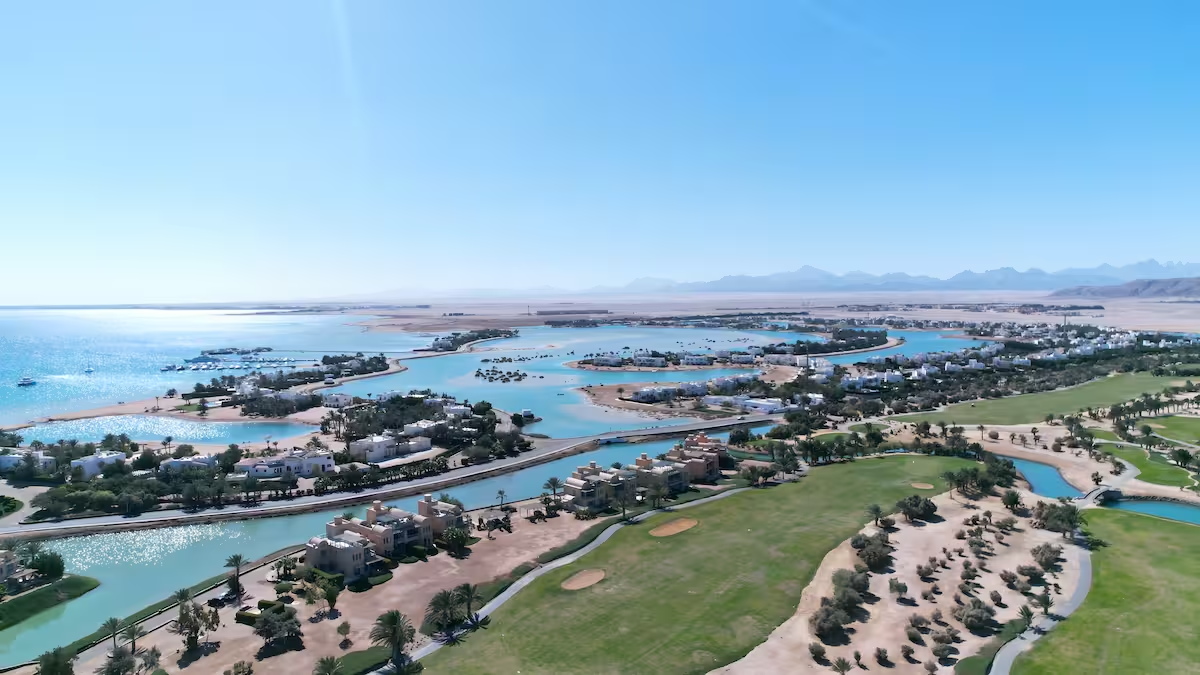
Things have been equally positive for El Gouna Red Sea's marina network, which has expanded from 280 wet berths in 2015 to over 600, reaching full occupancy. Haytham Samir, El Gouna Red Sea chief commercial officer, said that this trajectory “reflects not just growing demand but the town cementing its place as a leading yachting destination in the region and on the Red Sea coast”.
With four marinas integrated across the community, the water is woven into daily life in a way that sets El Gouna apart from any other destination on the Red Sea, according to Samir.
“Last year, 39 percent of El Gouna's property sales came from international buyers, a figure that speaks to the town's growing appeal as a place to own, not just visit,” Samir emphasised. “The marina infrastructure is central to that appeal.”
The appeal of the Egyptian coast
Local yachting companies also believe that the industry is booming, with improving infrastructure playing an important role in this trend.
“Demand has risen clearly and it's still accelerating,” commented Bahi Naguib, general manager with Seal Superyachts Egypt. In particular, the growth in demand for yachting services is reflected in the growing number of foreign-flagged yachts calling at Egyptian marinas and transiting the Suez Canal, as well as in the expanding charter and superyacht segment on the Red Sea, Naguib noted.
“The drivers are fairly straightforward: Egypt's position at the junction of the Mediterranean and the Red Sea makes it an essential waypoint for yachts moving between European and Indian Ocean seasons.”
On top of that, Egypt has a year-round climate and world-class reefs around Hurghada, El Gouna and Marsa Alam, Naguib said, adding that a national tourism strategy backed by large-scale coastal investment contributes to the rapid industry growth. Moreover, the cost base stays competitive against established Mediterranean destinations, which is especially important given a surge in inflation across the region.
“We are seeing gradual growth in yacht ownership and marine lifestyle interest within North Africa and the Middle East, particularly among high-net-worth individuals and investors,” Nazeh said. Egypt is also experiencing a strong recovery in its tourist industry more generally, especially in Red Sea destinations such as Hurghada, El Gouna and Sharm El Sheikh. Marine tourism has become an important component of this growth.
.avif)
A new wave of marina investment
Amid the growth in yachting tourists, infrastructure is also growing but it isn't yet sufficient for Egypt's ambitions, according to Naguib. Local players believe that the Red Sea network is already relatively mature, comprising marinas in El Gouna, Hurghada, Port Ghalib, Safaga and Marsa Alam. At the same time, the Mediterranean coast is catching up quickly, led by developments in Ras El Hekma and New Alamein, alongside upgrades at Galala, the modernisation of Ismailia, expansion at Soma Bay and planned investment at Nuweiba.
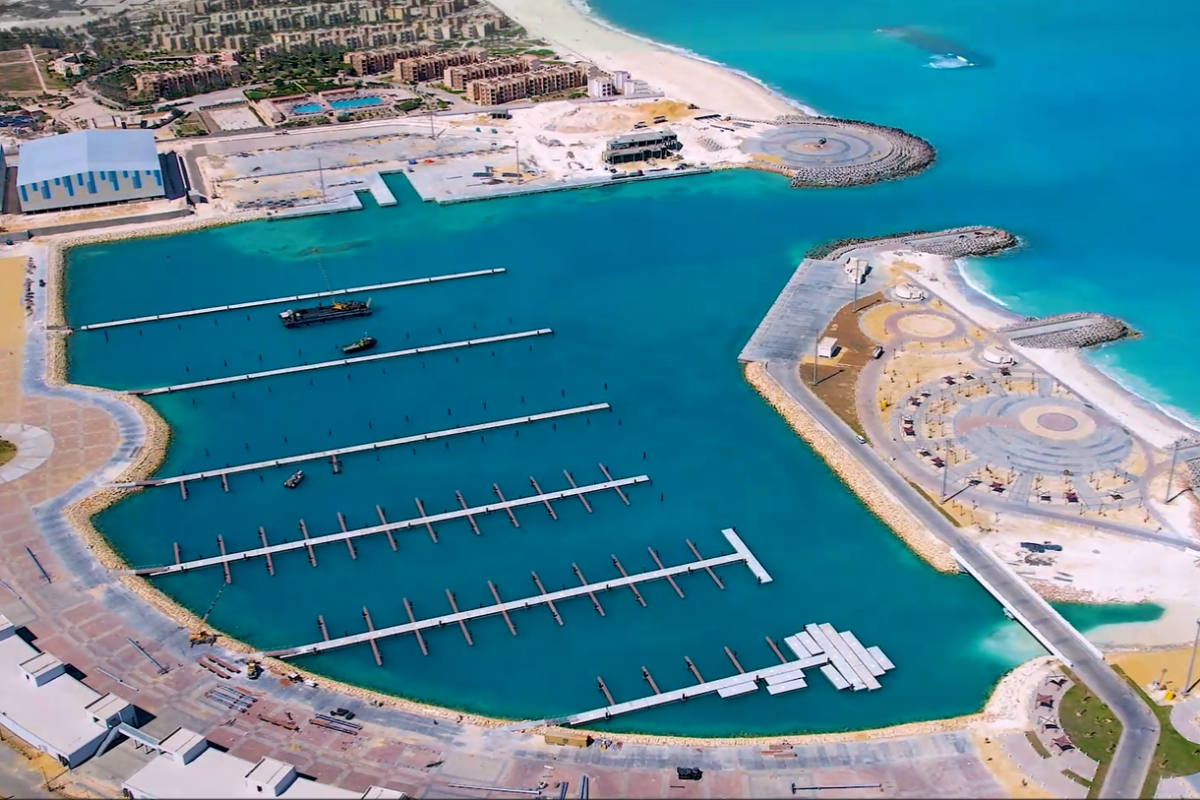
Most recently, Egypt's National Centre for Planning State Land Uses approved three new international yacht marinas. This includes one in Sharm El Sheikh, covering 21 hectares. On the Mediterranean north coast, the plan envisaged the construction of Marsa Matrouh for 67 hectares. In the Suez Canal region, the government gave the go-ahead for the construction of Ismailia Marina of 30 hectares.
El Gouna is a good example of where marina industry development is heading, according to Naguib, who pointed out that Marina Island by Tuban sits at the heart of the town's central Tuban district with open-to-sea lagoon access, alongside curated waterfront dining and retail.
“It continues El Gouna’s 36-year track record of waterfront development on the Red Sea, following earlier launches such as Nuba El Gouna, Fanadir Shores and North Bay. It also carries a strong investment profile with reported returns of around 20 percent over two years and rental yields in the region of 6-8 percent,” Naguib said.
The strongest development in Egypt’s marina industry in recent years has been concentrated in three coastal clusters: the Mediterranean North Coast, the northern Red Sea and Gulf of Suez, and the established Red Sea resort corridor around Hurghada, El Gouna and Marsa Alam, commented Nandini Roy Choudhury, senior analyst with Future Market Insights. The Gulf of Suez and Ain Sokhna–Galala corridor likely hold particularly high interest for investors.
“Its principal advantage is accessibility from Cairo, which makes it suitable for weekend boating, second-home ownership and resort-based marine tourism,” Choudhury said.
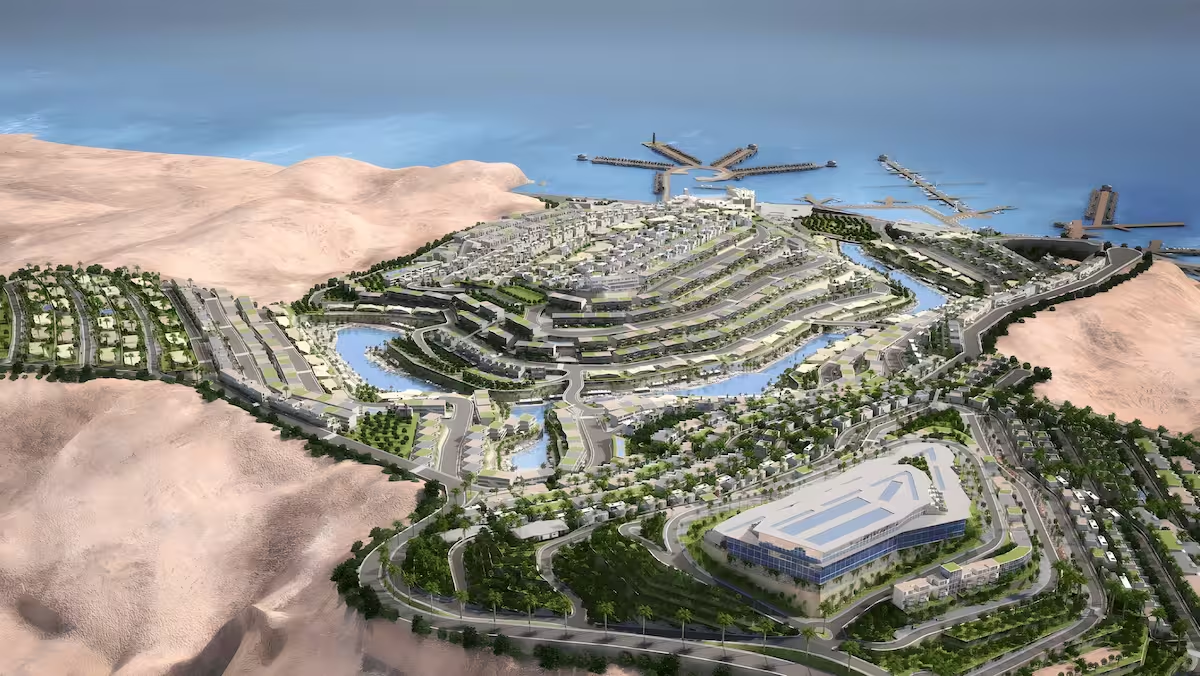
The recently announced Monte Galala Towers and Marina project illustrates the scale of this opportunity: the approximately $1 billion public-private development is expected to combine a marina with hotels, residences and wider tourism infrastructure south of Ain Sokhna, Choudhury added.
Challenges beneath the surface
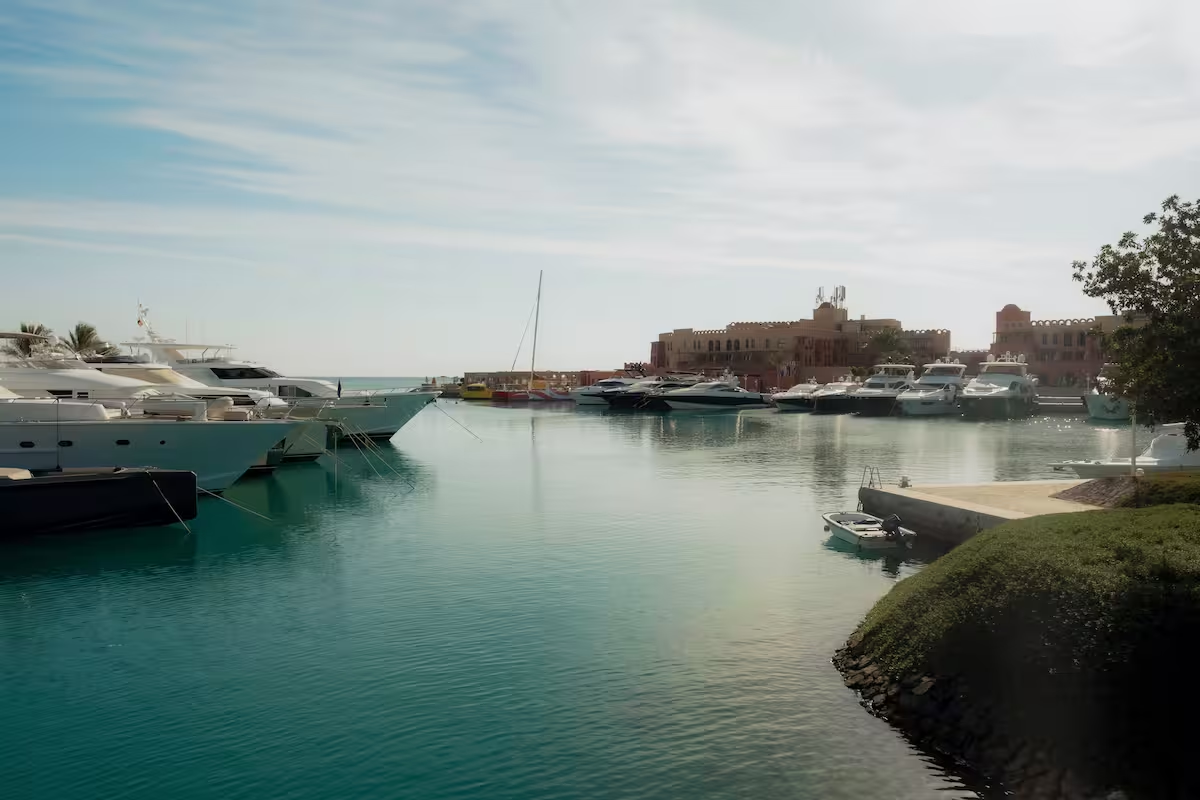
Despite the positive outlook, the sector still faces several operational and regulatory challenges, Hurghada Marina’s Nazeh commented. Despite the recent development, Egypt still has a need for specialised marina infrastructure.
“Some areas still require additional technical infrastructure, including advanced yacht maintenance, refit and repair facilities. However, we are optimistic as the country is currently looking into expanding shipyard and maintenance capabilities along the coasts to address this gap,” Nazeh said. In addition, the faster growth is constrained by financial and investment challenges.
“Marina developments require significant long-term investment, and returns are usually linked closely to tourism and international market conditions,” Nazeh added. On top of that, seasonality and regional competition are also factors to reckon with. Nazeh noted that Egypt competes with well-established Mediterranean and Gulf marina destinations, so maintaining high service quality and operational efficiency remains essential.
“The main challenges are still largely procedural, though entry and cruising formalities continue to improve,” Naguib said. Beyond that there's the Mediterranean's current capacity gap compared to the Red Sea, the need for deeper marine technical services, and the importance of protecting the reefs and natural environments that are among Egypt's greatest yachting assets.
Administrative complexity has also historically been the key challenge for yacht industry development in Egypt.
“International yacht operators value predictability: they need to know in advance how long clearance will take, what documents are required, what fees will be charged and whether they can move easily between domestic marinas,” Choudhury said.
Egypt’s recently introduced single-window platform and unified regulations are meaningful improvements, but their effectiveness will ultimately depend on consistent implementation by every authority and port, according to Choudhury.
“A second barrier is the uneven quality of supporting services,” Choudhury believes, explaining that a competitive yachting hub requires more than attractive berths. It needs reliable bunkering, waste disposal, customs and immigration services, chandlery, spare parts, lifting facilities, dry docks, skilled technicians, yacht management, crew accommodation and provisioning.
“These services are available to varying degrees in Egypt, but not yet with the consistency or geographical coverage found in more established Mediterranean hubs,” Choudhury added.
Connectivity between marinas also needs improvement, local market players believe. Egypt has several successful coastal destinations, but they do not yet operate as a clearly marketed national cruising network.
Beyond berths and breakwaters
In general, market players believe the government is moving in the right direction by not only supporting the construction of new marinas, but also facilitating the growth in the auxiliary services.
“What ultimately makes a destination successful is the network effect: a chain of safe harbours close enough together to allow cruising along the entire coast, supported by fuel and bunkering facilities, repair and refit yards, crew services, and streamlined clearance procedures for foreign-flagged vessels,” Naguib said.
Overall, Egypt has the coastline, climate, tourism base and location required to become a significant yachting destination, Choudhury said, adding that the next stage “is less about announcing isolated marina projects and more about creating a reliable national ecosystem”.
“Consistent regulation, transparent costs, stronger technical services, connected cruising routes and environmentally responsible development would allow the country to convert yacht transit into longer stays, higher spending and sustainable marina investment.”