This article was also published in issue 152 of Marina World magazine. Click here to read the online version.
Studies by the Algarve Centre of Marine Sciences (CCMAR) at the University of the Algarve in Portugal have shown that marinas can indeed play an important role in marine conservation, but only if certain conditions are met.
.avif)
Coastal countries have international obligations to protect their marine environment, with the “30x30” target - meaning protection of 30 percent of the world’s ocean by 2030 - agreed at the United Nations COP15 Biodiversity Conference. It is the most ambitious conservation commitment ever made. To achieve the conservation target of 30 percent, the most widely used approach is that of the creation or expansion of marine protected areas (MPAs). These important components of marine conservation and management strategies are geographically defined areas where governments have placed limitations on human activities.
There are different types of MPAs and within an MPA there can be zones with different regulations and levels of protection. Access is highly regulated and extractive activities such as fishing are not permitted in marine sanctuaries. This is known as “full protection”. Unfortunately, most MPAs worldwide offer weak protection, allowing fishing and other activities harmful to the environment. Globally, less than three percent of the total MPAs is considered highly or fully protected. Most MPAs can be classified as either marine reserves, where access and some activities are controlled, but total protection may be limited to only a part of the marine reserve or to marine parks, where multiple uses are allowed, including fishing, diving and boating.
In this context, can marinas be considered MPAs? The answer depends on a number of factors, including local conditions, geographic location and marina regulations and management. For example, in countries such as Portugal, fishing is not allowed in marinas, while in others it may be regulated, discouraged or even allowed. Marinas where fishing is not allowed can function as refugia for species that are highly sought after by commercial, recreational and spear fishers.
Protecting mega-spawners
Large-sized individuals of highly prized species such as the European seabass (Dicentrarchus labrax), gilthead seabream (Sparus aurata) and common seabream (Diplodus sargus) may be relatively rare due to overfishing in coastal waters, but they can be commonly observed in marinas in southern Portugal. Protecting large individuals, known in the fisheries literature as “mega-spawners”, in marinas is particularly beneficial to conservation efforts as these species produce a larger number of eggs and young fish relative to their size. In simple terms, the larger the fish, the more eggs they produce, the more fish survive through to adulthood or reach their minimum legal landing size, which is known as “recruitment”. Similar to artificial reefs, marinas can provide habitats for numerous species that require hard and preferably complex structures that offer food and protection from predators. In our own studies we used a variety of methods, including underwater visual census, baited remote underwater video and fish traps to study differences in the composition and structure of fish assemblages between the inner and outer sides of marinas in the south of Portugal and in the Canary Islands.
Within marinas there were differences in the variety and population of species between areas lacking structure such as walls and those providing more complex habitats. Differences in species composition were also found between the inner and outer marina areas. Nevertheless, overall fish diversity within marinas was comparable to that of the outer areas, indicating that marinas provide suitable habitats for many species.
Artificial habitats
Studies from many countries have shown that marinas may be important nurseries for some species, including many commercial species. At certain times of the year schools of juvenile fish can be seen along or under the floating docks or near the walls of marinas. Here they find food among the algae and invertebrates such as mussels and barnacles that rapidly colonise hard structures, as well as finding some protection from their own predators.
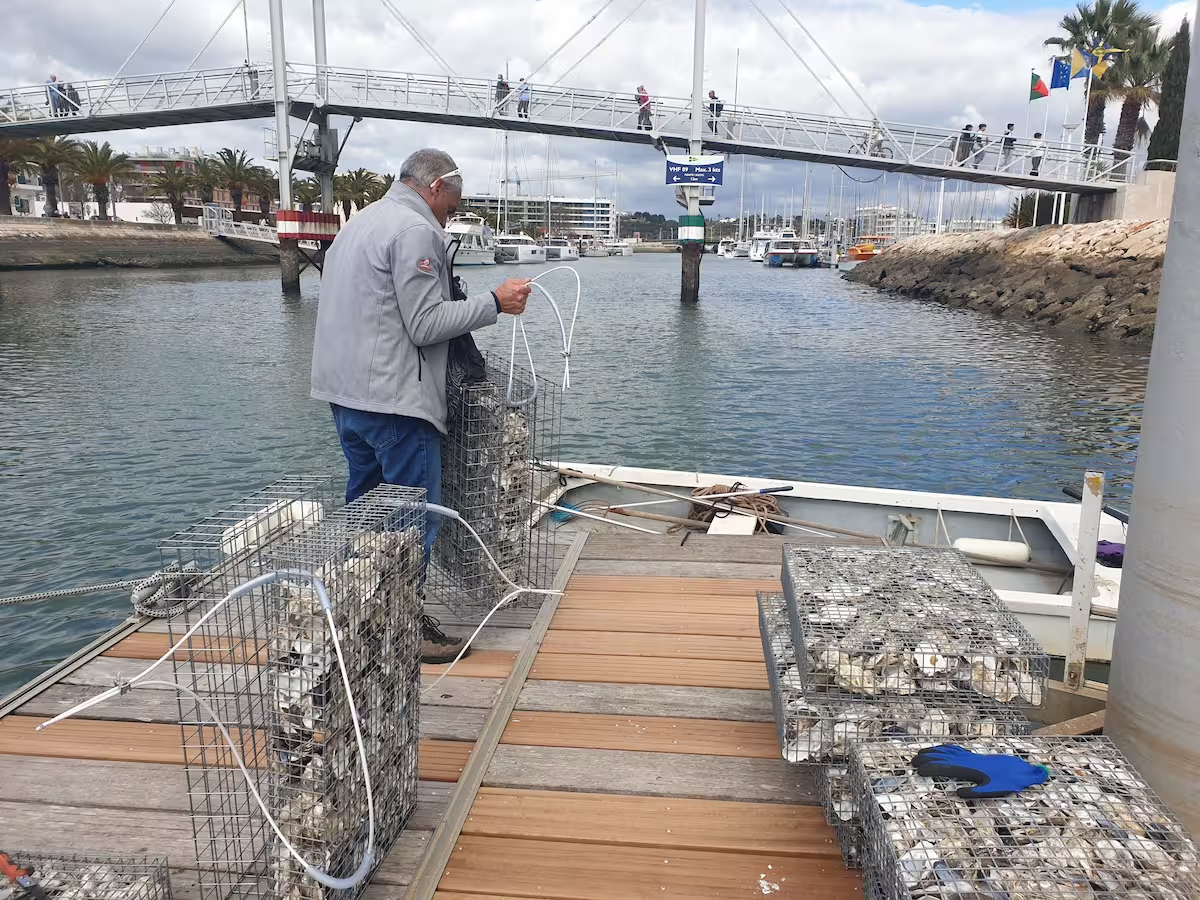
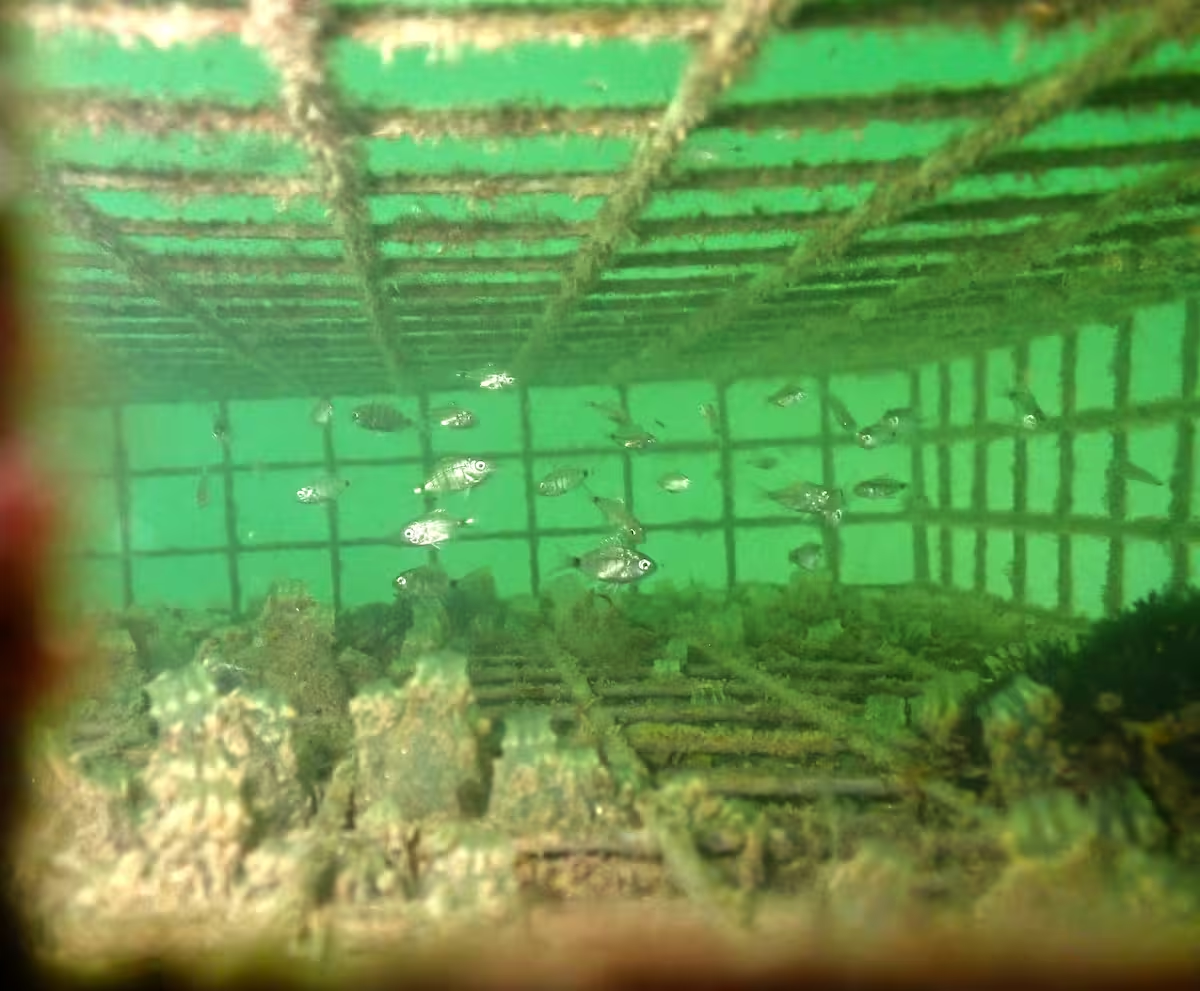
To improve the nursery function of marinas, artificial structures or nurseries have been developed and deployed in marinas around the world. In Lagos Marina in the south of Portugal, Biohuts - artificial structures developed by Ecocean, a French company specialising in marine ecological restoration - have been deployed under floating docks or attached to marina walls. These artificial habitats consist of an inner, small mesh cage filled with oyster shells within a larger mesh cage. The oyster shells in the inner cage, rapidly colonised by all kinds of species requiring hard structure, provide food and shelter for juvenile fish, shrimps and crabs, while the outer cage and the fine mesh inner cage prevent entry of predators, thereby enhancing juvenile survival and recruitment.
Monitoring by students from the University of the Algarve MSc in Aquaculture and Fisheries from September 2023 to June 2024 recorded 21,918 juveniles from 23 fish species associated with Biohuts suspended below the floating docks in Lagos Marina. Control areas without Biohuts had far fewer species and fish densities. Given that many fish species in the south of Portugal spawn in the spring, it is highly likely that even greater numbers of species and densities associated with Biohuts would have been recorded in July, August and September. These preliminary results show that Biohuts are effective tools for enhancing fish abundance, biodiversity and recruitment in marinas.
The benefits of marinas in terms of habitat, protection and as potential MPAs are however dependent on factors that can negatively impact fish populations. Pollution and low oxygen content in the water, known as hypoxia, can be harmful especially in marinas with poor water circulation due to low tidal amplitude. We now know that in addition to well-known and studied pollutants such as chemicals from sewage, paint and fuel, marine organisms are also susceptible to noise and light pollution that cause stress, abnormal behaviour and may even drive some species away. Marinas are also points of entry of invasive species that may become competitors or predators of native species.

Well-managed marinas can provide suitable habitat and protection for juveniles and adults of many fish species, thereby fulfilling one of the main conservation objectives of MPAs. Indeed, marinas can be integrated in existing MPAs. In coastal areas where development has led to loss of habitat and habitat degradation, marinas’ structural complexity can be hotspots of fish diversity, contributing to conservation and management goals, despite their relatively small size. Equally, very small coastal MPAs that are fully protected have proven to be remarkably effective, with high abundance, diversity and mean size of fish compared to unprotected areas.
Certain conditions must be met to ensure that marinas function like MPAs. Ideally, marinas should be integrated within a larger MPA framework, meaning that they should be designed and managed not only for recreational purposes but also with conservation aims in mind. Regulations and management plans, including zoning and rules controlling activities such as fishing, speed limits and anchoring should be implemented and enforced. Mitigation of organic, chemical, noise and light pollution is essential.
Improving habitats using artificial structures such as Biohuts is an important measure that can contribute to achieving conservation goals by enhancing fish diversity, recruitment, abundance and production. Ensuring environmental management standards for marinas through certification schemes such as Clean Marina, Green Marina or Blue Flag programmes can also contribute to sustainability and conservation goals. Finally, public education and dissemination of best practices have a role to play in ensuring that marinas are an important part of a coastal ecosystem mosaic.
Karim Erzini is a Professor at the Algarve Centre of Marine Sciences, University of the Algarve, in Faro, Portugal. He can be reached at kerzini@ualg.pt.