





A simulation study commissioned by DualDocker and conducted by Blue21 has shown that DualDocker’s high-damping connection system for floating infrastructure reduces motion, improves occupant comfort and lowers susceptibility to resonance compared with rigid and pile-guided mooring.
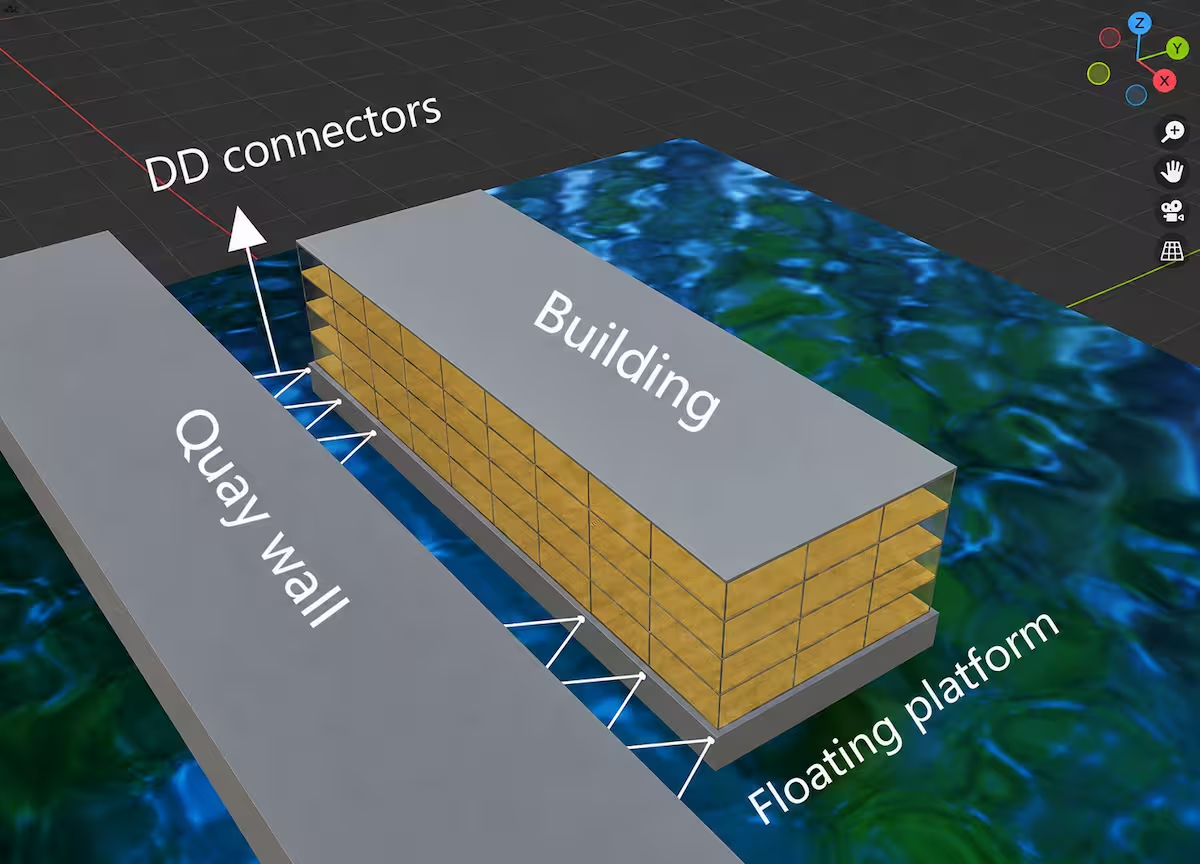
The study was commissioned to evaluate whether DualDocker’s connector technology could offer advantages over conventional mooring solutions used in floating developments and marinas, and was conducted using Blue21's HydroMEC+ simulation platform.
Blue21 modelled a large floating building connected to a quay wall - a 60x20x12m superstructure on a 60x20x6m pontoon, weighing roughly 4,000 tonnes - and tested it under realistic maritime conditions representative of Dokhaven in Rotterdam, including waves up to 0.4m, currents of 1 m/s, ship-generated waves and wind gusts of 40 m/s.
Three systems were compared: DualDocker's high-damping connectors, a rigid quay connection and a pile-guided mooring system typical of marinas. The quay-connected configurations both used 11 connection points of equal load capacity, differing only in stiffness, allowable displacement and damping - isolating those variables for direct comparison.
The results showed that DualDocker's controlled high-damping connectors shifted the structure's dynamic response away from the frequencies most excited by waves, wind and other loads, reducing resonance and improving stability. This translated into measurably lower horizontal accelerations at deck level and at the top of the building than either the rigid or pile-guided alternatives, directly improving motion control, comfort and safety.
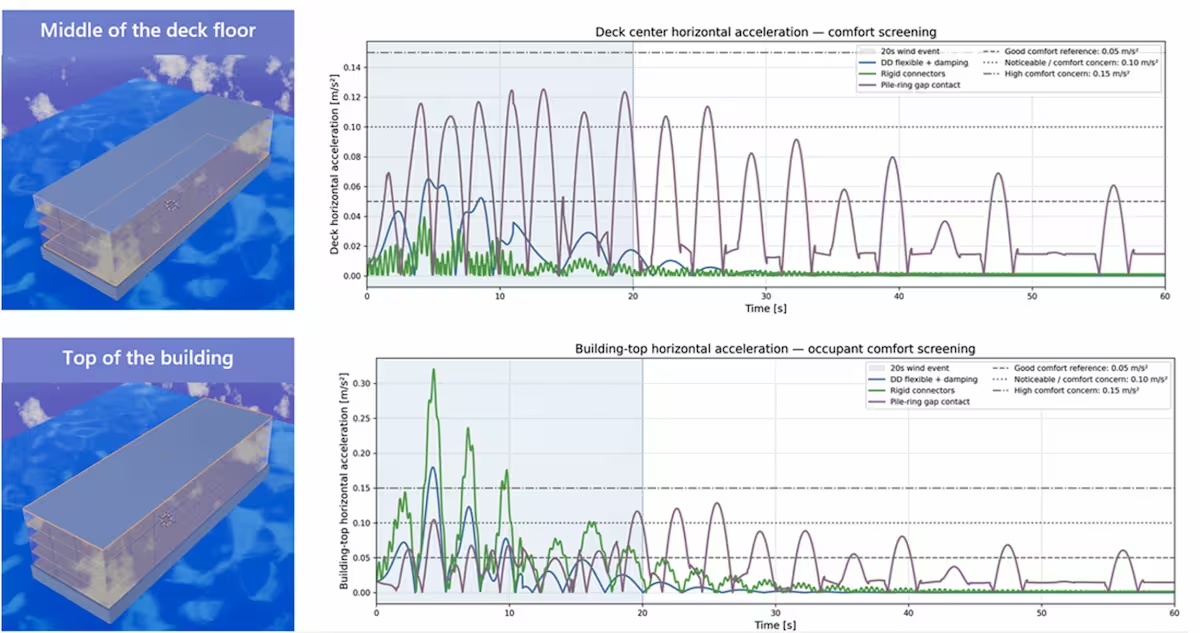
In a report shared with Marina World, Blue21 wrote that the occupant comfort assessment “further demonstrated that connection-system behaviour has a direct influence on acceleration levels throughout the structure”.
“Compared with conventional rigid and pile-guided solutions, the DualDocker concept achieved lower acceleration levels in critical areas of the building, contributing to improved comfort, operational performance and overall safety.”
CEO of DualDocker, Michael Fuhrmann, celebrated the study, highlighting that their connectors absorb “enormous” kinetic energy from wind and waves, meaning “comfort and significantly higher safety for floating pontoons and jetties, yachts and, of course, superyachts too”.
DualDocker is an Austrian company that develops high-damping connector technology for floating structures as an alternative to conventional mooring systems in marinas and floating developments, with a focus on improving motion control, safety and comfort.
Blue21 is a Delft-based engineering firm specialising in floating urban development. Its HydroMEC+ platform combines hydrodynamic modelling, mooring analysis and dynamic response assessment to evaluate floating structures under real-world conditions, helping validate new technologies before being deployed.


.avif)
.avif)


