This article was also published in issue 152 of Marina World magazine. Click here to read the online version.
With enthusiastic governmental backing, Albania is planning a network of marinas along its coastline to revitalise its seaside cities and attract a highly lucrative tourist demographic. New marinas in the cities of Vlora and Durres are leading the charge.
Not even 40 years ago, Albania was one of the most isolated countries in the world. Trapped in a brutal communist regime led by Enver Hoxha, Albanians could not even travel freely around their own country - let alone travel abroad - and foreign visitors were largely banned. Even as neighbouring socialist Yugoslavia successfully developed and marketed its Croatian and Montenegrin coastlines to international tourists, Albania lagged behind.
When communism in the Balkans collapsed in the early 1990s, Italy, Greece and especially Croatia were already highly popular international tourist destinations with the infrastructure and amenities to match. Albania, however, lacked international investment, suffered from crime and instability, and was generally associated with manifold negative stereotypes.
Oh how times change. Albania has burst onto Europe’s tourist scene in a spectacular fashion with a six-fold boom in visitor numbers since 2014, boasting an astonishing variety of cities, landscapes and experiences in an area smaller than the US state of Maryland. The country has quickly become one of Europe’s trendiest destinations, with 14 million tourists predicted to enjoy its monumental peaks, ancient heritage and stunning coastline in 2025.
But those visiting Albania for its coastline are still largely limited to visiting by land or air rather than sea, unless they happen to take the passenger ferry from Italy. Recreational marine infrastructure is wanting and the country has decided it can no longer afford to miss out on a lucrative and competitive industry. The direction of travel is clear: on the motorways heading to the coast you will see a number of huge billboards advertising Albania’s flagship projects, including Vlora Marina and Durres Yachts & Marina.
“A necessity for Albania”
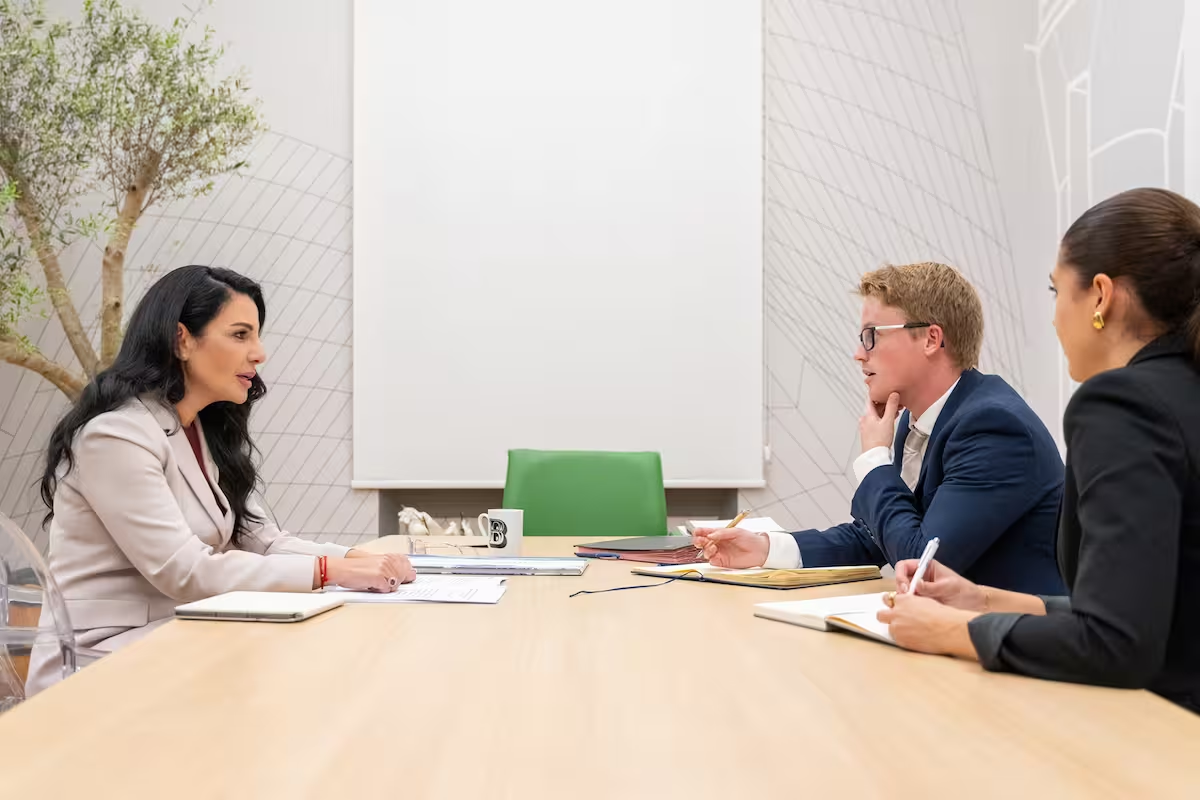
“Albania is finally free to look outwards again and we want to catch up with Europe, not just politically or economically, but also in how we use and protect our coastline,” Albania’s deputy prime minister and minister of Infrastructure and Energy, Belinda Balluku, told Marina World during an interview in Tirana in October 2025.
“But now, if we want to make our coastline accessible to high-end tourism, we need to give people instruments and infrastructure where they can enjoy their environment. Therefore marinas are absolutely a necessity for Albania.”
At the heart of this strategy is relocating dirty and noisy industrial ports deleterious to local life and international tourism away from city centres to new locations. Meanwhile, the old ports’ pre-existing infrastructure will be transformed into the country’s first two full-service, international standard superyacht marinas.
“We’re careful about where and how we build, focusing on areas that already have infrastructure and avoiding sensitive ecosystems,” deputy PM Balluku stressed. “The concept is ‘smart growth’, not overdevelopment.”
Albania’s vision for its maritime infrastructure is not purely economic. Last century’s communist system prevented Albanians from travelling freely around their own territory, including to the seaside, and therefore stifled the emergence of a collective maritime consciousness and culture befitting a country with 450km of coastline. To reverse this, Albania is taking inspiration from another small Mediterranean country that is famous for its world-class marina and the surrounding ecosystem.
“Monaco has built a full life cycle and culture around marinas, starting from young people and education. We admire how Monaco integrates marinas with urban life, creating spaces that serve both residents and visitors, while maintaining high environmental standards,” said deputy PM Balluku.
Vlora Marina
Recognising a gap in Albania’s maritime infrastructure and the chance to cement a new standard of coastal living in the country, the team behind Vlora Marina saw an opportunity to pioneer a new industry.
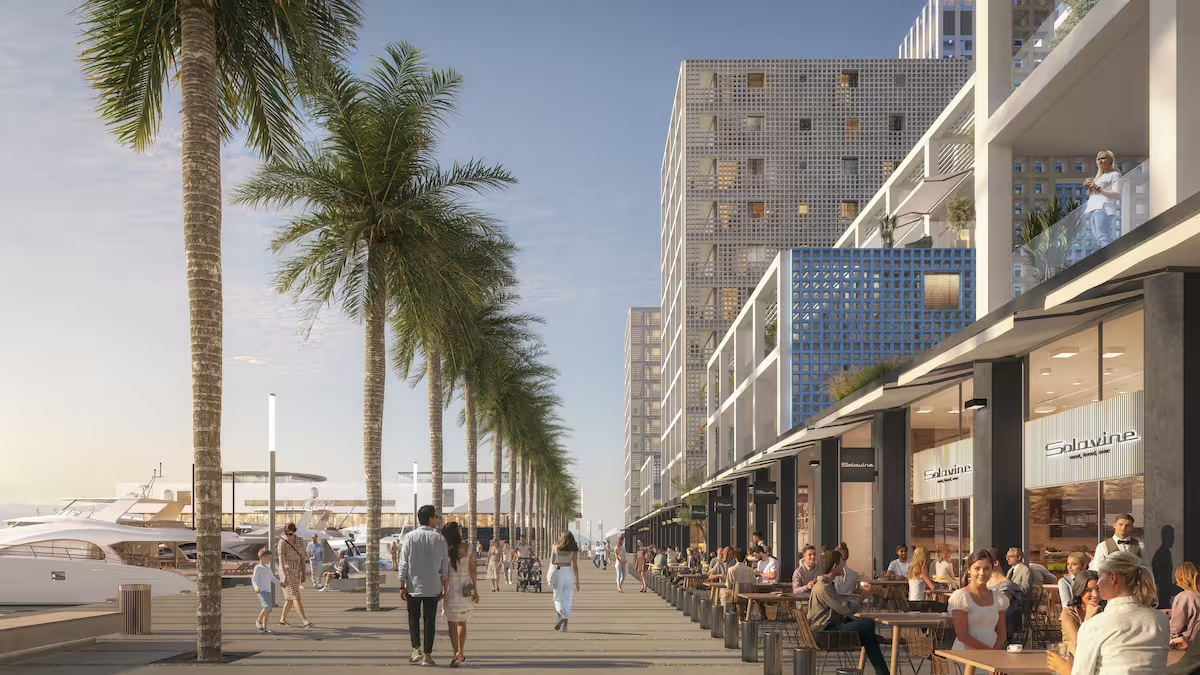
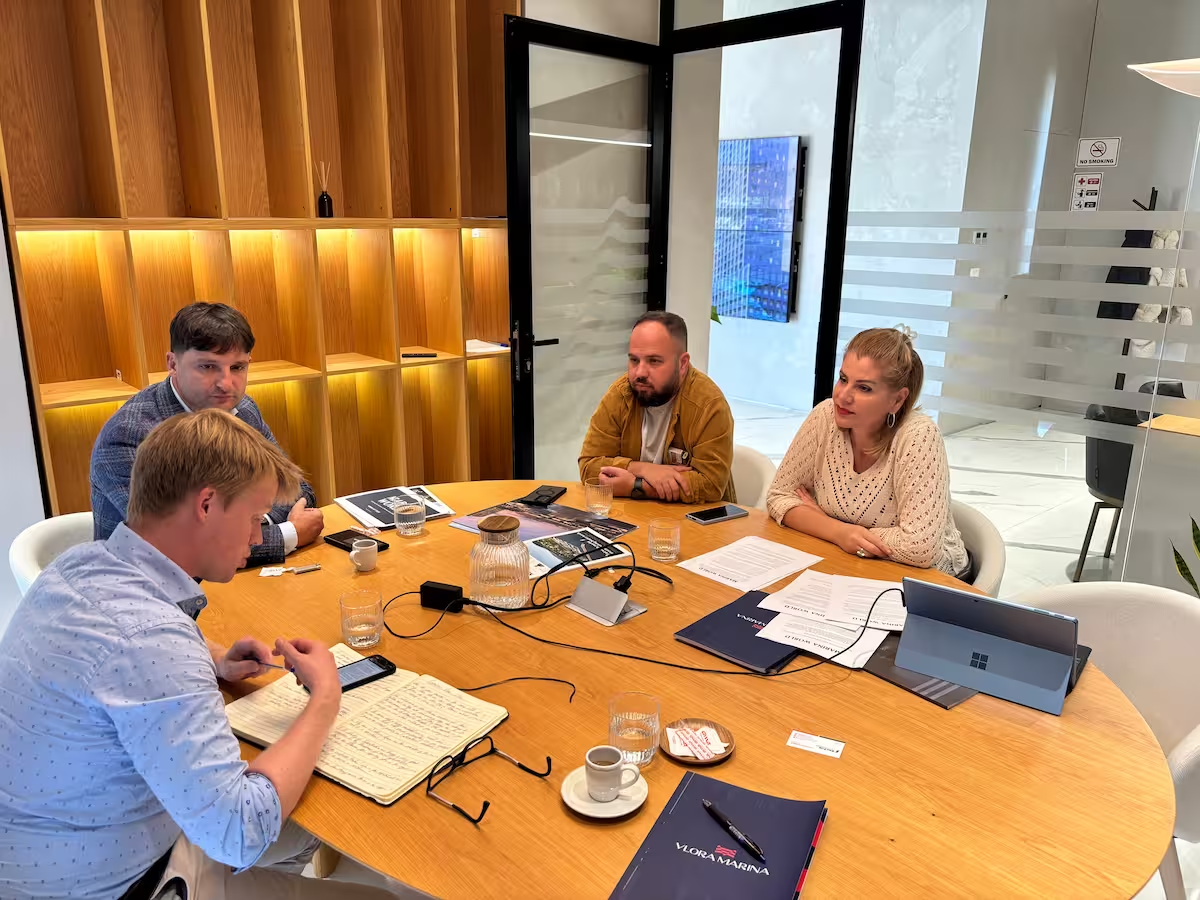
“The vision is for Vlora Marina to become a Mediterranean reference point blending modern design, high-end hospitality and Albanian identity,” said Vanova Strakosha, programme manager of Vlora Marina, during an interview with Marina World at their offices in the city. “It will elevate how the city and country is perceived in the region and internationally.”
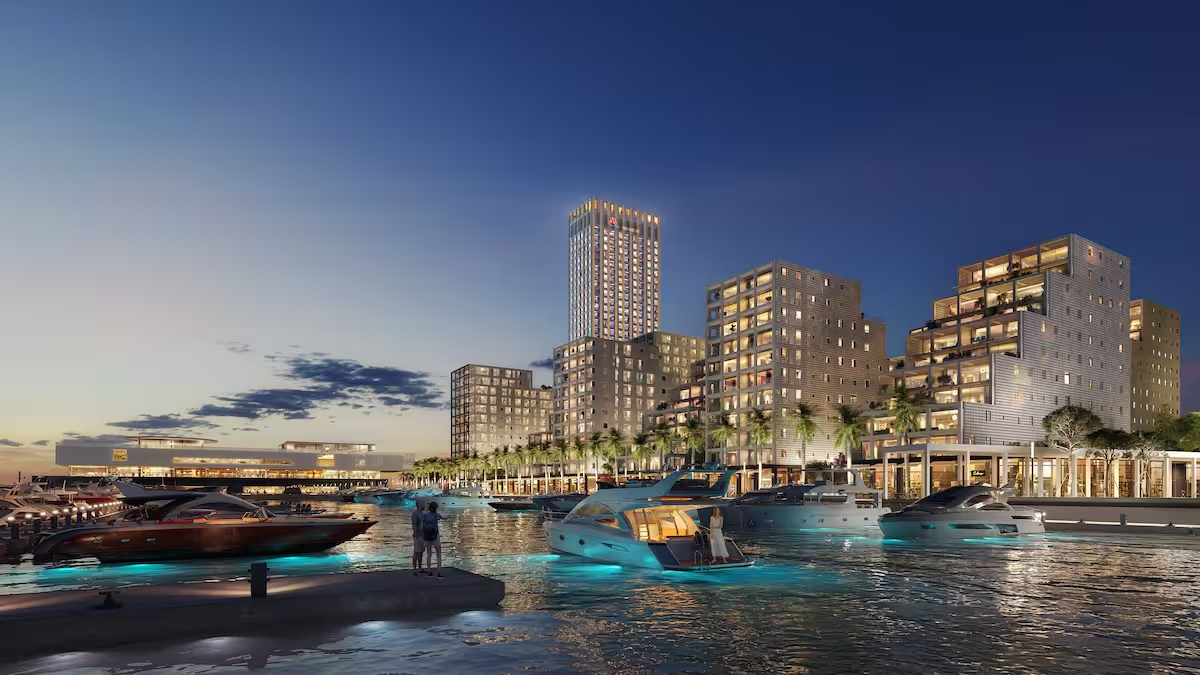
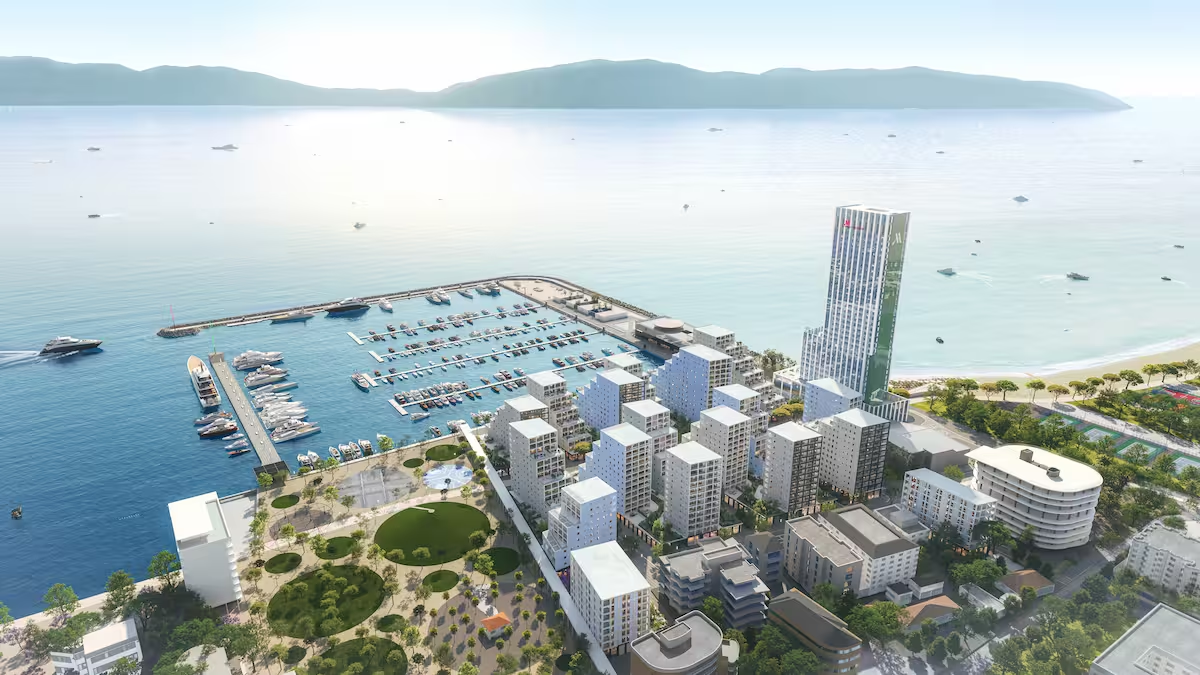
The marina’s location in the wider landscape and the design seen in renderings are as inviting as they are striking. On the border of the Ionian and Adriatic seas in southwestern Albania, Vlora dates back almost 3000 years and is surrounded by the gentle green foothills of the Ceraunian Mountains, capped by 300 days of sunshine per year.
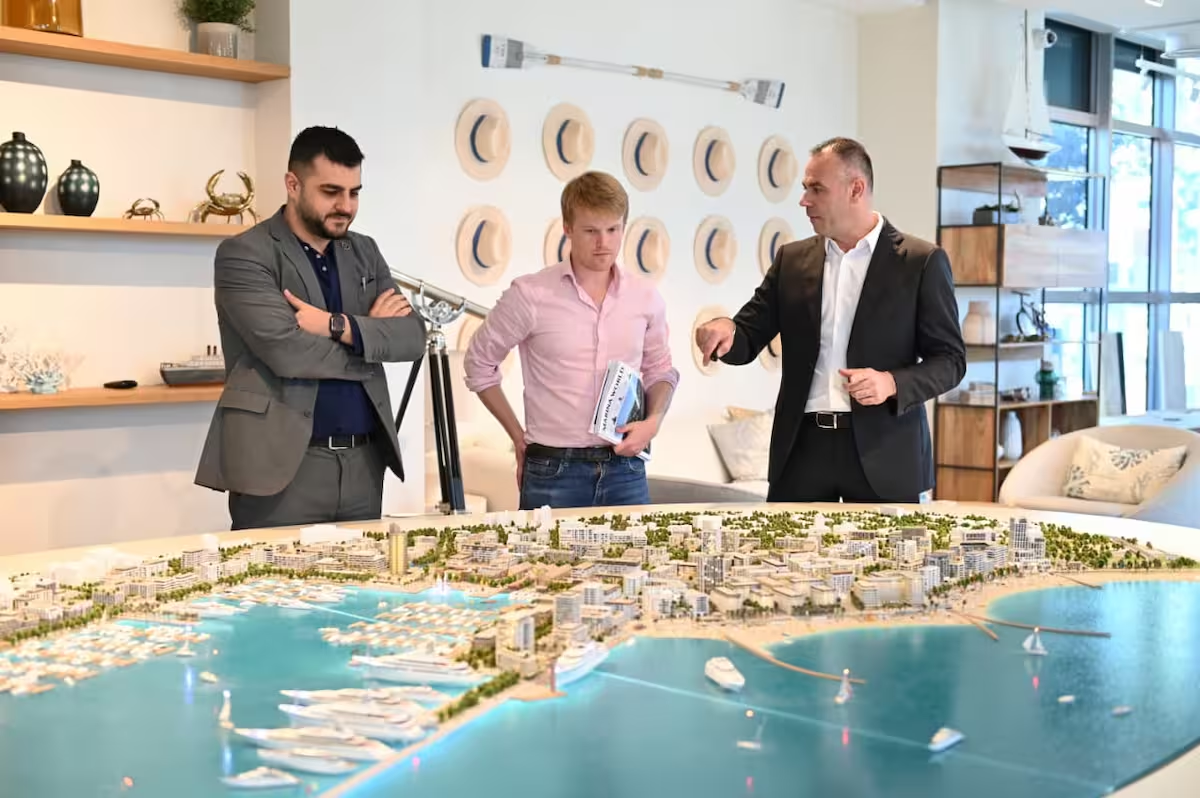
The marina itself has been designed by the British-Turkish company ARTI Proje and is set to be the country’s first development of its kind with over 400 berths for vessels up to 50m. It is expected to be operational by mid-2027.
Meanwhile, the residences emphasise “Mediterranean lifestyle, combining modern comfort with traditional coastal values”, Strakosha added. “Buildings are oriented to maximise views towards the sea and the beautiful green mountains across the bay. This ensures that every residence connects with the natural surroundings.”
“Outdoor public spaces will play a central role reflecting the local tradition of living between indoor and outdoor areas,” said Strakosha, highlighting the inspiration that Albanian culture has had on the design of the marina and waterfront areas. “For example, Albania has the highest density of cafés in the world, this is an important part of our culture. In Albania, we relax with family, socialise with friends, conduct business with colleagues and clients, all in cafés.”
“From the start, our goal has been to set new standards in the Albanian, Adriatic and Ionian regions. We have partnered with top international consultants and designers to ensure that every element - from raw materials to the guest experience - meet world-class marinas’ criteria,” Strakosha added. Indeed, the premium Mediterranean and UAE marina operator D-Marin has thus far supported Vlora Marina with technical expertise and consulting about facilities, locations, pontoon types, offices and other elements such as their fuelling station, and was announced as the marina’s operator in December 2023.
D-Marin’s chief commercial officer, Dean Smith, told Marina World: “We are very interested in the cruising opportunities offered by Albania and having a high-quality facility available to yachtsmen opens the door for all.”
He added: “Working with the project team has been a very positive experience as their focus on quality and building a perfectly integrated residential, leisure and marina facility aligns perfectly with the D-Marin offer.”
Durres Yachts & Marina
The second landmark project on Albania’s coast is gradually taking shape in the city of Durres, whose port has been in continuous operation for almost 3000 years and is the country’s largest. Durres port’s commercial operations will gradually be transitioned to Porto Romano, a few kilometres to the north. Meanwhile, the enormous 44 hectare site will become the Mediterranean’s largest marina by area, boasting multiple hotels with more than 850 rooms, business areas, eight hectares of green or open spaces, up to 700m of beachfront and up to 280 yacht berths. The development will also be complemented by new road and rail links to both Kosovo and North Macedonia, increasing its pull and reach to markets beyond Albania’s coast.
According to an agreement signed between the lead developer of the project, UAE-based Eagle Hills Real Estate Development, and the government of Albania on 30 January 2023, the project has a total value of around €2 billion. The project will unfold in stages with a full development timeline including the yacht marina and additional hotels running to 20 years. Durres Yachts & Marina is 33 percent owned by the Albanian state through the Port of Durres’ Albanian Seaports Development Company, with the remaining 67 percent owned by Eagle Hills.
A document supplied to Marina World by Durres Yachts & Marina promises the “creation of new jobs, preservation of local culture and heritage, strengthening of community bonds, provision of social services, commercialisation of culture and art”, as well as the “revitalisation of art and culture in general”.
The preservation of history is of particular concern in Durres, with a 2000-year-old Roman amphitheatre and other ancient sites within walking distance from the current port. “We want modernisation but not at the cost of our identity,” said deputy PM Balluku.
“In practice, this means every marina project includes cultural and architectural guidelines that reflect the local character. It is important to recognise that people preserve history by giving or creating access to it, and this is what our marinas will do. For example, the future marina of Durres will blend with the historic city’s Roman and Venetian heritage, turning the old port area into a public waterfront with cultural and recreational spaces, not a closed enclave.”
Yachting Ecosystem
The projects featured in this article are only two major pillars of Albania’s whole vision as the country is planning a network of smaller marinas along the entire length of its coastline. Other notable marinas include Sarande and Orikum in the south, as well as Shengjin in the north. Most notably, the Ministry of Infrastructure and Energy has partnered with Luca Dini Design & Architecture to explore the development of a national maritime strategy in which Albania’s marinas cooperate rather than compete.
“Instead of each marina working alone, they’ll operate as a network, optimising logistics, maintenance and transport connections. This model avoids congestion, spreads demand and protects sensitive areas along the coast,” said deputy PM Balluku about the partnership with Luca Dini. She added that they are also introducing “green marinas” that share resources and infrastructure to reduce carbon footprints.
Indeed, sustainability is a topic that Albania has long taken seriously as it is one of only a handful of countries in the world that generates 100 percent renewable energy. “Sustainability is a non-negotiable principle for us…We’re determined that our marinas reflect the same philosophy,” she added.
Social renewal
It will still be quite some years before Albania truly joins its Adriatic and Ionian neighbours to compete on their level. Vlora Marina will be operational in mid-2027 while Durres will only begin to realise its potential as a luxury marina and waterfront development in the 2040s.
These are long-term investments, however, and the country is clear-eyed about the potential that marinas have to redefine not only Albania’s burgeoning tourist industry but also the country’s relationship with the sea.
“Now, people are reconnecting with the sea to explore another world, a water world,” deputy PM Balluku concluded during her interview. “It is right that we develop a network of marinas not just for the economy, but to create a new way of living throughout generations. Marinas are becoming places of life, leisure and pride. That social renewal might be the most meaningful benefit of all.”