This article was also published in issue 152 of Marina World magazine. Click here to read the online version.
Founder of One Concept Marine, Thomas Aboulinc, speaks to Marina World about their unique Meltem floating platform for renewable energy generation, rainwater harvesting and healthier marine life.
What exactly is the Meltem platform and what makes it so unique?
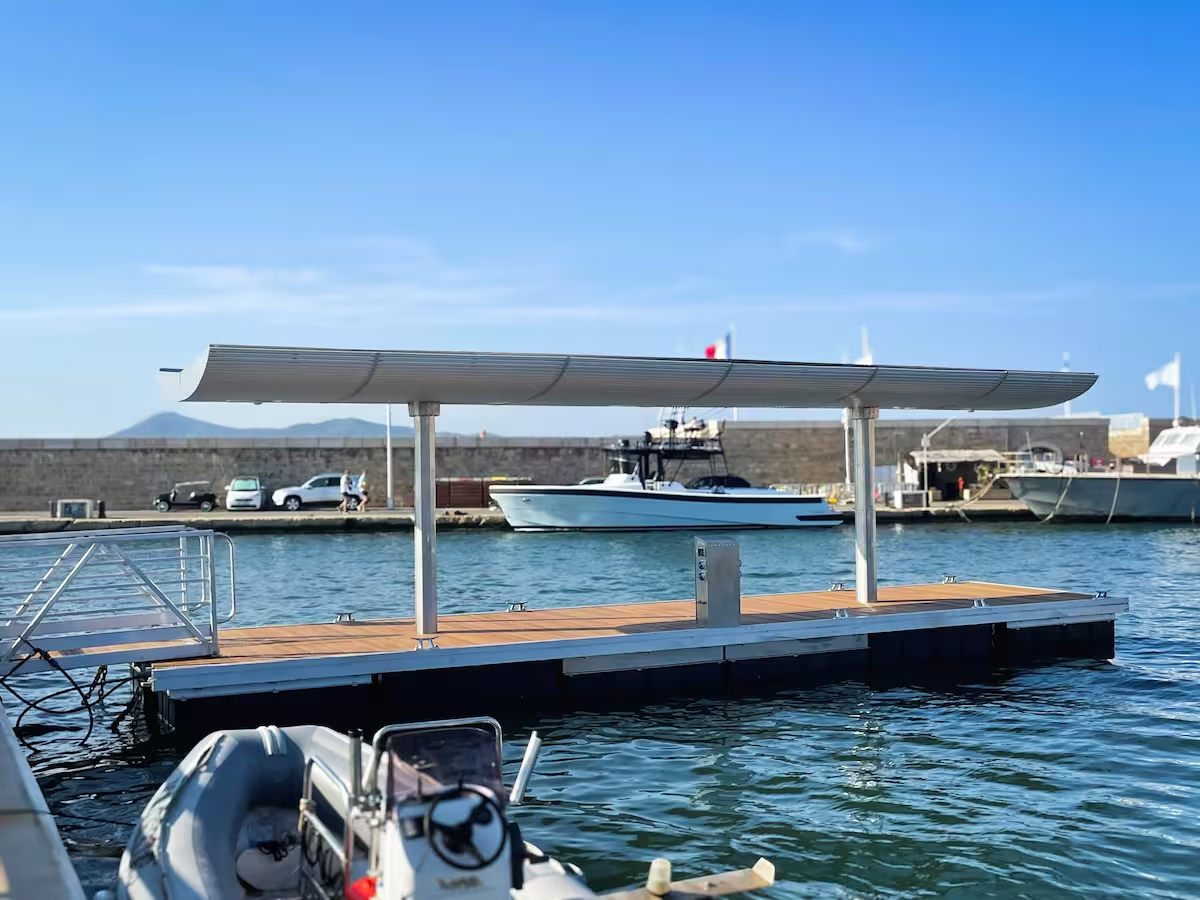
Meltem is a unique floating infrastructure unit that transforms standard floating docks into a useful environmental and operational asset. Equipped with a solar canopy, it generates renewable electricity directly in the marina. Its integrated reservoir collects and filters rainwater for rinsing boats, and an artificial reef under the platform promotes marine life in areas that are often heavily artificial. The idea is simple: use the inert space already available in marinas to initiate a sustainable transition. One unit typically produces around 8,800kWh per year, equivalent to powering ten boats for a season or driving an electric car for nearly 50,000km.
Meltem was designed as a reliable, robust and low-maintenance platform capable of withstanding marine and tropical environments. The first unit has been in operation in Saint-Tropez since 2024 and provides on-site data on energy production, water savings and environmental benefits. It demonstrates that a marina can increase its resilience, reduce operating costs and improve the quality of services offered to boaters while directly contributing to environmental goals.

How did the idea for the Meltem platform come about? What was your inspiration?
Meltem was born from a mix of observation, engineering curiosity and a small anecdote. During my studies, I spent a weekend sailing with fellow interns and we waited a long time on a pontoon before boarding. Standing there, I realised how much unused potential there is on these floating structures. Ports face increasing stresses such as limited water resources, rising electricity prices and loss of biodiversity. Yet the infrastructure already in place could help address them.
That moment led us to imagine the pontoon not as a passive walkway but as an active platform that generates resources. Discussions with port managers confirmed the need for something practical, modular and economically viable. Our vision at One Concept Marine is that sustainability must be useful, measurable and compatible with the economic reality of a marina. That philosophy guided three years of research and development, during which engineers and designers worked together to make the concept robust, modular and visually integrated into port landscapes.
Meltem is not an abstract invention. It is the result of field observations, ongoing dialogue with ports and a shared desire to make environmental transition tangible, operational and aligned with the future of marinas.
With which partners do you work for the solar panels, rainwater harvesting and artificial reef? Why particularly these partners?
Meltem is built with the support of specialised European partners: the last French manufacturer of photovoltaic panels, Voltec Solar, chosen for their quality and low-impact manufacturing; Atlantic Marine for aluminum; and MSI, which is part of the SF Marina Group, for the concrete pontoons. For biodiversity, we collaborate with Ecocean, recognised for its expertise in delivering operational ecological restoration solutions within port environments.
We chose these companies because they offer proven expertise, durable materials and industrial capacity. Working with partners that operate internationally also ensures that Meltem can be deployed reliably in different regions. Their technical expertise aligns with our philosophy: robust solutions, short supply chains and environmental performance that is both measurable and meaningful.
How can the Meltem platform benefit marina managers?
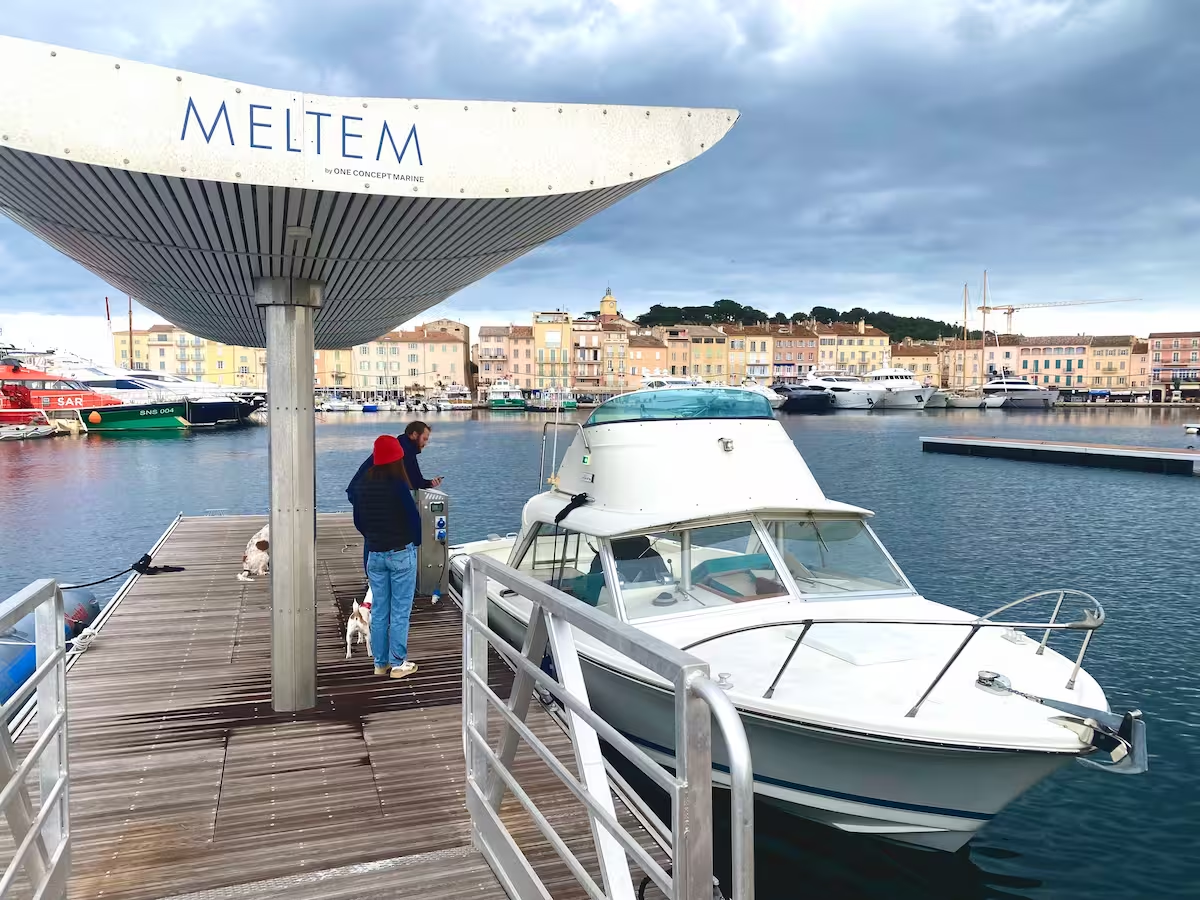
For marina managers, Meltem offers a practical way to reduce operational pressures while preparing their port for future challenges. The platform generates its own renewable electricity to be independent and resilient against energy price volatility. By collecting and filtering rainwater, it reduces the use of potable water in day-to-day operations, an advantage in regions facing growing water restrictions. Its design brings added value to marinas, contributing to environmental objectives while making better use of existing infrastructure. As an all-in-one solution, Meltem is also more economical than developing separate projects for energy, water and environmental improvements.
Meltem is also an effective management tool. Its integrated monitoring provides useful insights into resource use and supports clear communication with local authorities, investors and users. Designed to be robust and easy to maintain, the platform requires no heavy infrastructure and blends naturally into the marina. For ports seeking to improve service quality, control long-term costs and demonstrate visible progress on sustainability, Meltem offers a straightforward and operational solution.
In terms of financial figures, the return on investment of a Meltem installation can be achieved in three to five years for a port that chooses to resell its energy to users. The lifespan of the solar installation is 25-30 years, which means that a port can generate new revenue in its business model.
Can the Meltem platform be adapted to different types of marine environments other than marinas?
Meltem is designed to be modular and adaptable. Its dimensions, equipment and anchoring systems can be adjusted to fit different environments, including coastal marinas, inland waterways, lakes or nautical bases. Custom configurations can be developed when specific shapes or functionalities are required, and a reinforced version can be designed for tropical regions exposed to cyclones.
Beyond marinas, the platform is well suited to river ports, lake facilities or areas with limited infrastructure where autonomy in energy and water is essential. Off-grid configurations can be deployed for isolated islands or locations with restricted access to utilities.
Technically, the photovoltaic capacity, water storage volume and structural geometry can all be adapted. Depending on local conditions, the platform can be built using aluminum or concrete floats. Its modularity makes Meltem export-ready and compatible with different regulatory and environmental contexts. We also offer shore-based solar canopies in kit form for clients seeking similar benefits on land.
.avif)
What have been the biggest milestones in the development of the Meltem platform? Who are your most notable clients?
Meltem emerged from three years of research and development focused on developing a reliable, modular and operationally useful platform for ports. In 2024, the first unit was deployed in Saint-Tropez, a site known for its environmental sensitivity and technically demanding conditions. The platform has been operating ever since, providing real-world data and insights that now drive our industrialisation efforts. Building on this experience, we are developing new products as well as tailored configurations for different types of marinas.
Our first client was indeed the Port of Saint-Tropez, and we are now advancing projects in Monaco and in inland and maritime ports across France. Interest is growing internationally as ports worldwide look for practical solutions to challenges linked to energy, water management and sustainable transition.
Thus far you have only sold inside France, what plans and ambitions do you have for future expansion?
Even though our first clients are in France, the Meltem platform is export-ready. Many ports face the same pressures on energy, water and sustainability. At the moment we are focusing on the Mediterranean and island regions. Meltem’s modular design allows us to adapt to local conditions, including off-grid or cyclonic configurations, and our industrial partners already operate internationally. Several discussions are underway with ports outside France, marking the first steps of our international expansion.

.avif)