MARPOL, the International Convention for the Prevention of Pollution from Ships, has applied to all vessels – commercial and recreational – for more than five decades. Yet across the global leisure marine sector, awareness and practical application of MARPOL obligations remain inconsistent, creating a growing compliance gap that is beginning to attract increased regulatory, insurance and environmental scrutiny.
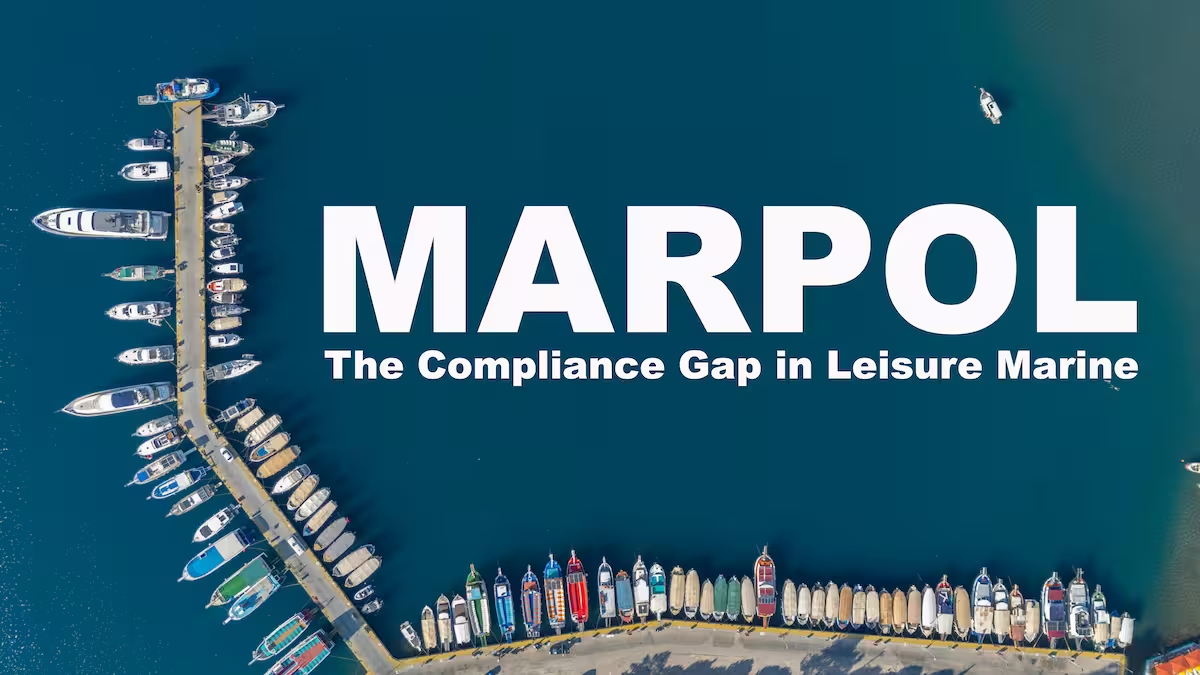
Historically, MARPOL enforcement has focused on large commercial vessels and high-profile pollution incidents. Recreational boating has often been viewed as peripheral to the convention’s impact. That assumption is now being challenged as attention shifts towards the cumulative environmental effect of routine operational activity taking place in marinas, harbours and boatyards worldwide.
MARPOL Annex V, which governs the discharge of garbage and substances harmful to the marine environment, is particularly relevant in this context. Within marina environments, Annex V is most commonly engaged through everyday activities such as vessel washing, maintenance operations, yard work and the discharge of bilge, grey or black water. These activities are routine, widely accepted and rarely perceived as regulatory risks, yet they can result in chemical and detergent residues entering marina waters on a daily basis.
When we consider that commercial maritime vessels account for around 0.3 percent of the world’s fleet and are tightly regulated and monitored for compliance with MARPOL, it is striking to realise that recreational vessels – which make up an estimated 99.7 percent of boats on the water – have little to no awareness of their obligations under MARPOL. This is clearly evident when we see berth holders routinely washing their boats with harmful chemicals in marinas and boatyards every day, all around the world.
A further complication is that many products marketed for “marine use” are not necessarily non-harmful when discharged into the sea. Similarly, treated bilge or grey water is often assumed to be compliant, despite the potential presence of chemical residues introduced during normal operation. Under MARPOL, compliance is determined by outcome rather than intent, a distinction that is not always well understood at operational level.
The role of marinas and harbour authorities is therefore coming under greater focus. While MARPOL obligations ultimately sit with the vessel, marina operators occupy a critical position at the interface between regulation and behaviour. Increasingly, insurers and regulators are not asking marinas to police individual actions, but to demonstrate reasonable and proportionate steps to inform users, set clear expectations and manage environmental risk.
As sustainability expectations evolve and liability frameworks tighten, MARPOL is being re-examined not as a distant shipping regulation, but as a practical operational framework for the leisure sector. Clear guidance, consistent communication and evidence of good practice are becoming central to managing environmental risk and demonstrating due diligence.
MARPOL may not be new, but its relevance to recreational boating is being redefined. For marinas and harbour operators globally, closing the compliance gap is fast becoming an operational and reputational priority rather than a theoretical regulatory concern.

.avif)