This article was also published in issue 155 of Marina World magazine. Click here to read the online version.
Many a word has rightfully been written about the hundreds of world-class marinas spread along the northern Mediterranean. However, what is sometimes forgotten is that the Med has a southern shore, one that is less popular for tourists of all types but no less exciting a destination.
Despite being less popular than its European neighbours, Morocco still draws millions of visitors every year thanks to its eclectic mix of vibrant cities, mountain towns and desert landscapes. An abundance of cheap flights to nearby markets, a generous visa policy and last year’s Africa Cup of Nations football tournament have helped propel it to being the most visited country in the whole of Africa, beating other behemoths like Egypt and South Africa.
According to Business Insider Africa, Morocco welcomed a record 19.8 million tourists in 2025, in part aided by last year’s Africa Cup of Nations football tournament. For comparison, Croatia, the undisputed leader in Adriatic tourism, welcomed only two million more tourists than Morocco in 2025, with 21.8 million arrivals.
Where Morocco falls short in comparison to the likes of Croatia is in its ability to attract maritime tourists. Yes, many may make a short ferry trip from Spain to Tangier to plant their footprints on African soil before heading back to Europe, but by far the most popular method of entry is by plane.
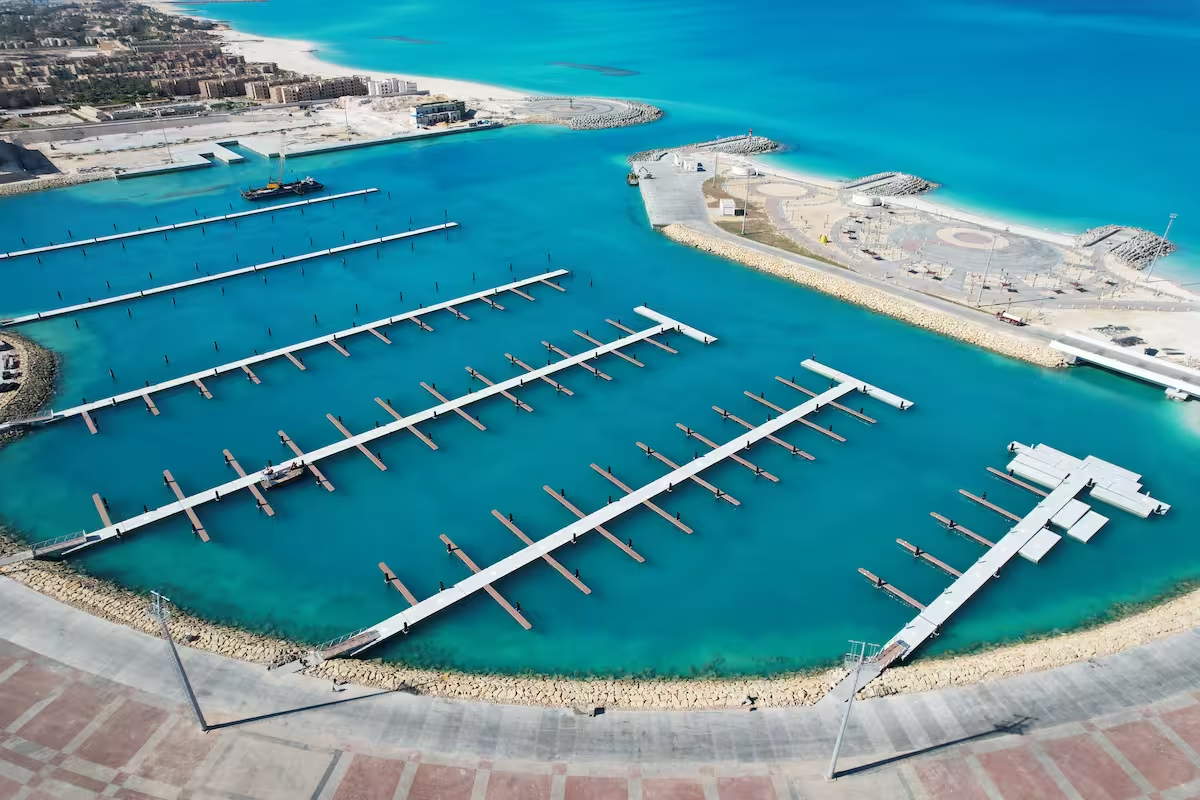
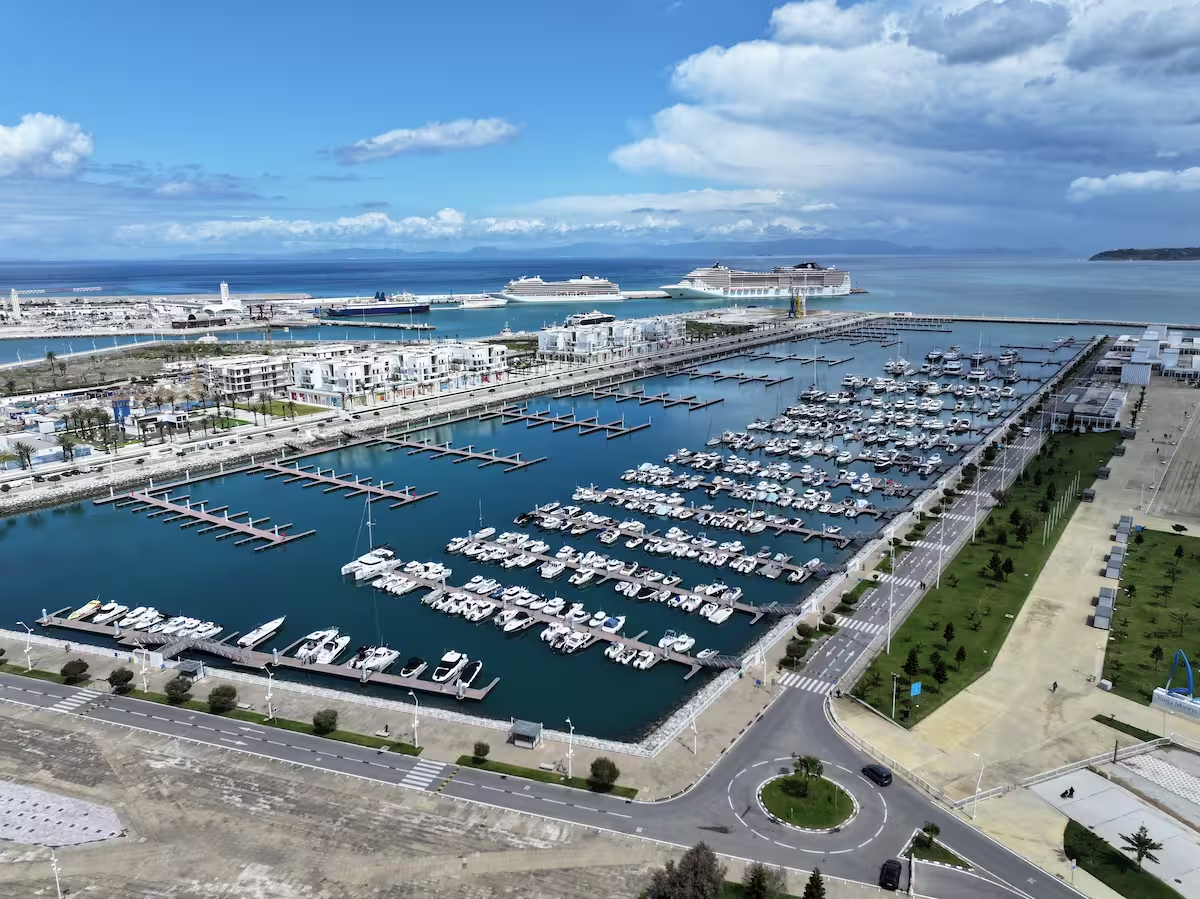
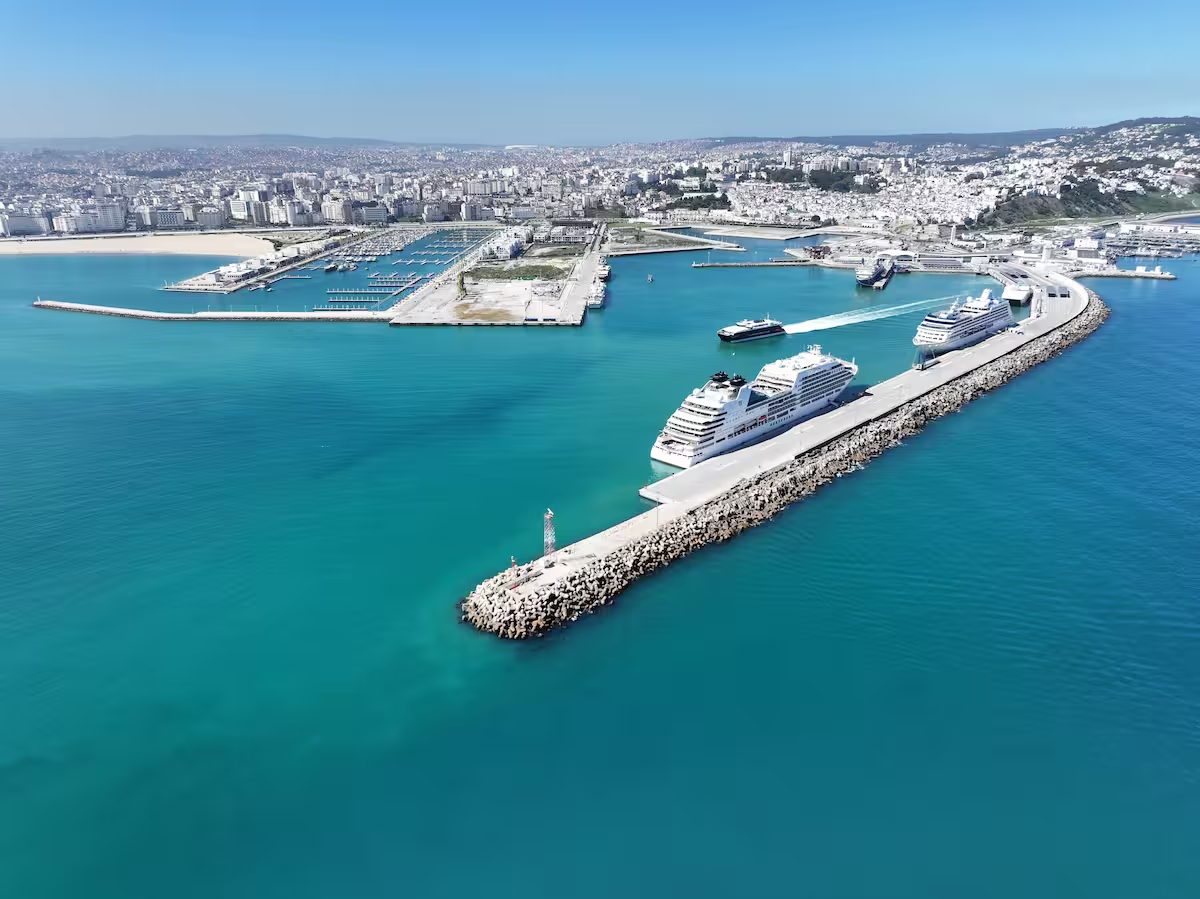
Yet it is the city of Tangier, located on Morocco’s northern edge, that is leading the way in turning the country into a more viable destination for maritime tourists and recreational boaters. Part of a wider waterfront redevelopment project, the city’s new Tanja Marina Bay International hosts some 1,400 berths across two separate basins, making it one of the largest marinas in the Mediterranean.
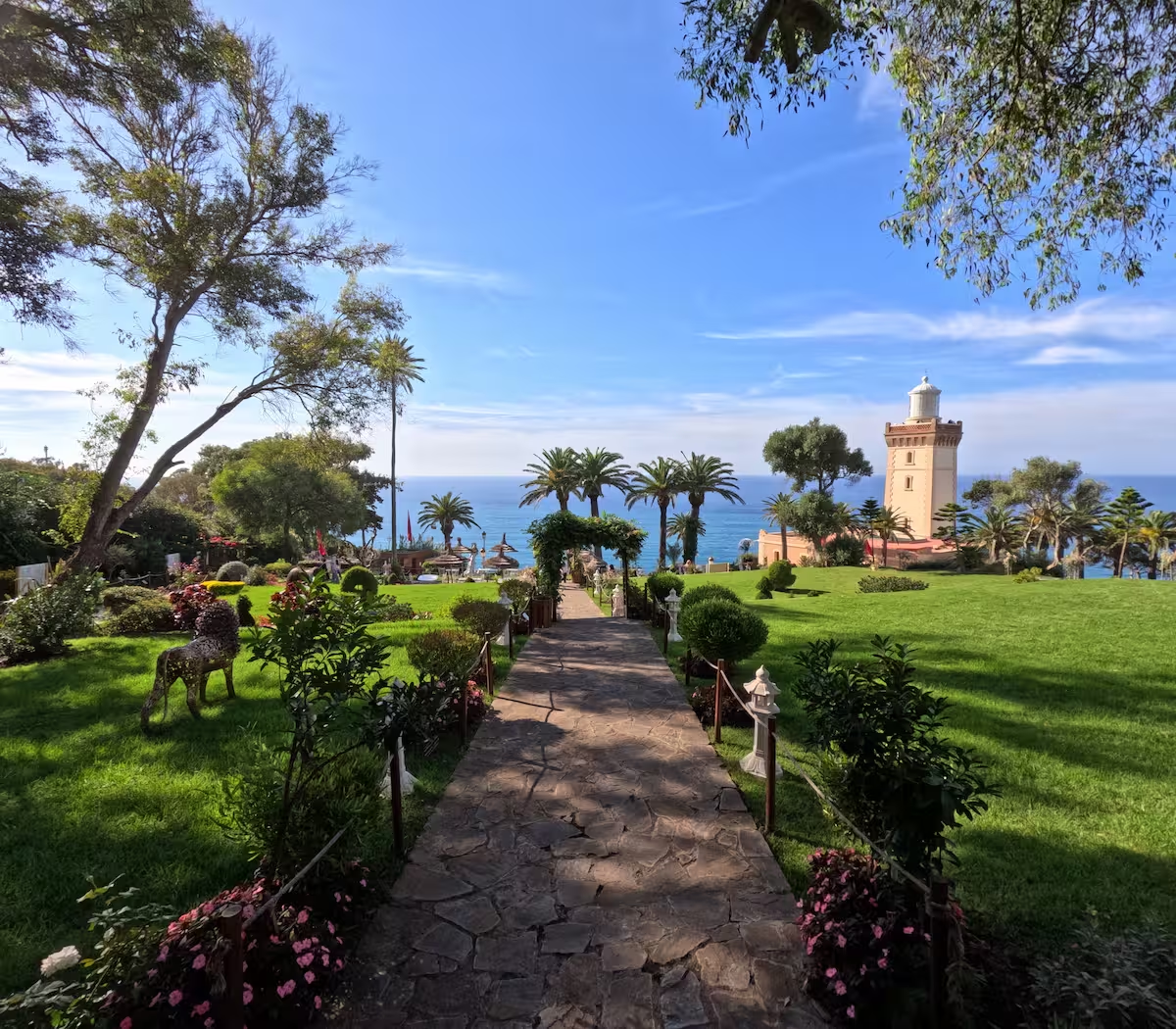
For the avoidance of any doubt, the would-be border between the Med and the Atlantic is marked by a sign around 10 kilometres west of Tangier at the stunningly beautiful Cape Spartel, a short walk away from the iconic lighthouse and Hespérides Garden.
Transforming the port
The redevelopment of the area from a largely obsolete industrial port into a hybrid urban waterfront started with the establishment of the Development Company for the Reconversion of Tangier City Port Area, otherwise known by its French acronym, SAPT, in March 2010.
Later in 2012, SAPT and the Moroccan National Ports Agency created a joint subsidiary called the Tangier City Port Management Company, or SGPTV, to build and develop all the infrastructure required for cruising, yachting and ferry activities in the port area, and to manage their operations and related facilities under a concession agreement.
“There are three strategic pillars for the redevelopment of the Tangier port area,” said Mohamed Ouanaya, chief executive officer of SGPTV. “The first is to reposition Tangier as a premium Mediterranean maritime destination, particularly for cruises and yachting. The second is to reconcile the city with its waterfront by removing the physical and functional barriers created by the old industrial port. Finally, the third objective is to create an economic hub that generates territorial value by replacing logistics with high-impact local services.”
Interestingly, this idea to relocate dirty and noisy industrial ports away from city centres to make way for urban redevelopments is a topic that we have recently covered elsewhere in Marina World. In Albania, large commercial ports have been or are being moved to new locations away from the centres of Vlora and Durrës to make space for leisure marinas and urban waterfront complexes.
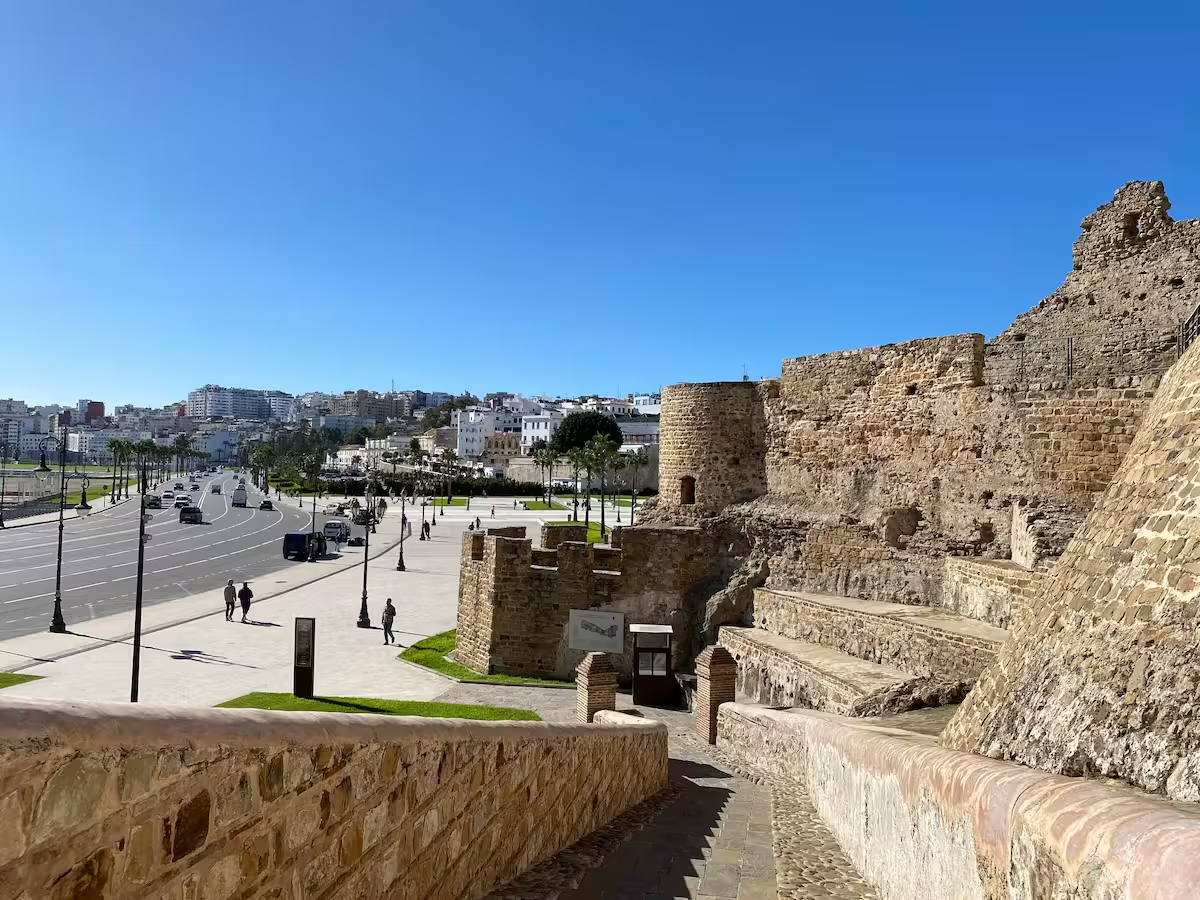
In Tangier’s case, commercial shipping was gradually transferred out of the city centre from 2008, with the Port de Tanger Ville being officially closed to commercial shipping by ministerial order on 15 December 2010. What is now the biggest basin in the marina used to be occupied by fishing boats, which were moved to a new location on the other side of Tangier ferry terminal, a few hundred metres away.
The marina is not only a maritime gateway to the Mediterranean and the north of the country. Bucking the trend of generally poor to non-existent public transport among many African countries, Morocco has since 2018 boasted the continent’s only high-speed railway, linking Tangier to the country’s capital city, Rabat, as well as to its biggest city, Casablanca. Other high-speed rail connections even further south to Marrakesh and Agadir are also either being constructed or are in the planning phase. Indeed, one can only seriously label a marina a “gateway” to a country if there is the road or rail infrastructure that links the gate to final destinations further away.
Metalu and Rolec
Metalu, the French manufacturer of aluminium structures for ports and marinas, have supplied all the pontoons to Tanja Marina Bay International in Tangier since the start of construction, as well as to marinas in Rabat, Casablanca, and Bizerte in Tunisia, thereby making them a leading supplier of pontoons to marinas in North Africa.
“The first time I was in Morocco was around 15 years ago, but then I didn’t visit for 10 years,” Metalu’s Guillaume Jacquot told me. “When I visited again it was incredible to see how much the country had evolved and developed.”
“Metalu has gradually installed all the pontoons and fingers in Tangier, spanning three different phases in 2016, 2019 and then in 2024,” Jacquot said. All the pontoons are floating and installed on piles, and the marina was scheduled to be finished in time for the start of the summer Mediterranean yachting season in 2026.
Not including the 200 cruise ships due to arrive in Tangier in 2026 thanks to the construction of a dedicated dock and immigration and customs facilities, Tanja Marina Bay International can accommodate superyachts up to 90m long all the way down to recreational boats as small as seven metres long. It can fuel yachts up to a capacity of 200m3, recover bilge water, offers winter storage and maintenance, and has a one-hectare shipyard.
The British company Rolec has supplied Quantum power pedestals to the marina as far back as 2016, with second and third phases being supplied in 2025 and 2026, according to Rolec’s Kate Broom.
“In total, we’ve supplied over 300 bespoke pedestals across the different phases, with socket configurations ranging from 16A right up to 400A,” she added. “We also manufactured custom Megamaster units for the superyacht berths, supplied with powder-coating to match the Quantum aluminium finish.”
“It’s been a fantastic project to be involved in and I’ve been fortunate to meet several of the key people involved over the years,” Broom added.
Beyond the docks and pedestals, leisure facilities such as cafés, restaurants and shops, as well as real estate, have been constructed on the marina peninsula that divides the site into its two basins. The marina also hosts the famous Tangier Royal Yacht Club, the oldest yacht club in Morocco and founded in 1925.
“For a project of such complexity, we prioritise partnerships with technical leaders capable of providing high value-added equipment, ensuring the longevity of installations in a corrosive marine environment,” said Mohamed Ouanaya of SGPTV. “Our model relies on top-tier suppliers for all port infrastructures to guarantee long-term durability and operational excellence,” hence their choice of Metalu and Rolec.
Port performance and future plans
As a newly integrated development, Tangier is already seeing results across its new passenger port and marina facilities. 2025 saw a record marina occupancy rate of 96 percent and 1.5 million passengers transiting through the city via ferry.
“Cruise companies have also integrated Tangier as a reference stop in the western Mediterranean zone with a 49 percent increase in stops compared to 2024 and a record 200 calls confirmed in 2026,” said Ouanaya. He added that overall performance in 2025 resulted in a total revenue of 202.6 million dirhams ($21.9 million USD), an increase of 23 percent on the previous year that reflected "a solid and well-balanced post-COVID recovery across all segments”.
The vision for Tangier’s marina and waterfront does not stop there, with further projects planned in the coming years to expand connectivity, sustainability initiatives, leisure amenities and real estate, all working towards the 2030 World Cup.
“Additionally, we actively participate in international initiatives such as ‘Plastic Smart Cities’, aiming for plastic discharge elimination by 2030, and are progressing toward ISO 14001 and 50001 certifications for exemplary energy transition in the face of climate challenges,” said Ouanaya.
A cable car linking the port to the old town and the new town is designed to improve mobility around the city while reducing urban carbon emissions, and the Tarifa-Tangier ferry link is also planned to become 100 percent electric with the introduction of two high-speed catamarans connecting Europe and Africa in less than an hour.
“In 10 to 20 years,” Ouanaya concluded, “Tangier City Port will be the nerve centre of a Mediterranean leisure and maritime tourism hub, a model of a sustainable and smart port, and a structuring lever for Morocco's international influence.”