This article was also published in issue 154 of Marina World magazine. Click here to read the online version.
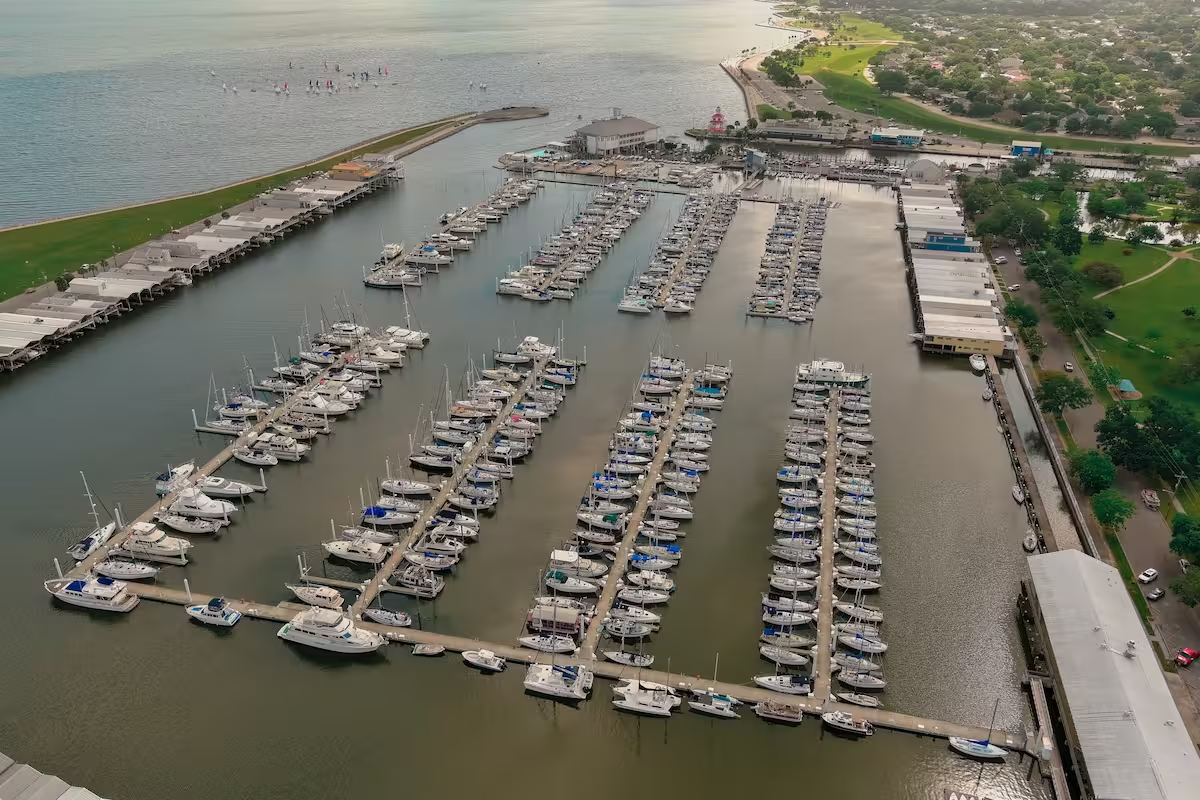
Devastated by Hurricane Katrina, the redevelopment of the New Orleans Municipal Yacht Harbor in Louisiana aimed to rethink the regional approach to marina design in vulnerable areas. After five years in operation and having seen multiple storms, the marina functions as a real-world example of how a well-planned, resilient facility performs under pressure.
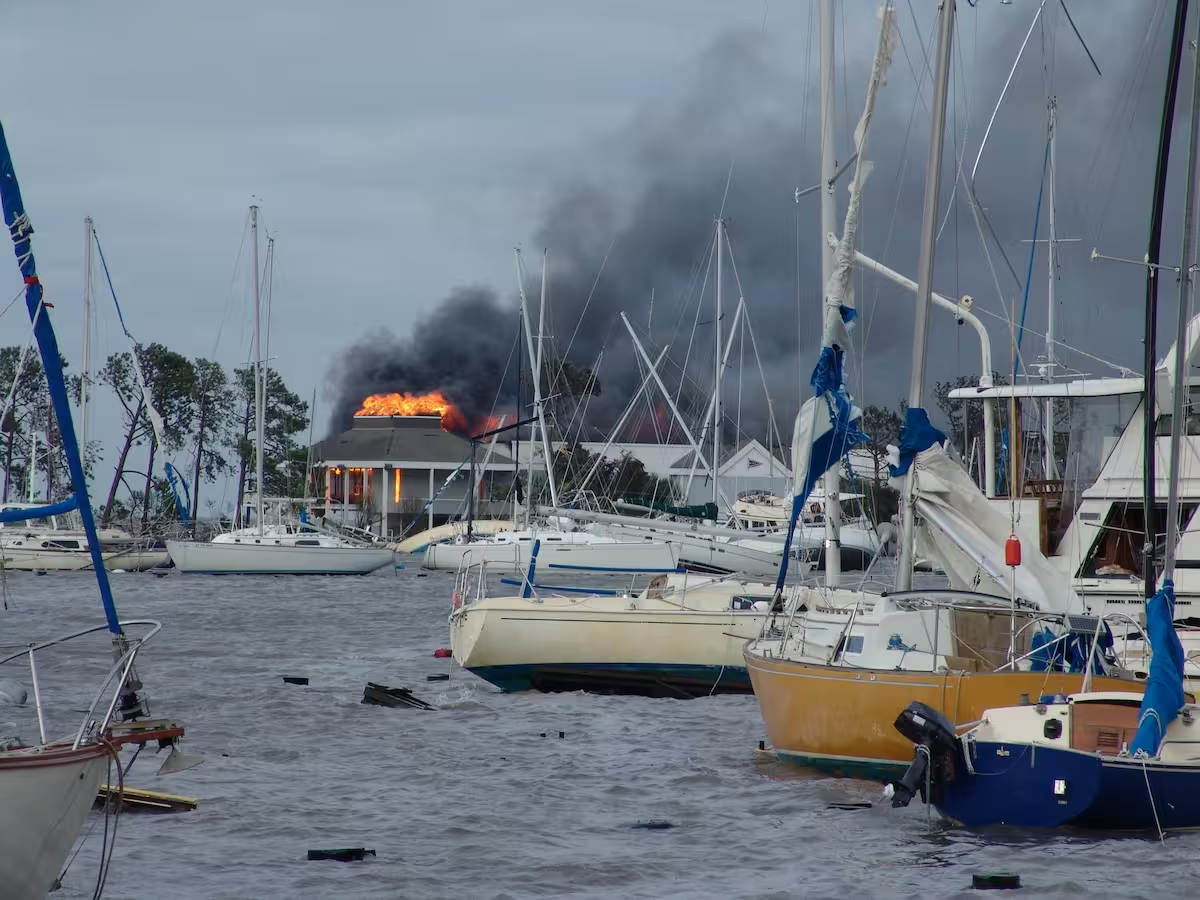
When Hurricane Katrina struck New Orleans in 2005, it fundamentally and permanently transformed the city, devastating neighbourhoods and the lives of those who call the region home. The New Orleans Municipal Yacht Harbor, situated on the south shore of Lake Pontchartrain, experienced storm surge levels of up to 3.5m and wind gusts of up to 38.5 m/s and was heavily damaged, with docks destroyed and the site left largely unusable in the years following the storm.
The city applied for and received federal funding for a redevelopment effort. This presented an opportunity to do more than just restore what had been lost during Katrina and rethink how the marina could be redesigned to function in an environment where stronger, more frequent extreme weather events are becoming the norm. Serving as the prime consultant for the planning and design of the redevelopment, Moffatt & Nichol understood this distinction and the importance of redesigning the marina with resilience as a central concept.
Planning and design strategies
The project team evaluated a wide range of potential extreme events to ensure that the redesign could account for a spectrum of future conditions. One of the project’s most defining design decisions was to replace the existing fixed dock marina with a robust floating dock system in a region where floating structures were not well understood. Unlike fixed docks, which remain static regardless of water levels, floating docks rise and fall with changing water levels. This adaptability reduces the likelihood of structural failure during storm surge or high wind and also allows the system to adjust to long-term changes caused by sea level rise.
Julio Viteri, project manager for the City of New Orleans, describes the scope of the project along with some of the considerations the team made when approaching the design.
“Once we understood the extent of the damage to the fixed docks and utilities, it was clear that rebuilding the marina in-kind was not the best approach. With more than 50 percent of the facility damaged beyond repair, we had an opportunity to step back and rethink the entire vision of the marina as a state-of-the-art redevelopment,” he said.
“Adaptability was a core characteristic that we knew the new facility needed to have, and the concept of a floating dock system became a central component of that direction. The City brought in Moffatt & Nichol as a key contributor to advancing that vision, and their focus on long-term performance helped shape the truly resilient marina that exists today.”
The floating dock system is anchored to the ground by tall guide piles that extend six metres above mean tide. These guide piles were designed to accommodate a wide range of water levels, from normal operating water levels to storm surge from the 100-year return event. The height of the guide piles was calculated to include a combination of factors including dock freeboard, storm surge, wave setup and projected sea level rise. Updated federal standards also played a role, with the design flood elevation set at +5.2m NAVD.
Bellingham Marine Industries was selected by the general contractor, TKTMJ, as the subcontractor responsible for the final design, fabrication and installation of the floating dock system. The system was designed to comply with the performance specifications prepared by Moffatt & Nichol which called for a marina that could survive 58 m/s wind gusts and a still water level of 2.65m. Steve Ryder, manager of product development at Bellingham, speaks on the construction and durability considerations of their floating dock system:
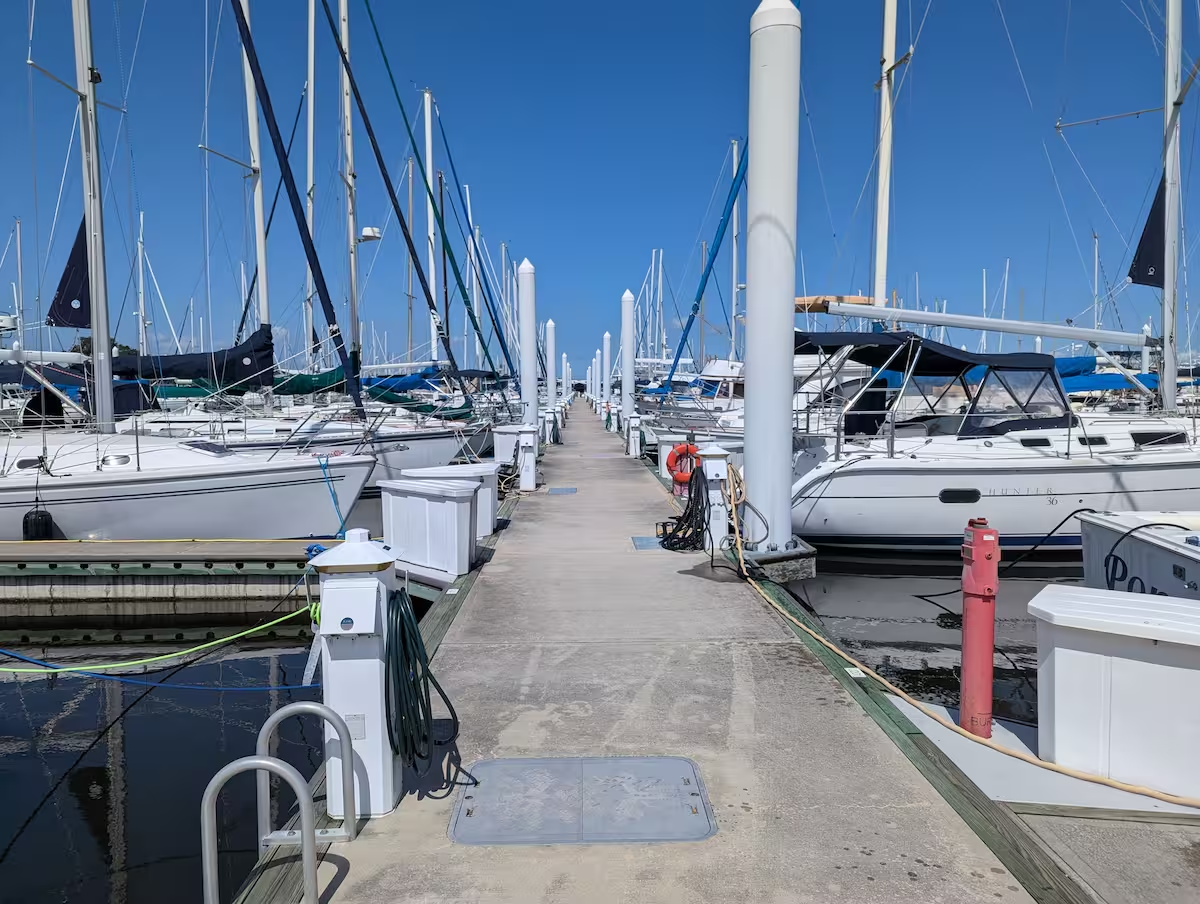
“Bellingham’s Unifloat concrete floating dock system, which uses six-sided precast concrete modules with a structural timber waler system, was selected to meet the design requirements of the contract. Structurally, the system evenly distributes loads through the waler and through-rod system to the steel pipe piles which were driven deep into the soils of the harbour. Heavy duty dock floats were installed around the outer perimeter of the marina to attenuate the waves entering the harbour for the remaining interior docks, providing the protection the marina needed while making the project economically viable.
“Floating docks rise and fall with the water levels, providing safe and consistent access to boats as they are always at the same level no matter the tide or storm event. Unlike fixed docks, where utility work can be submerged during high water events, floating docks have all utility systems run internally, which elevates the utilities above the water level at all times and reduces the cost of maintenance during and after these events. The City of New Orleans has a marina that meets today’s needs as well as the future needs of the facility.”
Material selection and system integration were of equal importance. Materials in the brackish waters of Lake Pontchartrain are moderately susceptible to corrosion, requiring durability and service life considerations to be key aspects of the design. Concrete docks were selected for their mass and durability, while the steel pipe construction of the guide piles offered the high capacity and flexibility needed to accommodate the large horizontal loads. The piles were epoxy coated to further enhance corrosion resistance and extend their lifespan.
Electrical distribution was installed on the second floor of buildings to elevate the equipment above the design flood elevation. Utility disconnects were installed at the entrance of each dock, and dock utilities were installed with flexible piping and conduits under the gangways with enough slack to accommodate the full range of water level fluctuations. An overwater comfort station offering restrooms and shaded gathering space was designed and constructed as a fixed, elevated structure designed to withstand storm surge and remain stable in the event of major storms.
Enhancing the marina’s breakwater further strengthened its ability to withstand extreme weather. Moffatt & Nichol’s coastal analysis identified that the breakwater was frequently overtopped during storms and the waves rolling over the breakwater were a primary driver of damage to the marina’s infrastructure. This led to a separate project to raise and enhance the breakwater to implement a multiple lines of defence strategy where the breakwater improvements work in tandem with the floating docks to improve coastal protection. Rather than relying solely on the success of any one feature, the marina’s performance is the result of multiple systems working together to respond to uncertain conditions in a controlled and predictable way.
Performance five years later
Multiple hurricanes have tested the New Orleans Municipal Yacht Harbor since it opened in 2020, offering a real-world test of its design. Hurricanes Delta and Zeta, category 4 and 3 respectively, struck the marina in October 2020 while the last phase was finishing construction, followed by Hurricane Ida in 2021, a category 4 hurricane, about one year after the new facility was fully operational. Three years later, the marina was struck by Hurricane Francine.
Across these four storm events, the marina endured a maximum storm surge of 1.7m and wind gusts of up to 43.5 m/s, which would have historically submerged the existing fixed docks and overtopped the breakwater. The floating dock systems behaved as intended, rising and falling with water levels and allowing for controlled movement rather than structural strain. In contrast to the prior fixed docks, the new infrastructure has demonstrated an ability to absorb and adapt to changing conditions.
While routine maintenance and minor wear are expected in any marine environment, the marina has remained operational and avoided the kind of widespread damage that disrupts operations and requires significant repair. Instead, it continues to function as intended, supporting tenants and users with minimal downtime after major storm events.
Bryan Whited has been the marina’s executive director since 2021 and has experienced first-hand how the facility has performed under extreme weather conditions.
“Since reopening, the marina has been tested by several major storms, including Hurricanes Zeta and Ida, both of which brought significant storm surge and high wind speeds,” he said. “Despite those conditions, the marina experienced minimal damage. The floating dock system has been a major upgrade for us and has allowed the marina to absorb storm surge and movement that would have overwhelmed the previous fixed dock system.”
.avif)
The marina’s redevelopment reflects a growing focus towards proactive, resilience-driven design. As storm frequency increases and long-term environmental conditions remain uncertain, the adaptability of infrastructure becomes a defining factor in coastal design and engineering. New Orleans was one of many communities impacted by the devastation of Hurricane Katrina, and projects like the New Orleans Municipal Yacht Harbor can set a precedent for how resilient planning and design can deliver long-term benefits for areas affected by extreme weather.
“The marina has performed consistently since the development,” said Whited. “Tenants have responded positively to the upgraded facility, and the day-to-day experience of using the marina has been smooth and reliable. Importantly, the new docks have given us a lot of confidence moving forward. We feel that we’re well positioned to handle future storms in a way that the previous facility simply wasn’t.”
Five years after completion, the New Orleans Municipal Yacht Harbor has moved beyond design intent and into demonstrated performance. Its ability to withstand storm events and adapt to changing conditions offers a model for what resilient marina design can achieve. As a publicly owned, municipal yacht harbor, the project emphasises that resilient infrastructure is something that everyone can benefit from.
In a field where success is often measured over decades, the New Orleans Municipal Yacht Harbor has passed its first tests with flying colours and has set the stage for how marinas in the region can be designed for future extreme weather events.