





This article was also published in issue 154 of Marina World magazine. Click here to read the online version.
As we all know, 70 percent of the Earth’s surface is covered by water and 30 percent is covered by land. The limitations of only building on land, as well its use, overuse and abuse, are obvious. However, humans’ relationship with the sea has not yet been industrialised to the level of real estate and I believe that it is time to start thinking very differently. We can live on the water, we can eat on the water, we can commute through the water, we can work on the water, all while keeping land available for things like agriculture.
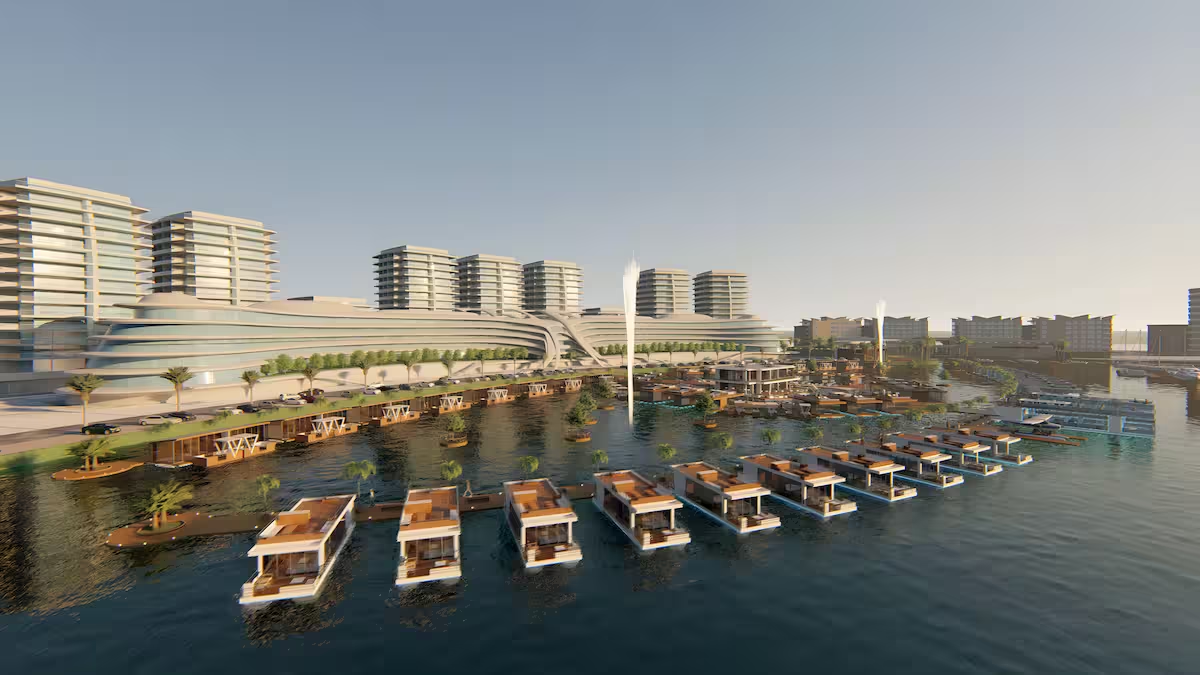
Only half a percent of the planet’s land area is coastal and yet twenty percent of the global population lives there, putting enormous stress on land use, infrastructure, public services and the people that live in these areas. Spreading this concentration out across the water would open up new skylines, architecture and city planning to tap into new opportunities that we are not currently exploiting.
In general, for real estate assessments, waterfront assets are the most expensive assets in any particular country and the first 100m of the landside is the most expensive part of the waterfront because it is the area that is the most visible, accessible and connected to the water. However, the land behind these first 100m tends to be around 30-40 percent cheaper. So this confirms that it is indeed proximity to the water that increases the value of the land.
If the value increases because of the property’s accessibility to the water, then the first kilometre of the water itself - as long as it is sheltered or usable - can also be considered a valuable area that can be used for the development of floating asset classes. In this sense, water has a value but at the moment it doesn’t necessarily have a price.
In my opinion, floating properties create added value, increase quality of life, create a stronger economy and would reduce the concentration of high-value, high-rise properties on the waterfront. Because the land is so expensive, until now the only way to increase value further is to build upwards, but this ultimately blocks your view of the water and land, and harms the overall experience of being by the sea. This is why institutionalising the development of floating properties is the most profitable, sustainable and common-sense approach to guaranteeing waterfront quality of life.
Furthermore, developing floating asset classes will invariably mean the introduction of rules and regulations from government and local authorities, in turn meaning that any such developments are bankable and have an inherent value. Recognising this would be the first step in taking the knowledge and lessons of the marina industry and applying them to floating properties, potentially as standalone developments or indeed as part of a wider marina or waterfront development.
Water as a foundation
Generally speaking, many people are not particularly aware of water’s scientific properties. Many think that it is not strong and it cannot bear large weights. But this is not so. Water can carry enormous structures such as ocean tankers, as well as large platforms made from wood, steel or concrete, provided they have the necessary buoyancy built into them. Floating properties’ wider surface area and low-rise nature mean that they are more suitable for on-water construction than their denser land-based counterparts.
Water can in fact carry greater weights than land itself and this is evidenced by how massive, ocean-going cruise ships are built. Shipyards will tend to build only the first 20-30 percent of the ship on land so that it sits just above the waterline. Then, rather than having extremely expensive and complicated ground foundations, they transfer the vessel to the water to continue construction, which is both easier and stronger. Improving the general understanding of water’s scientific properties as a very strong construction foundation is critical to realising its potential as a host of new, high-quality, accessible living spaces with a minimal environmental impact.
It is also important to ensure that underwater ecosystems receive enough exposure to direct sunlight, which is necessary for healthy marine life. If floating properties are constructed in a configuration that still leaves 30-40 percent of the water’s surface exposed to direct sunlight, you actually create fairly ideal, shaded habitats for sea life without having to install additional structures on the seabed to encourage fish and crustaceans to live there. So, in this sense, floating properties can actually enhance rather than harm marine ecosystems, provided they are constructed and regulated in the right manner.
The problem of land reclamation
Nowadays, all construction companies and architects refer to environmentally friendly or “green” strategies or approaches, but this does not change the fact that land-based construction and land reclamation causes significant environmental damage. The amount of concrete, chemicals, steel or any other such materials used in land reclamation is enormous and it leaves a lasting impact on marine ecosystems. However, building on water without land reclamation or even piling is considerably less harmful and invasive. There is no need to dig massive holes, lay foundations or take anything away from the seabed. You only need strong anchoring systems with a minimum impact, and many of these systems exist today already.
It is also worth emphasising that the demand for living in floating properties is almost certainly there. Many people already seek a waterfront, seaside lifestyle, and yet the prohibitive cost of waterfront property makes this impossible. However, if you were to ask anybody if they would like to live by the water, open their doors, dive in, go for a swim and go out on your boat which is docked right there, with unlimited access to watersports and relaxing on the beach, the answer would be yes.
The price for floating properties need not be premium either. If you institutionalise, democratise them and regulate floating properties, then they could emerge as a very competitive alternative to land-based real estate. In the Middle East, for example, it is important to understand that it was not the desire to live on reclaimed land that drove land reclamation. It was the desire to live by the water. Floating properties give a similar solution that is better on cost effectiveness, sustainability and environmental impact, and, most importantly, it represents an added value to unused open water space that creates a genuine connection with nature rather than damaging it.
One can apply this philosophy to marinas. We know that people are increasingly saying how marinas should adapt their business models to encourage owners down to the marina more often through investing in “lifestyle” facilities. However, boat owners are usually successful, busy people, so they cannot come every day or even every weekend.
In my opinion, in the future, a successful marina will combine four elements. Firstly is its most basic function as a parking lot for boats, second is a hotel, third is hospitality such as restaurants, and fourth is floating assets such as offices, shops or entertainment venues. This mixed-use model will create the vibrant, 24/7 atmosphere that many marinas or waterfront areas are lacking, and what many inner-city districts away from the waterfront do have.
From vision to reality
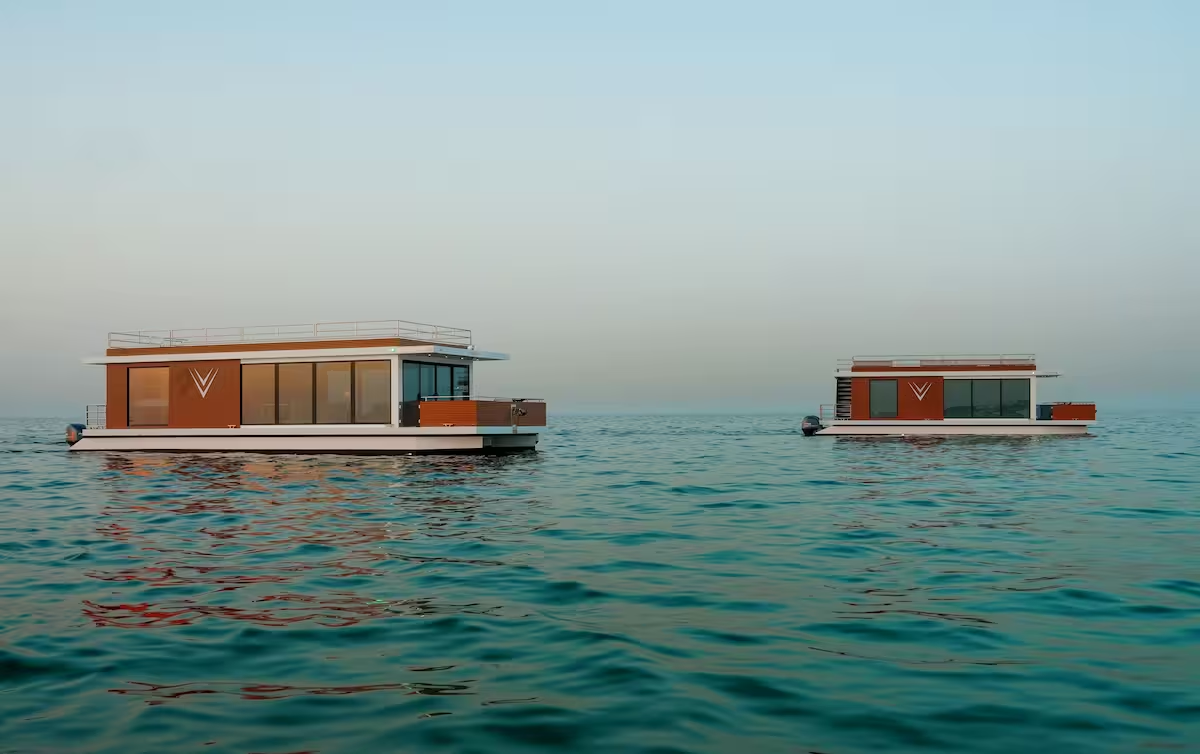
Floating properties have not yet been realised on a large scale, possibly because they have often been seen only as an innovation or a concept without real-world utility. However, it is up to developers, contractors, media and promoters to create those few examples as a proof of concept and a challenger to conventional properties built on land reclamation.
Dubai is a good example of how water can bring value to human population centres. They took existing and commercially valuable land and excavated a canal to connect the two sides of the city and create a new waterfront with new scenery and a new economy. The lesson from Dubai is not that we should be digging canals everywhere, but instead that you could build floating cities while keeping canals free for transportation.
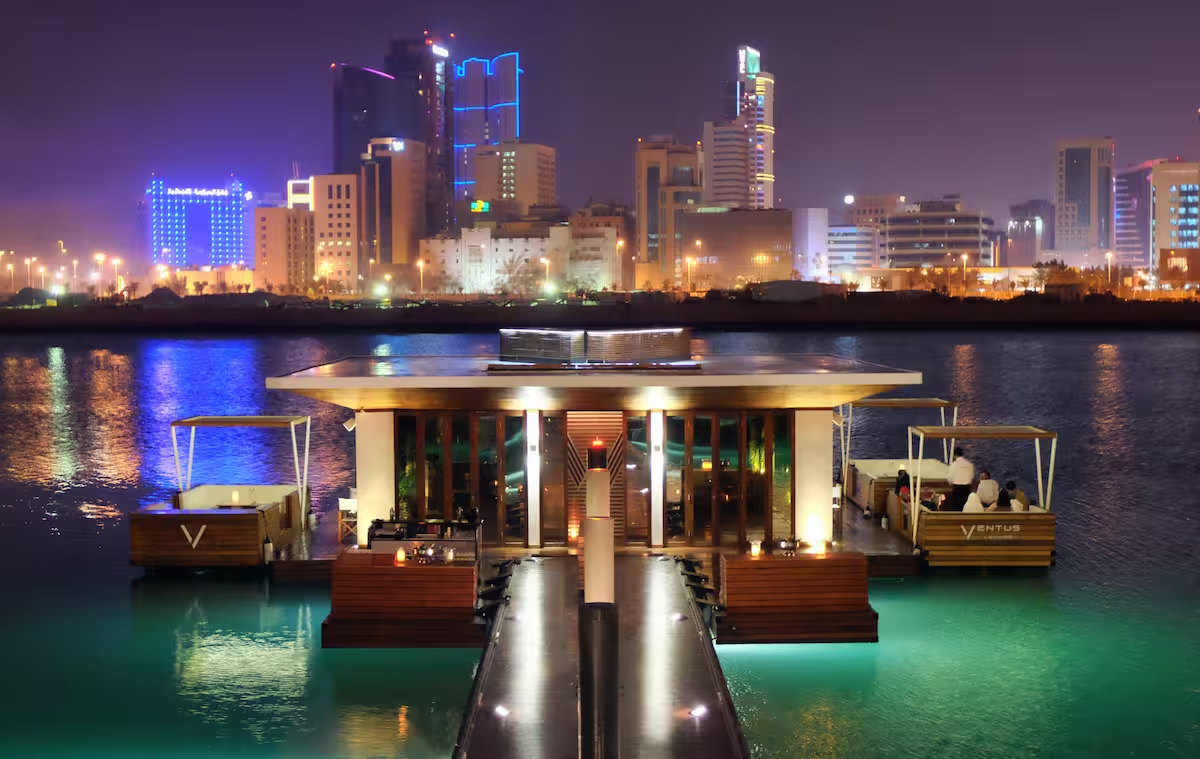
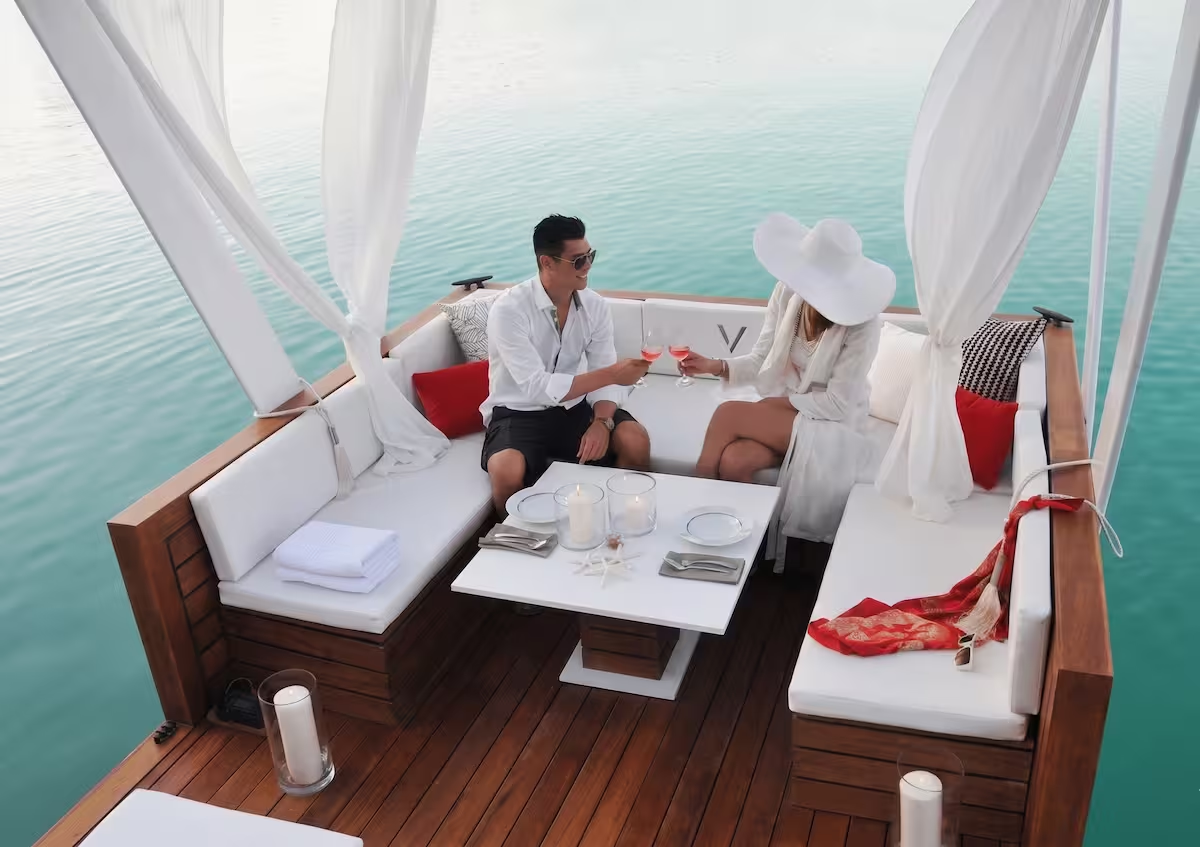
At V-Marine, we have received and delivered on requests for the world’s first five-star floating lounge next to the Four Seasons in Bahrain and floating offices for Ferretti Group in Dubai. We have also looked at beach clubs, theatres, watersports, shops, offices and we are even working on a floating resort. All of these together show that floating buildings are indeed a viable host for affordable and sustainable human living and recreation. What remains is to encourage the wider adoption of floating buildings as a solution to urban and waterfront overcrowding, and to create the democratic, institutional and regulatory frameworks needed to unlock their potential to radically reframe waterfront living.


