This article was also published in issue 155 of Marina World magazine. Click here to read the online version.
Marina World goes behind the scenes of the renovation of one of the Mediterranean's most iconic marinas.
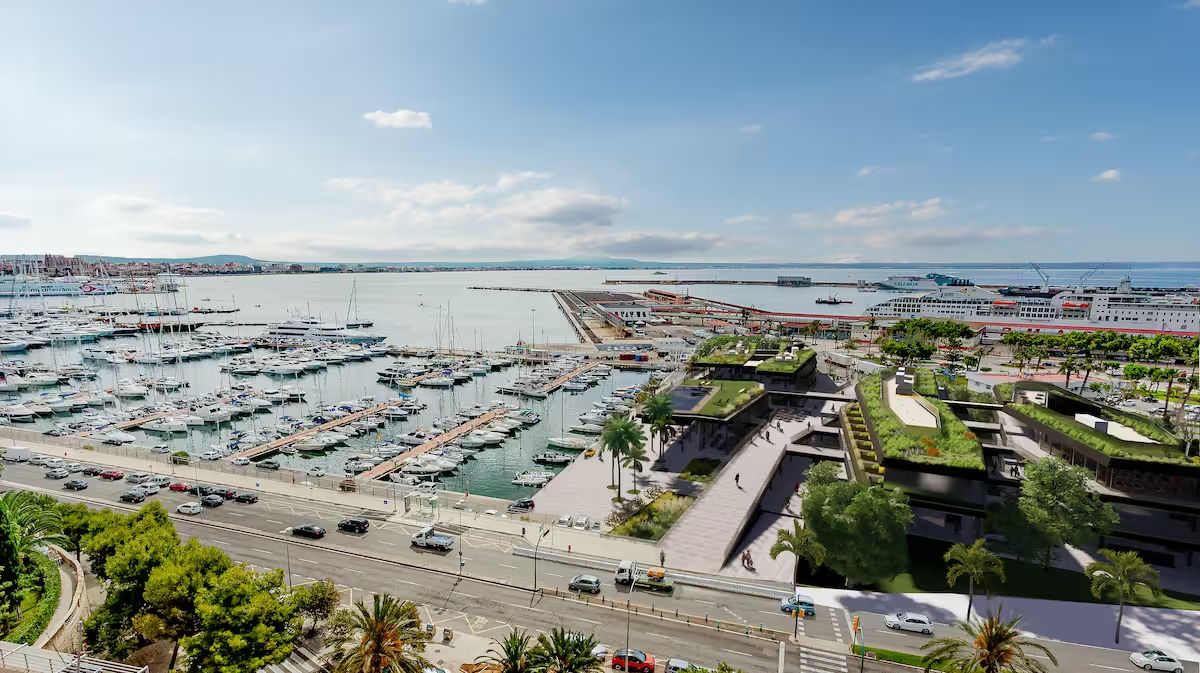
After nearly five decades operating at the forefront of luxury yachting in the Mediterranean and with a prestigious history of hosting celebrity and royalty, the Club de Mar-Mallorca in Palma needed a facelift.
However, given that the Club de Mar operates on land and water that are state property, the recent multi-year refurbishment actually came about as a bit of a barter deal. The Balearic Port Authority (BPA) would grant an extended concession term until 2044 if the club committed to investing more than €50 million in public-realm improvements.
“That trade - a longer concession in return for committed capex - is the standard Spanish mechanism for unlocking major private investment in port facilities,” Club de Mar-Mallorca said, and it was effectively what made the entire €95.5 million redevelopment financeable. Funded by the club’s members, the project was approved by the BPA on 18 October 2017, the redevelopment took place from 2020 to 2025, and the bulk of the new facilities were officially opened on 30 March 2026.
Marine works
The extensive redevelopment works at Club de Mar-Mallorca largely focused on upgrading berthing facilities and utilities, and modernising the clubhouse.
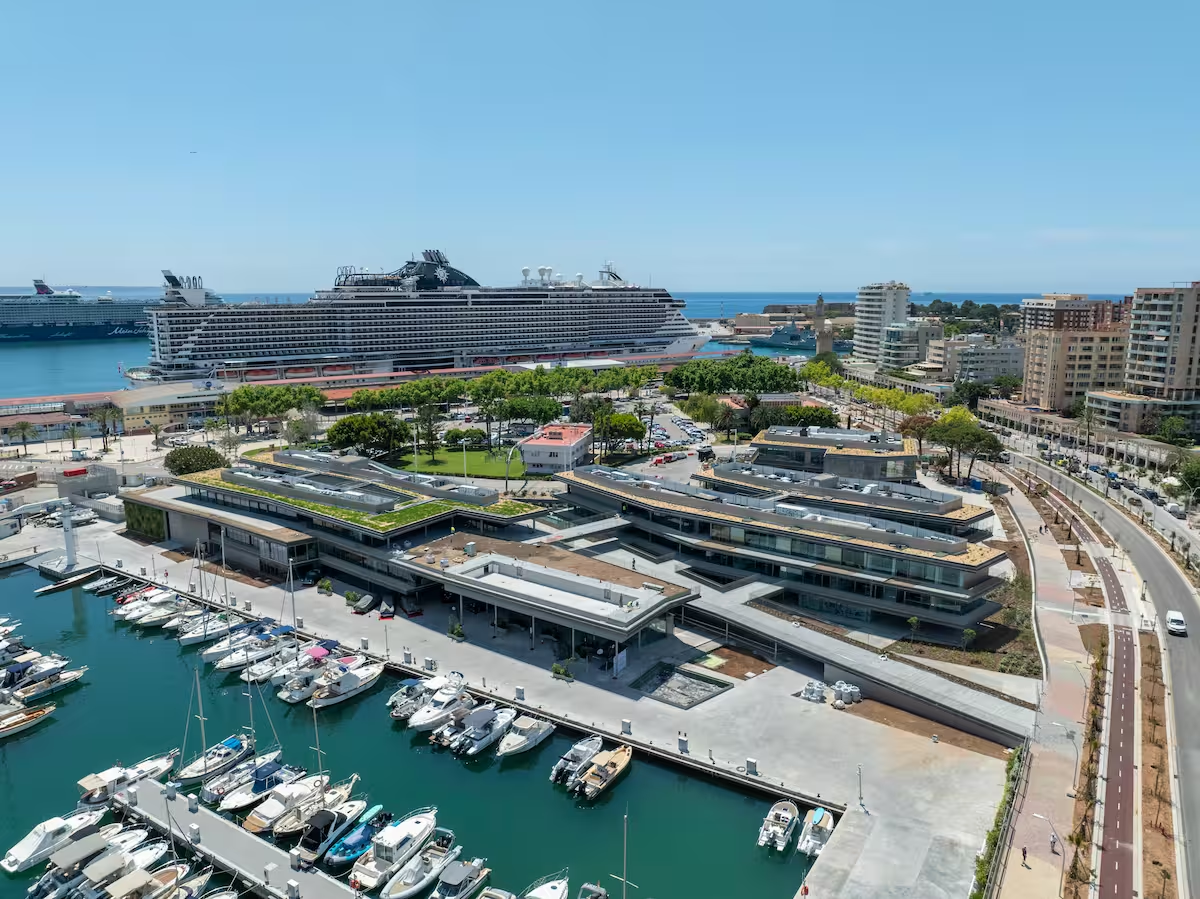
On the marine side, the project included the construction or renovation of nine pontoons. Most important of all was the extension of Pier 70 as well as constructing a new Pier 80 designed to accommodate vessels from 40-100m long. The smaller pontoons 51 and 52 underwent a complete replacement of their superstructures and repair works were carried out on the remaining pontoons across the marina. In total, the works covered 472.5 linear metres of 3.5-metre-wide aluminium pontoons and 61 linear metres of six-metre-wide aluminium pontoons.
Almarin, a company of Lindley Marinas, was responsible for supplying and installing the aluminium fixed pontoons onto existing concrete slabs to expand the marina. “The aim was to provide a solution that moved away from conventional standards, with a distinctive aesthetic befitting the importance of the project,” said Aleix San Vicente, CEO of Almarin.
While a structural assessment carried out by Club de Mar’s own engineering team found the existing structure of the pontoons to be in good condition, the slabs on which the fixed pontoons were placed were very warped. One of the main challenges was therefore to adjust all the pontoons to guarantee a completely horizontal, level surface when installed. Almarin also needed to increase the pontoon’s service and mooring capacity by adding new pedestals and cleats, while also giving the overall installation a renewed and distinctive appearance.
"Our solution incorporated two key features," explained San Vicente. "First, the new deck was supported directly on the existing pontoon, meaning the structural profiles didn't need to function as self-supporting elements. Second, to achieve a distinctive aesthetic, we selected a grey composite decking - the first time we had used this particular colour. Its combination with the natural tone of the concrete proved particularly successful, giving the installation a contemporary, elegant appearance."
Meanwhile, all associated berthing and fendering systems were renewed, including bollards, mooring systems and anchor lines. The refurbishment also upgraded the whole gamut of utilities, including potable water, fuel, telecommunications, electrical distribution networks and marina service pedestals from Arelsa, which now provide up to 800A of current in the largest superyacht berths.
However, one of the principal design considerations was the need to minimise any impact on the seabed and avoid dredging operations because of the environmental implications associated with the removal and handling of marine sediments. For that reason, during the construction of Pier 80, they increased the bearing capacity and geotechnical performance of the seabed by using gravel columns distributed through the foundation of the pier, avoiding the need for dredging or sediment removal.
With berthing capacity for vessels over 18 metres increased by some 12 percent, Club de Mar-Mallorca installed new transformer substations to meet the future electricity demand, as well as other modern energy and waste management utilities. These included a new Flovac vacuum wastewater collection system for vessel pump-out, electric vehicle charging stations from Circutor, more energy-efficient lighting and upgraded fire protection systems. Concrete was supplied by AISA Hormigones and the marina continues to use Pandora marina management software.
Clubhouse works
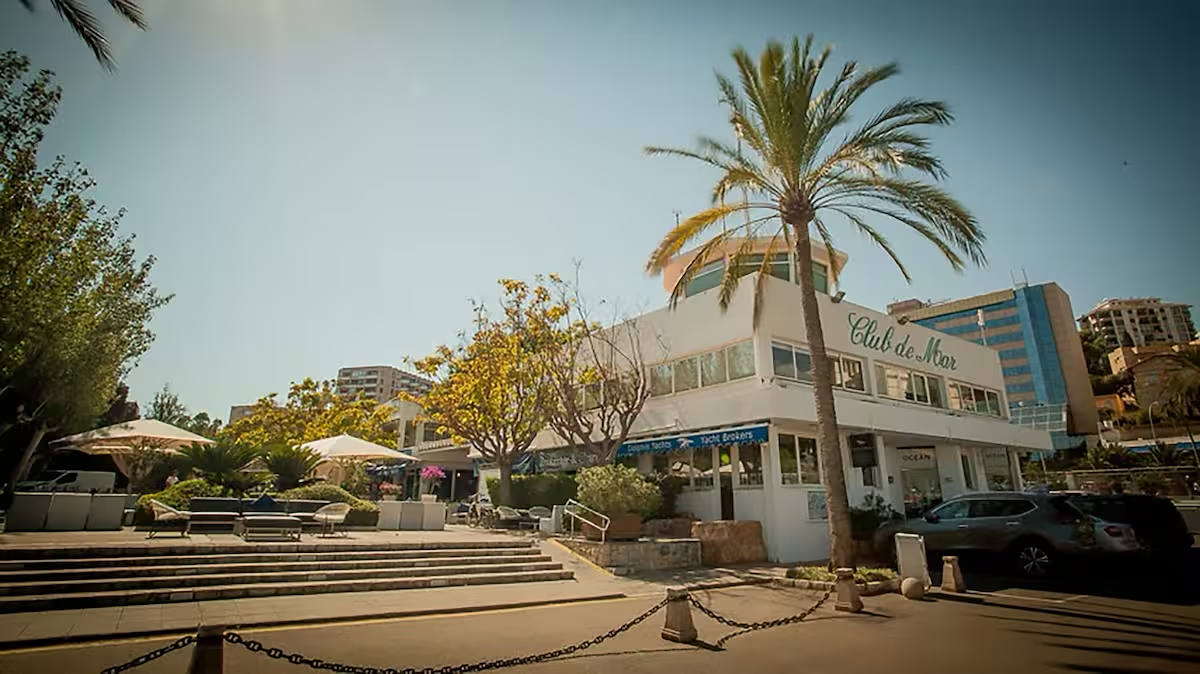
Although the clubhouse was a fairly innovative building in the 1960s, the Madrid-based architectural firm spearheading its redesign, estudio_entresitio, believed that it reflected a twentieth-century model of a private club that was more oriented towards its members and separate from the city.
“The nautical and social facilities had to be completely modernised while, at the same time, adding value to Palma,” estudio_entresitio said. “The challenge was to resolve an apparent contradiction: remaining a private club while simultaneously becoming a piece of urban and nautical infrastructure open to the city.”
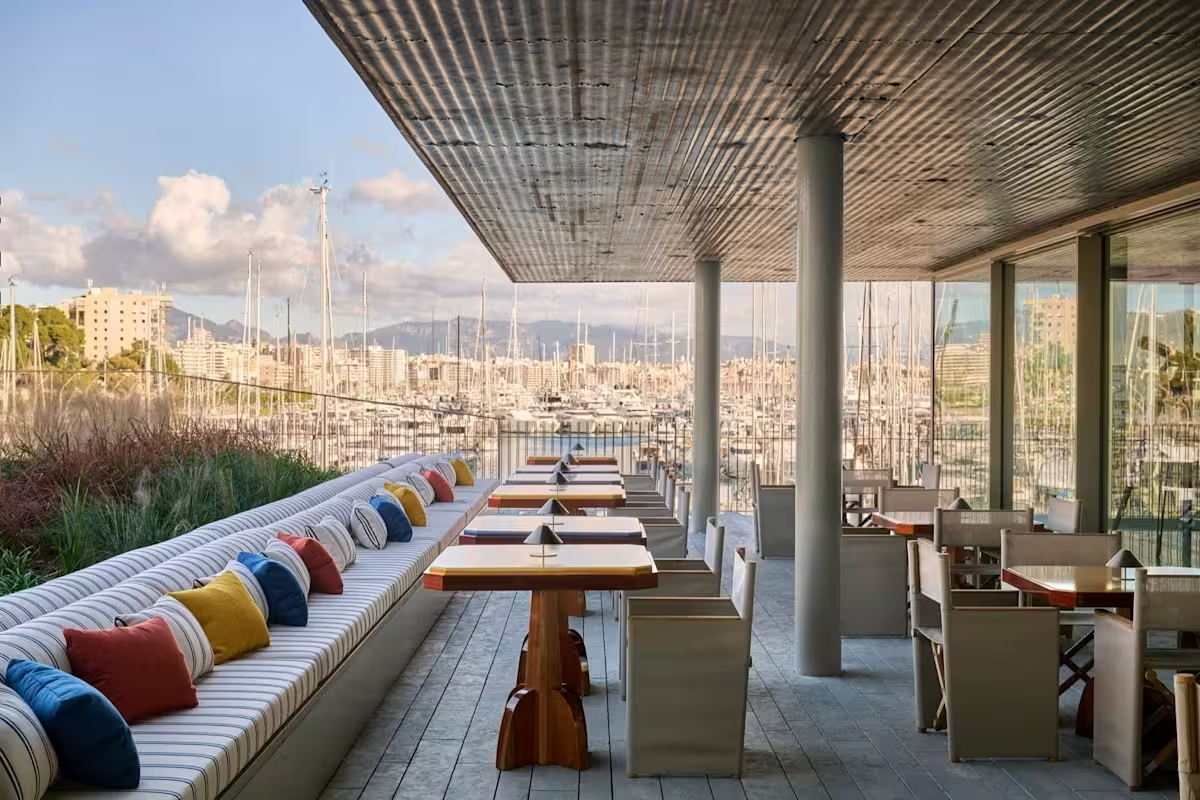
The design takes inspiration from the modern Mediterranean traditions of Coderch, Sert or Utzon, and gives particular importance to shade, horizontality and in-between spaces, according to entresitio. The result is what the architects call a “hybrid infrastructure” that can accommodate everything from large lorries delivering food to even larger luxury superyachts docking in the marina only a few dozen metres away.
“The project had to respond simultaneously to the territorial scale of the port and the everyday scale of the human body,” said entresitio. “That's why movement became a genuine material of the project. So did water. The depth of the site meant the sea had to be made present even where it could not be seen directly, through reflections, perspectives, courtyards, wind and light.”
The choice of building materials - including concrete, stone, glass, aluminium and reflective or micro-perforated surfaces - combined resistance to the marine environment with a Mediterranean atmosphere, while cantilevers, lattices, courtyards and vegetation control light, shade and ventilation. The renovation also added nearly 1,500 square metres of solar panels, low consumption LED lighting made from recycled aluminium, a new desalination plant and a vacuum sanitation system that reduces energy consumption and prevents discharges.
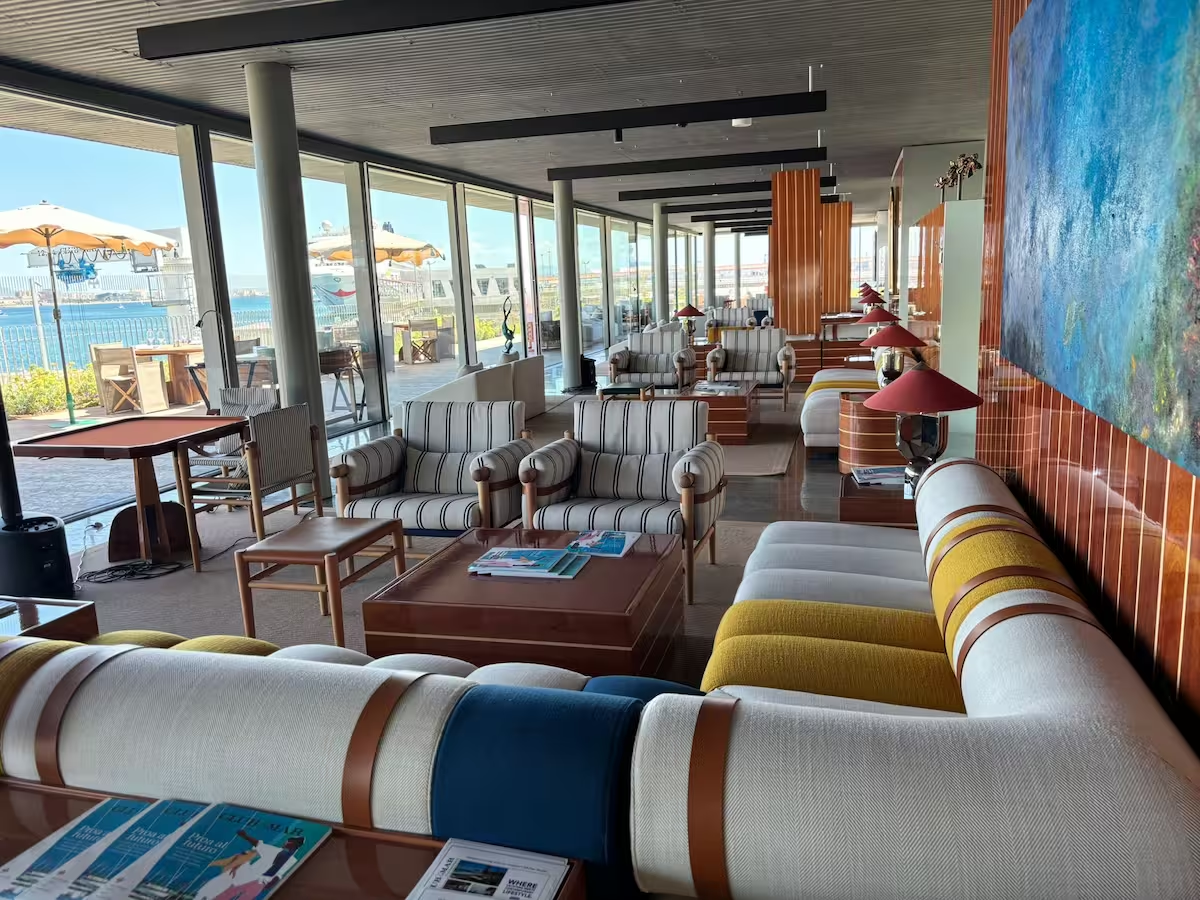
Although the clubhouse works progressed more efficiently than the marina because areas could remain open and segregated, the redevelopment was not without its problems. The teams encountered “substantial technical difficulties” during the construction of the basement levels, which are located below the groundwater table, and they had to continuously pump out seawater during the works.
One of the biggest changes to make the site more accessible was tearing down a wall that separated the club from the rest of the city, creating space for a pedestrian walkway. This area runs right through the complex, with courtyards, walkways and ramps breaking up the buildings to create multiple routes connecting the Paseo Marítimo with the water.
But how to keep the club exclusive while still making it open to the public? The solution was to “grade and filter the different levels of access”, according to entresitio, by keeping the lower floors “essentially public” while the members’ facilities occupy the upper level.
“We would describe it, above all, as a place rather than a building,” they told me. “The horizontality, the courtyards, the streets, the walkways and the vegetation cause the whole to fragment and spread out, blurring its boundaries. There is no single route. Visitors can pass through it, wander off, go up, go down or stop, building their own experience of the place.
“At the same time, the club fully retains its dimension as a members’ association. The members’ private facilities occupy a privileged position on the upper level, while below and around them a public dimension now appears that did not exist before. Perhaps that coexistence is what best defines the result: the club remains a club, but the place also belongs to Palma’s urban experience.”
Looking to the horizon
Naturally, the long-term economic impact of redeveloping such a well-established institution goes far beyond the 131 jobs created during the five-year construction period. In terms of gross value added - which is calculated from the incorporation of new members, operating income, construction works, suppliers and auxiliary services, and from consumption generated by the associated employment - the revamped Club de Mar-Mallorca is expected to generate a cumulative economic impact of €531 million from 2016 to 2044, when the new extended concession expires. While the club itself intends to employ some 115 people once all the new facilities are fully operational, they believe the club will contribute to as many as 500 direct, indirect and induced jobs in the wider Port of Palma.
And it is only when you consider the wider Port of Palma area that you begin to realise what an enormous economic powerhouse the boating industry is for the island of Mallorca. It is believed that the Club de Mar, despite being an outstanding and prestigious facility in its own right, only accounts for around three percent of the total employment associated with the activity of the Port of Palma.
Qualitatively speaking, the club’s president, Borja de la Rosa, also described the refurbishment as a “starting point” for a wider renovation of Palma’s Paseo Marítimo waterfront that would strengthen the port-city concept promoted by local government and the Balearic Port Authority. It would therefore seem that more marina and waterfront redevelopment could be on its way to Palma, with additional economic benefits to be realised.
José Luis Arrom, who has been the general manager of Club de Mar-Mallorca for over 15 years, sums up their achievements and ambition: “We want to become the best marina in Europe, without abandoning the values that have defined it since 1972,” he said. “We intend to keep building synergies with the city of Palma and with Mallorcan society at large, balancing the exclusivity of its services with an increasingly public-facing presence.”