This article was also published in issue 153 of Marina World magazine. Click here to read the online version.
The small town of Monnickendam, only a stone’s throw away from Amsterdam, is seeing its Waterland Marina be completely revamped with better, bolder infrastructure through a partnership with SF Marina, Seijsener, Boat Lift and i-Marina.

Monnickendam is one of those typical quaint, charming and quietly stoic small Dutch towns that can feel like you are walking through a model village. The houses, the canals, the cobblestone streets, everything is in miniature. With 850 berths, however, one thing in the town that is certainly not miniature is its Waterland Marina, known in Dutch as Jachthaven Waterland.
The business started in 1985 as Waterland Yacht Charter, when Jan and Trees Zetzema began chartering out their own boat and the fleet grew steadily with Monnickendam as its base. The company as it is called today came into existence in 2002 following the purchase of Jachthaven Van Goor and the daughter of Jan and Trees, Nienke Zetzema, joined the company in 2015.
The business expanded to its present size in January 2019 after purchasing the neighbouring marina, and since then Jachthaven Waterland has consisted of two separate but adjoining locations: Waterland and Hemmeland.
It is these two marinas that are currently undergoing a major renovation and redesign, a project that Nienke, now managing director and owner of the company, has been working on for seven years.
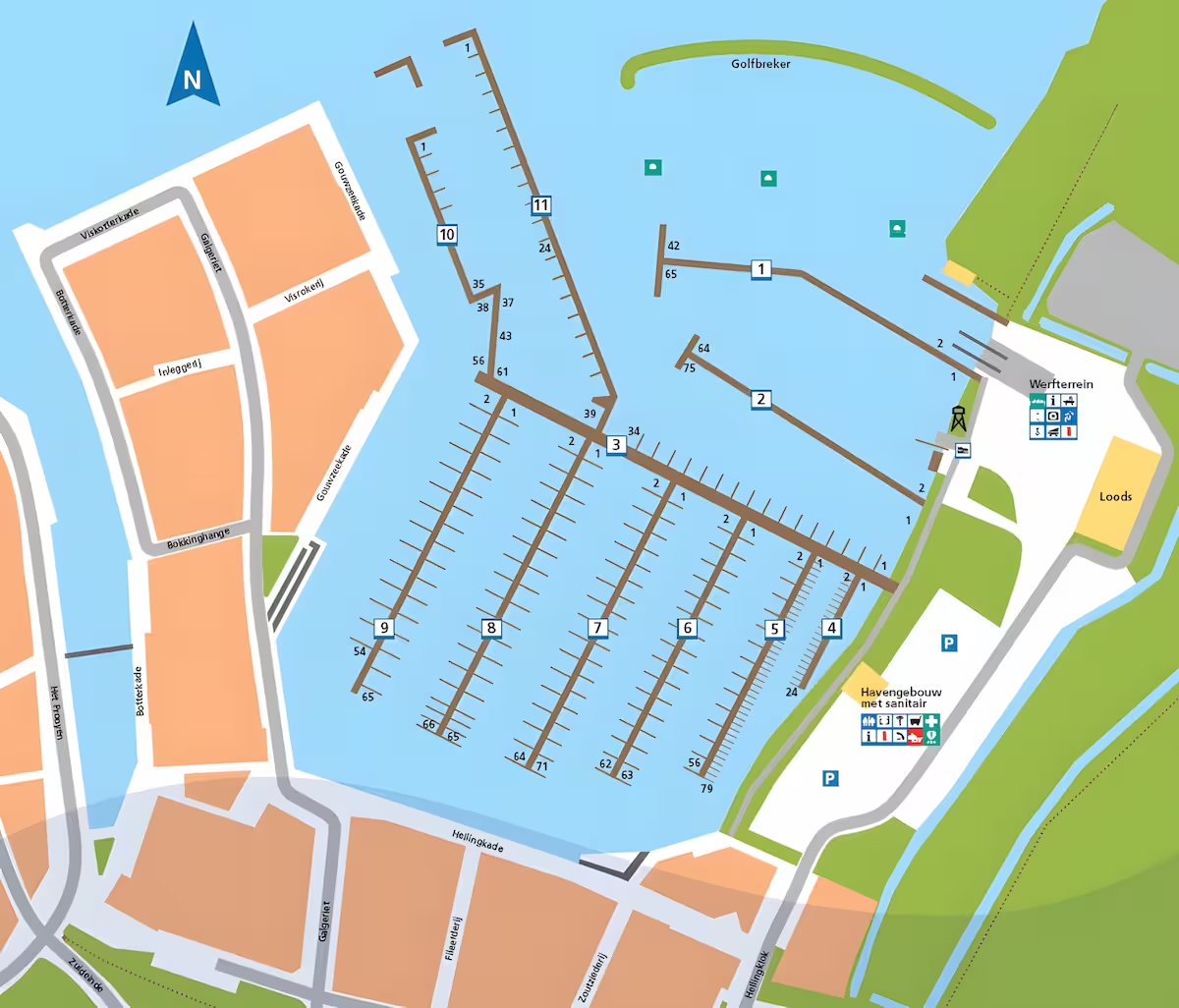
They will be combined into one contiguous marina built around an enormous 220-metre-long, six-metre-wide central pontoon manufactured by SF Marina of Sweden. The total length of all the pontoons in the new marina will be 1.1 kilometres and will boast 224 finger piers, with all pontoons ultimately guiding arriving traffic to the harbour office and facilities.
The permissions and approvals started coming in thick and fast in 2024 and 2025, including on the construction of a new boat lift area, a geotube breakwater, remodelling the harbour building and changing the layout of the pontoons. Nienke is upbeat about the involvement and support of the local municipality, a rarity when it comes to marina developments.
“The municipality wanted to build houses for a new residential area,” she told me. “With two marinas opposite each other, integrating the municipal marina into ours and moving to their location was a logical step.”
“The municipality was very keen on facilitating our move, they are rather small and we are a big player in the area, so that helps. The redevelopment was in the interest of the municipality, as this ensured that the development of real estate could progress. And from our side, we deliberately adopted a very positive and constructive attitude, which really helps especially when things get difficult from time to time.”
Constructing the marina
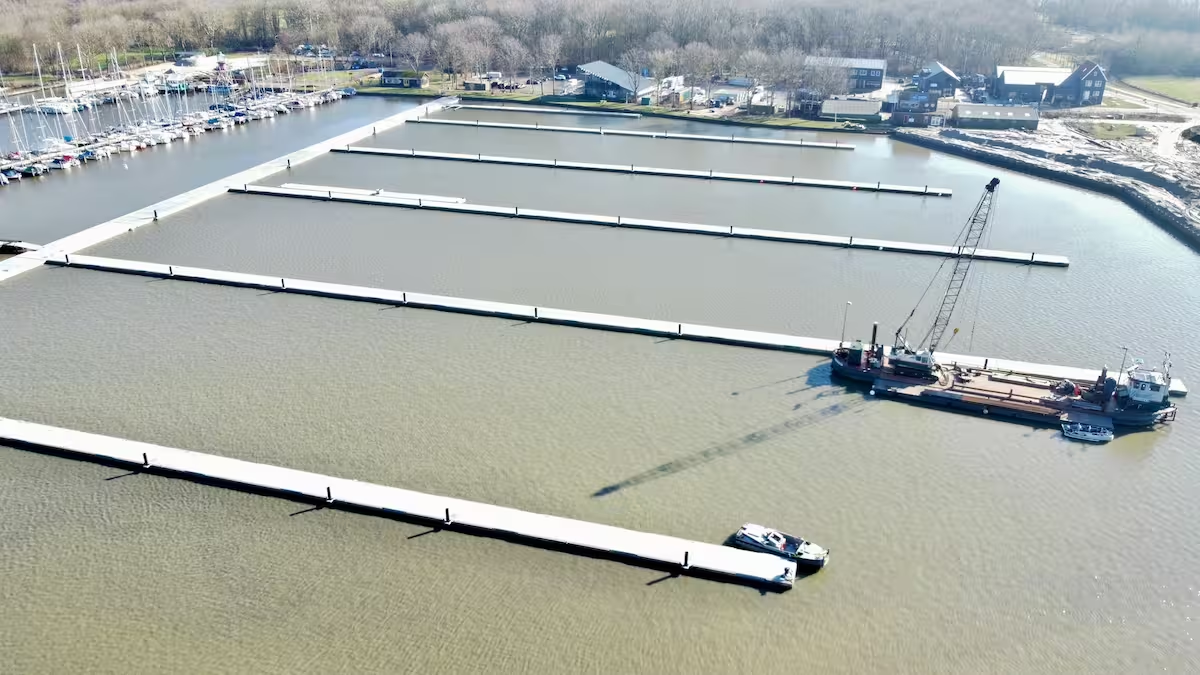
Waterland Marina began dismantling the old, wooden pontoons at the beginning of November 2025 in time for the arrival of the 52 new pontoon sections from Gothenburg. They were unloaded in Amsterdam, connected to make sure they were in the correct order, and then towed on water to Monnickendam.
The first sections arrived at the start of February and I was lucky enough to see the very first pile of the very first section of the main pontoon driven into the marina when I visited on 17 February. By Friday - only three days later - the main pontoon as well as pontoons 4, 5, 6 and 7 were all beginning to take shape.
Naturally, the aim is to be ready in time for the peak summer season when the majority of their clients - local Dutch and holidaying Germans - will arrive in Monnickendam. The first boats were launched in mid-March with the rest being launched in April.
For SF Marina, the redevelopment represents a milestone. Despite having sold to some 70 countries since the company’s inception in 1918, they had never once secured a project in the Netherlands. Nienke Zetzema’s decision to go for SF Marina pontoons has finally changed that, a decision which managing director Michael Sigvardsson said they were “of course very happy” about.
“We wanted top quality and long-term reliability,” said Nienke about their choice of suppliers. “We made sure that we were a ‘medium-sized’ project, so delivery would not be immediately at risk when something got a bit delayed. And as a small-sized family business, we choose the people we work with carefully. People do business with people.”

Future-proof marina infrastructure
Once the pontoons and jetties were all in the correct position, it was down to the Dutch company Seijsener to install the pedestals and wiring. Walking around the development on a cold and windy day in February, I could still see some of the old Seijsener units there.
“Our history with Waterland goes back over 40 years,” said Jesse Pielage, commercial director at Seijsener. “Originally, this relationship began with our former director, who has officially not worked at Seijsener for over ten years.”
“But what we are now creating, together with SF Marina, is a new, state-of-the-art solution for the jetties,” Jesse continued. “We opted for durable, long-lasting materials, such as anodised columns and stainless steel sockets. Production and installation were coordinated in close consultation with both the client and SF Marina.”
A European market leader in marina power pedestals, Seijsener has successfully completed several similar projects in the past and a marina on Monnickendam’s scale is routine for them. But they nevertheless “strive to create a solution that takes the environment and energy management into account”, Jesse said, stressing that the final installations will be future-proof and easy to maintain.
Finally, the present boat lift at the Hemmeland location dates back to 1991 and is at the end of its working life, according to Nienke Zetzema. For that reason, they have also chosen to invest in a new 5.9-metre wide, 30-ton Boat Lift from Italy that runs on HVO100 fuel for low consumption and minimal emissions.
Collaborative mindsets
Waterland started work on their newest location, Uitdam, several kilometres south of Monnickendam in 2025, and took the opportunity to run a trial of i-Marina’s management software.
“With the positive experience there, they decided to roll it out in Monnickendam during the renovation,” said Volker Meuzelaar of i-Marina. “They will be able to not only control their berths and invoicing, but also take control of their new hardware, including the electricity pedestals from Seijsener.”
“This automatisation will make their daily marina management more flexible, save time, and they will be able to operate and control their marina from anywhere. Invoicing, usage and payment will also be done with one click in i-Marina,” he said.
Working to optimise the marina is a collaborative effort between Waterland, Seijsener and i-Marina, said Volker, and this represents the biggest challenge. “Because of the size of the marina and timeframe for the new development, we need good coordination between all the parties involved.”
Thankfully, for the Dutch, good coordination between multiple stakeholders when it comes to the shared use of land and water comes fairly naturally. It is a principle without which the country - especially its densely populated urban heart between Rotterdam and Amsterdam - would cease to function.
The Netherlands is a masterclass in urban planning and design. Innovative, efficient solutions maximise the potential of limited space while generating economic value and raising the quality of life. Waterland’s renovation in Monnickendam - undertaken in partnership with SF Marina, Seijsener, i-Marina, Boat Lift and a supportive municipality - is a small snapshot of how this mindset can permeate into better, bolder marina infrastructure.

.avif)