





This article was also published in issue 154 of Marina World magazine. Click here to read the online version.
A Spanish manufacturer of power pedestals made from recycled ocean plastics has shaken up a competitive Mediterranean market. Marina World speaks to Marconn’s Paula and Miquel Vilanova to find out more.
How did the company get its name and where did the idea of making power pedestals from recycled materials come from?
The name of our company - Marconn - comes from the Spanish words for sea, connection and connectivity: mar, conexión and conectividad.The history of the company starts with the Vilanova family, who are the owners of a really big company in Girona called Tavil. The founder, Lluis, is our father and we are users of a marina in Platja d’Aro and it was here that the idea to create power pedestals for marinas was born.
At the time, Paula was also working on a university project concerning water and big data, and after having spoken to other marina users they understood that many pedestals were facing similar issues, such as water leaks and poor consumption habits. To address these problems, Paula began developing a housing for electrical pedestals designed to prevent water leaks, along with a software platform for consumption analysis and control.
The first idea was to work with fibreglass like many other companies in the market. After fibreglass, they started to work with polyethylene because they saw it was very durable in a marine environment. However, they soon realised that you could add recycled materials recovered from the ocean, such as fishing nets and bottle caps, to the polyethylene to create a pedestal that is both durable and combats plastic pollution in the sea.
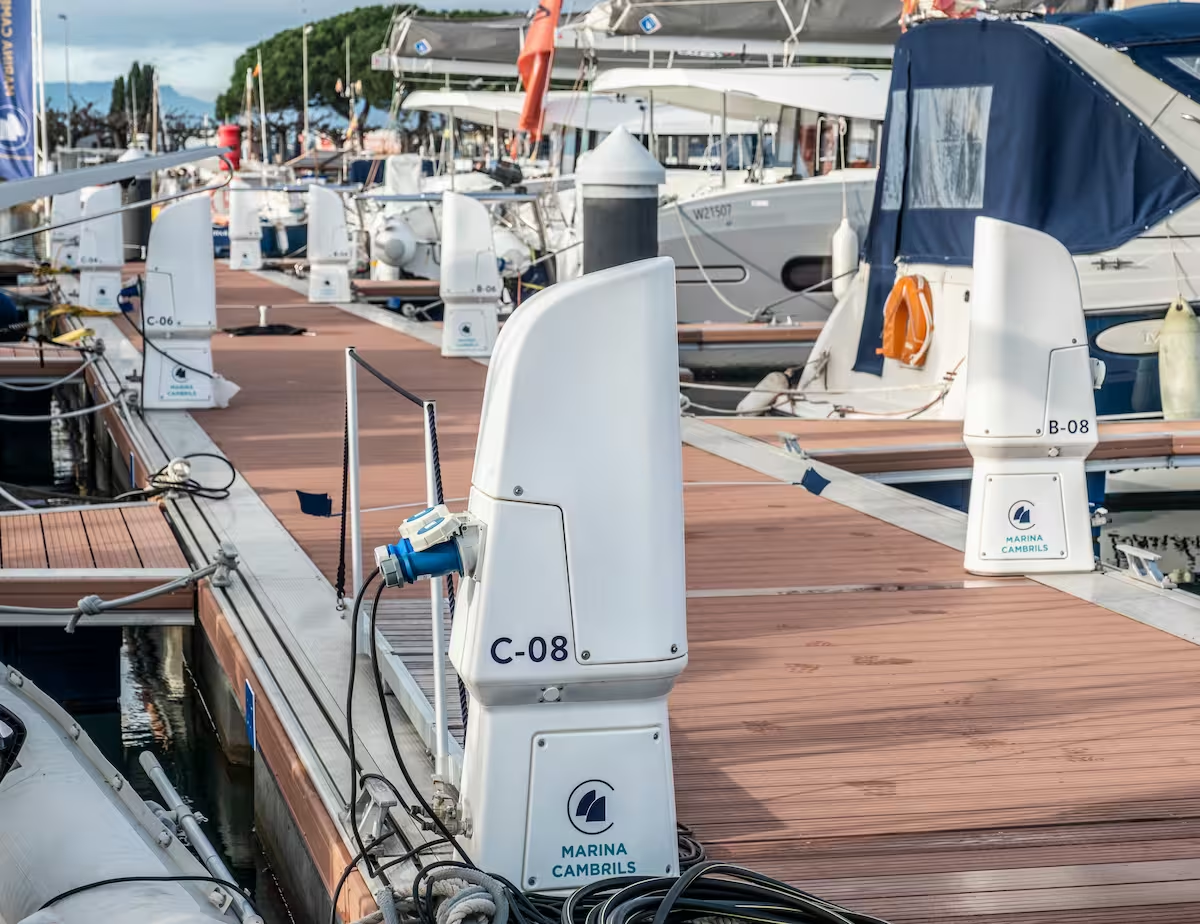
Nowadays, we make power pedestals from three different types of recycled materials: urban/domestic plastics, bottle caps and fishing nets. Just one of the biggest superyacht power pedestals can contain around 1500 bottle caps.
How did you break into such a competitive market that is dominated by big brands and companies?
In the early years, we didn’t just make a product and then go to market. We did it the other way round. We went from port to port across Catalonia to talk to captains and heads of maintenance to understand what these customers needed most in a new pedestal. They said that durability was a problem, which meant we shouldn’t use stainless steel or aluminium. We started out with fibreglass, then moved to polyethylene and eventually recycled materials, like I already said.
Customers also said they wanted a material that was durable, one that would still be in good condition after five, 10 or even 15 years. In fact, we now give a 20-year warranty for our products and want to be able to give more in the future.
Another key point was that accessing the pedestals to conduct maintenance was difficult. Many pedestals are quite small and complicated, so we created a design where you literally just lift the top off the pedestal and then you have 360-degree access to the control panel.
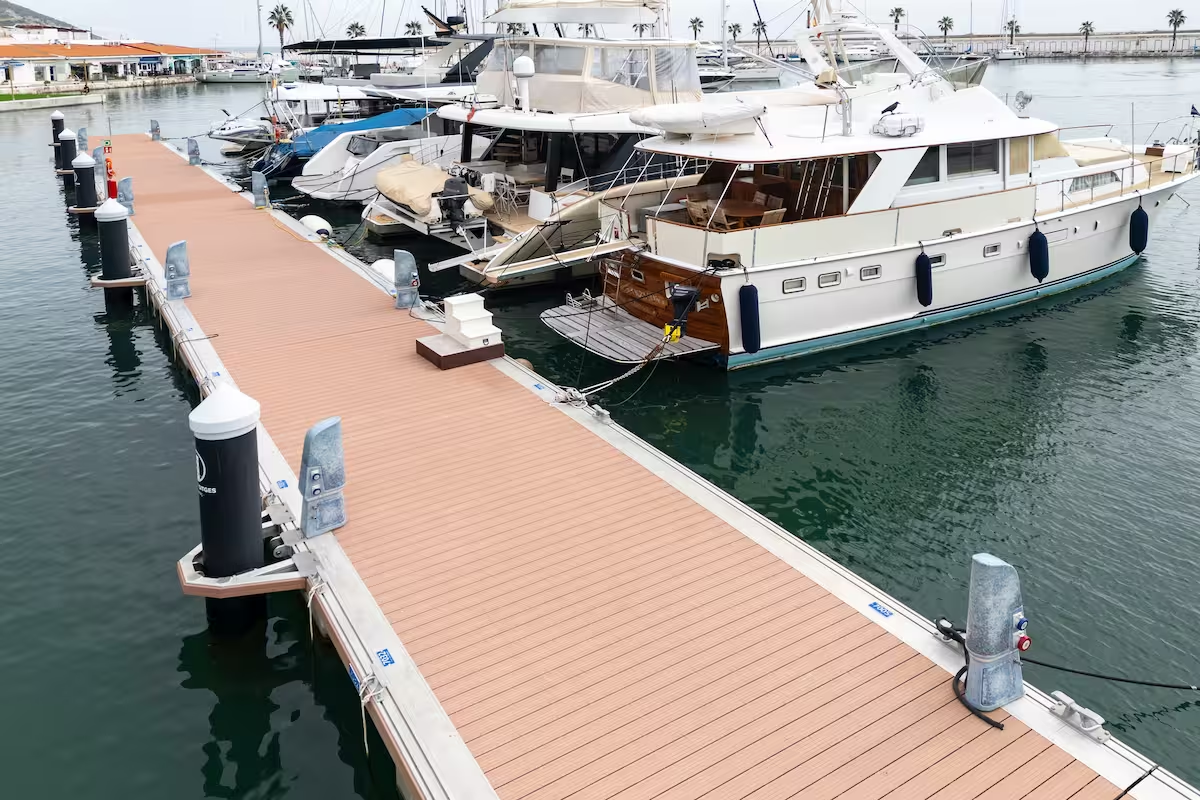
The pedestals themselves are highly customisable, no two marinas have exactly the pedestal configuration. We can choose the types of sockets, we can choose the types of water that can be supplied through the pedestal, it can adapt easily.
.avif)
Were there any particular initial challenges in manufacturing power pedestals from recycled materials? How did you overcome them?
The first prototypes we made were 50 percent recycled materials and 50 percent virgin polyethylene, however when we started we understood that a higher percentage of recycled materials in the mixture meant a lower durability. So we had to experiment and change the composition of the polyethylene and recycled materials in the manufacturing process to increase the number of recycled materials without sacrificing durability.
Just this year we made our first pedestal out of 100 percent recycled materials, and our intention is definitely to move towards making more pedestals out of 100 percent recycled materials. We have also managed to make the pedestals made completely out of recycled materials have the same durability as the ones made from virgin polyethylene, which is something we are very proud of.
We had to change the types of recycled plastics we were receiving. In essence, better quality plastic means a more durable pedestal. We also had to change the way we chop up the recycled materials as well as the temperature at which we mix them. Once you have found a good formula that works, you can increase the level of recycled material.
And, because our pedestals are made from recycled materials, we can actually take them out at the end of their lifespan, cut them up, melt them down and make new pedestals. Yes, it’s very important to clean the polyethylene properly to give it a new life, but in general we don’t need to use new materials to make new pedestals.
According to a study that we commissioned, manufacturing pedestals with recycled polyethylene and recycled plastics also produces considerably less emissions and uses much less energy compared to aluminium. Our manufacturing process releases 75 percent less carbon dioxide and uses 86 percent less energy, which is a very big reduction.
So is it cheaper for the customer to make a new pedestal out of the old pedestal, instead of buying a completely new one?
That would be fantastic, but unfortunately not! The cost is about the same. When you build a new one, you have to buy the raw materials. When you recycle the old pedestal you already have the raw materials, so you don’t need to buy new materials, but instead you have additional costs to clean and break down the old pedestal to be able to reuse it.
Being able to provide a solution that is both durable and sustainable is a key point, and choosing to recycle your old pedestals will not cost any more than buying new ones. So the onus is on the customer to make the more sustainable choice. However, because we started in 2018, none of our pedestals have actually reached the end of their lifespan yet. Port d’Aro was our first customer with around 300 pedestals and we have to wait some more years before it’s time to recycle the old pedestals to make new ones.
You have grown quite quickly in what is a very competitive market. Who are some of your biggest customers?
We have a really good presence in Spain, which is where we are based. Port d’Aro were our first customers, and since then we have served many others, including Port de Masnou, Port Ginesta, Marina Port Blanc, Port de Cadaqués, Nautic Tarragona, Port de Sitges-Aiguadolç, Port Torredembarra, Port Balís, Rolnautic Yachts in the Canary Islands, Port Fòrum in Barcelona, Marina del Odiel in the south of Spain and Bermeo Marina in the north of Spain.
In France, we are just finishing an installation in Saint-Malo and we have sold to Port Leucate, Port Lavandou, Horizon Marine and Port de Hérel-Granville. We have also sold to Cantiere del Pardo in Italy.
When we say that our product developed out of a university project, sometimes some people are scared that they will end up working with a young and inexperienced team. But since being founded in 2018, we have installed over 3500 pedestals across Spain, France and Italy, which is an average of over one pedestal every day.
Where do you source the bottle caps and fishing nets from to make the pedestals? Who are your partners in this?
We started creating the product together with a rotomoulding company in Valencia called Rotolia, and when we wanted to include recycled plastics they gave us the names and contact details of different public companies and non-governmental organisations that worked in these kinds of recycling processes.
After working with non-governmental organisations for a while, we started working with Gravity Wave. They are also based in Valencia and they work with fishermen and companies like ours to remove plastics from the sea and port areas to turn them into usable panels and products. The Spanish basketball legends Pau and Marc Gasol even joined as advisors and invested in Gravity Wave in February 2024, so they do a lot of publicity for them too.
The funny thing about the pedestals made from bottle caps is that we can’t guarantee what colour they will be. It depends on the mixture. For example, some marinas have blue pedestals but in the Port of Sitges, they are pink. But the most important thing is of course that these pedestals help clean up our oceans from plastic pollution, so we believe it is worth it!
Do you have expansion plans outside of Spain, France and Italy?
We are already increasing in France and Italy, and we are especially interested in the African and South American markets. We would like to grow step by step, slowly and consistently. We are happy and confident that we will continue to grow because our product is unique and more people in the marina sector are changing their mentality about sustainability and construction materials.
All the customers that we have say that they are happy with the product and our service, and these kinds of references are probably the best way to attract more customers. Captains and marinas all talk with each other and confirm that it is a good product, so we believe that the future looks good for Marconn.


.avif)


