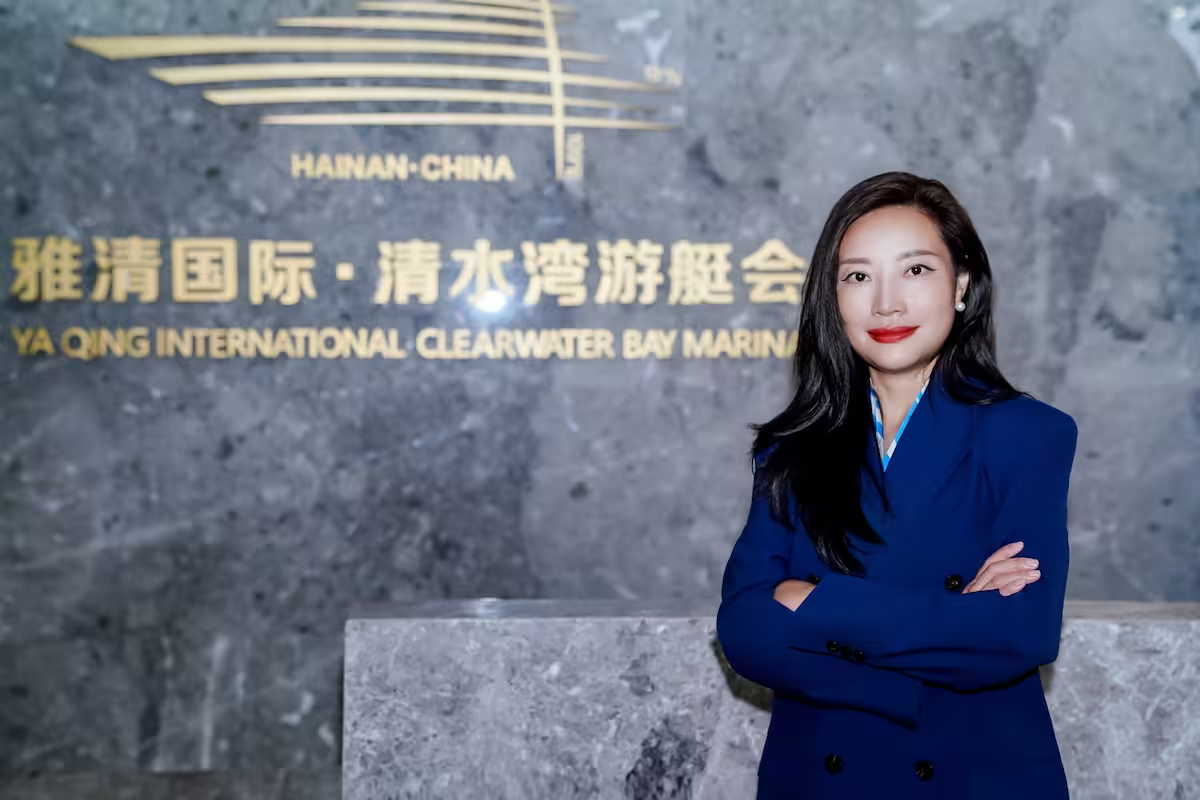
“In China, many yacht clubs have traditionally focused on a relatively narrow group of owners, particularly ultra-high-net-worth individuals,” stated Mally Xiao, chief executive and partner at Clearwater Bay Marina. “I think a marina can play a broader role than that.”
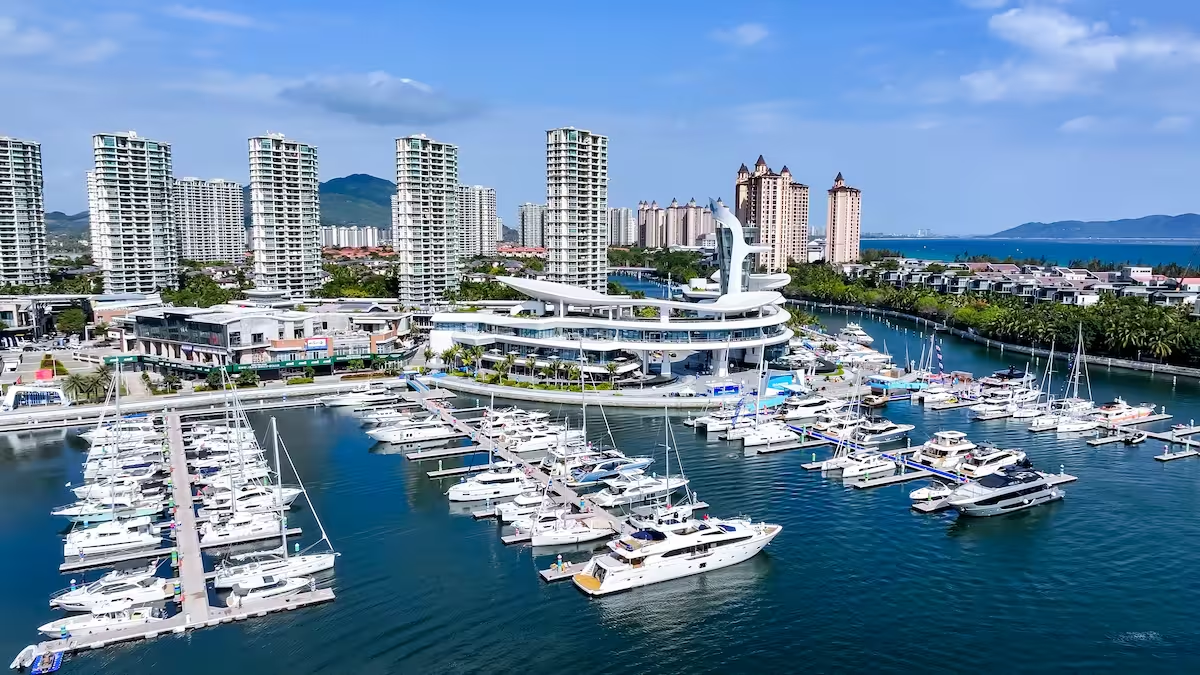
Her comment reflects a wider reassessment of China’s marina model, where yacht clubs have often operated as closed, membership-driven venues serving a limited segment of high-net-worth owners. At Clearwater Bay, located 40 minutes away from Sanya on Hainan island, that perspective has informed a development approach that places emphasis not only on berthing, but on a broader range of facilities and uses alongside core marina operations.
From long term redevelopment to delivery
Clearwater Bay Marina first entered construction in 2011 and was acquired by its new owner approximately three years ago. Since then, development has progressed in stages, with the initial phase covering the core marina berths and associated yacht club facilities upgrade now being completed.
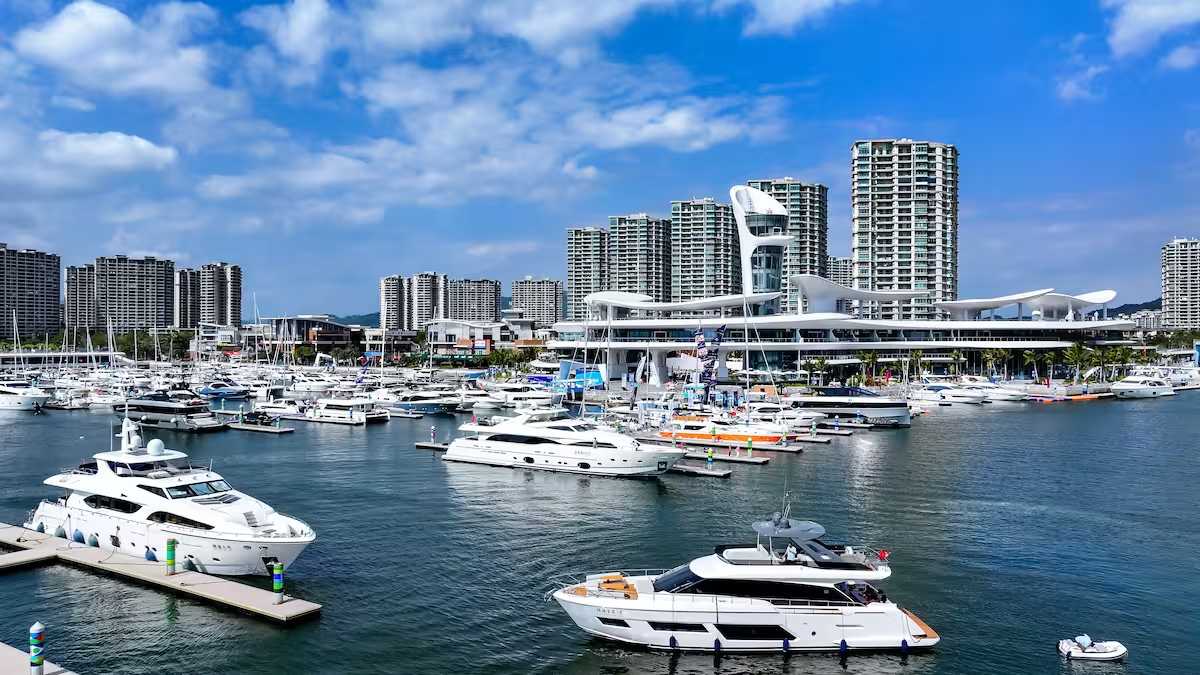
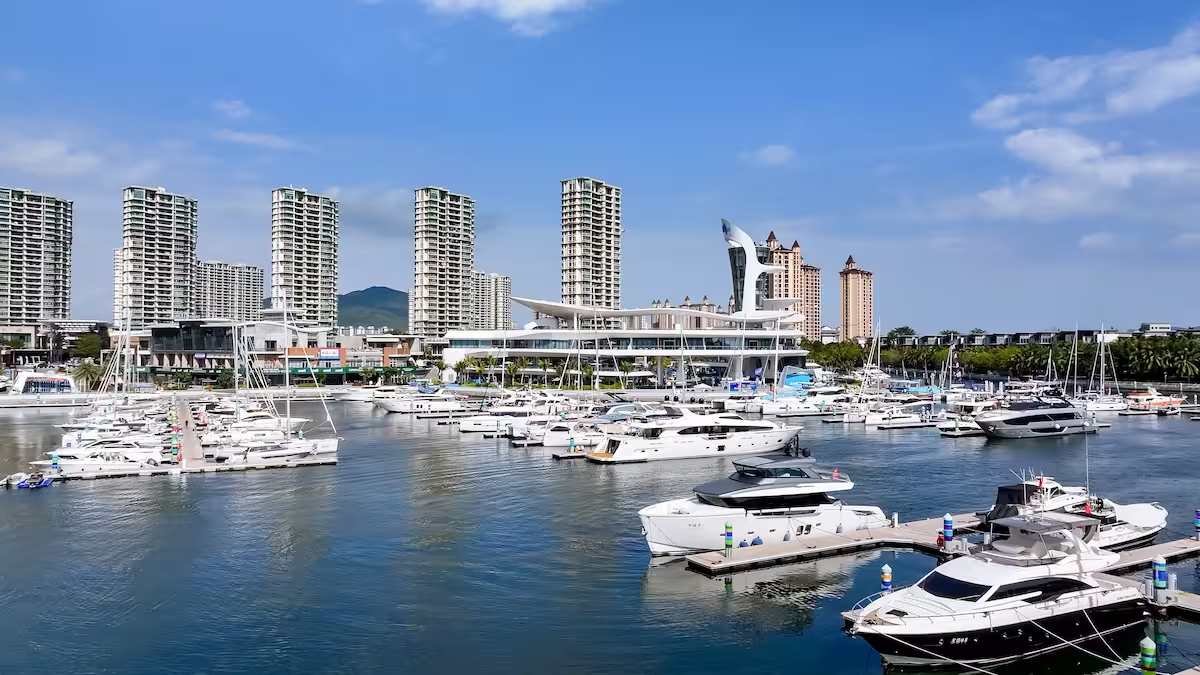
The marina currently comprises 873 berths accommodating a range of vessel sizes. To date, the largest yacht to have berthed at Clearwater Bay is the 64.6-metre Van Triumph, reflecting its capacity to host larger yachts alongside a broader mix of mid-sized vessels from brands such as Riva, Custom Line, Azimut, Sunseeker, Heysea, Allegro and Horizon.
Positioning within China’s marina landscape
One of the practical factors shaping the positioning of Clearwater Bay Marina is the inclusion of on-site customs facilities, which are intended to allow foreign-flagged yachts to complete entry procedures directly at the marina. At present, Visun Marina remains the primary designated port of entry for international yachts arriving in Hainan, meaning vessels typically need to clear customs there before proceeding elsewhere. Clearwater Bay’s ability to handle these formalities on site is intended to streamline yacht movements.
Beyond port formalities, Mally framed the marina’s differentiation in broader terms, pointing to location, timing and operating model rather than scale alone.
“It’s a different location, a different environment and a different timing,” she said. “But the most important thing is a different business model.”
Historically, many marinas and yacht clubs in China have operated as closed, membership-driven venues, largely oriented towards a small group of high-net-worth individuals. While that model has provided exclusivity, it has also limited day-to-day activity beyond core yacht ownership. Clearwater Bay’s approach, Mally suggested, is intended to broaden that dynamic by integrating facilities that extend beyond berthing alone.
She highlighted the marina’s beachfront setting and the inclusion of non-marine amenities as part of that strategy. “Here we have a kilometre-long sandy beach and we also have an art centre,” she said, describing these elements as a departure from more conventional yacht club formats. By widening the mix of facilities, the marina aims to generate greater on-site activity and footfall, supporting a more continuous use of the development rather than one tied solely to yacht movements.
Clearwater Bay as an active destination
That positioning has also been reflected in Clearwater Bay’s efforts to present the marina as an active destination rather than a purely functional asset. The Clearwater Bay Marina Getaway Yachting Festival was held as a means of bringing yachts, industry participants and prospective users to the site, offering a practical demonstration of how the marina’s berthing infrastructure and adjacent leisure facilities operate together. The event placed emphasis on the overall marina environment and onshore experience, rather than on vessel display alone.
This strategy is being pursued against a mixed backdrop for yacht activity in China. Drawing on more than two decades managing yacht clubs across coastal markets including Shenzhen, Qingdao, Shanghai and Hainan, Mally noted that recent years have seen a slowdown in new boat purchases, even as overall boat numbers have continued to rise.
“In the last few years, new boat sales have slowed down,” she said. “But the number of boats has increased and there are more second-hand boats on the market.”
These dynamics suggest that Clearwater Bay is seeking to align its facilities and operating model with a market that is evolving in composition rather than expanding uniformly, while positioning itself to attract both domestic yachts and, over time, a greater share of visiting foreign-flagged vessels.
Planning the next phase of expansion
With the first phase nearing completion, attention at Clearwater Bay Marina is shifting towards a second stage of development that would extend the marina’s capacity and alter its operating profile. According to Mally, completion of the clubhouse is targeted for the end of 2026, after which work on the next phase of marina infrastructure is expected to advance.
That expansion is intended to place greater emphasis on larger yachts than the marina currently accommodates. “In the second part of the development, we will be more focused on the largest boats,” Mally said, characterising the move as a shift in emphasis rather than a change in the marina’s overall berth mix.
Preparatory works are already underway, with pilings installed in anticipation of the next construction phase. With regulatory approvals in place, the longer-term objective is to enable Clearwater Bay to berth yachts approaching 100 metres. Mally noted that expanding capacity for larger vessels forms part of a broader effort to attract more visiting foreign-flagged yachts and strengthen the marina’s international relevance.
As the project moves forward, the pace and impact of the expansion will depend on execution and on how effectively additional capacity for larger yachts translates into sustained demand within Hainan’s evolving yachting market.

.avif)