This partner content article prepared on behalf of Metstrade was also published in issue 155 of Marina World magazine. Click here to read the online version.
Recreational boaters and smaller vessels are being squeezed by wider macroeconomic pressures, which is pushing the market to look for more lucrative horizons.
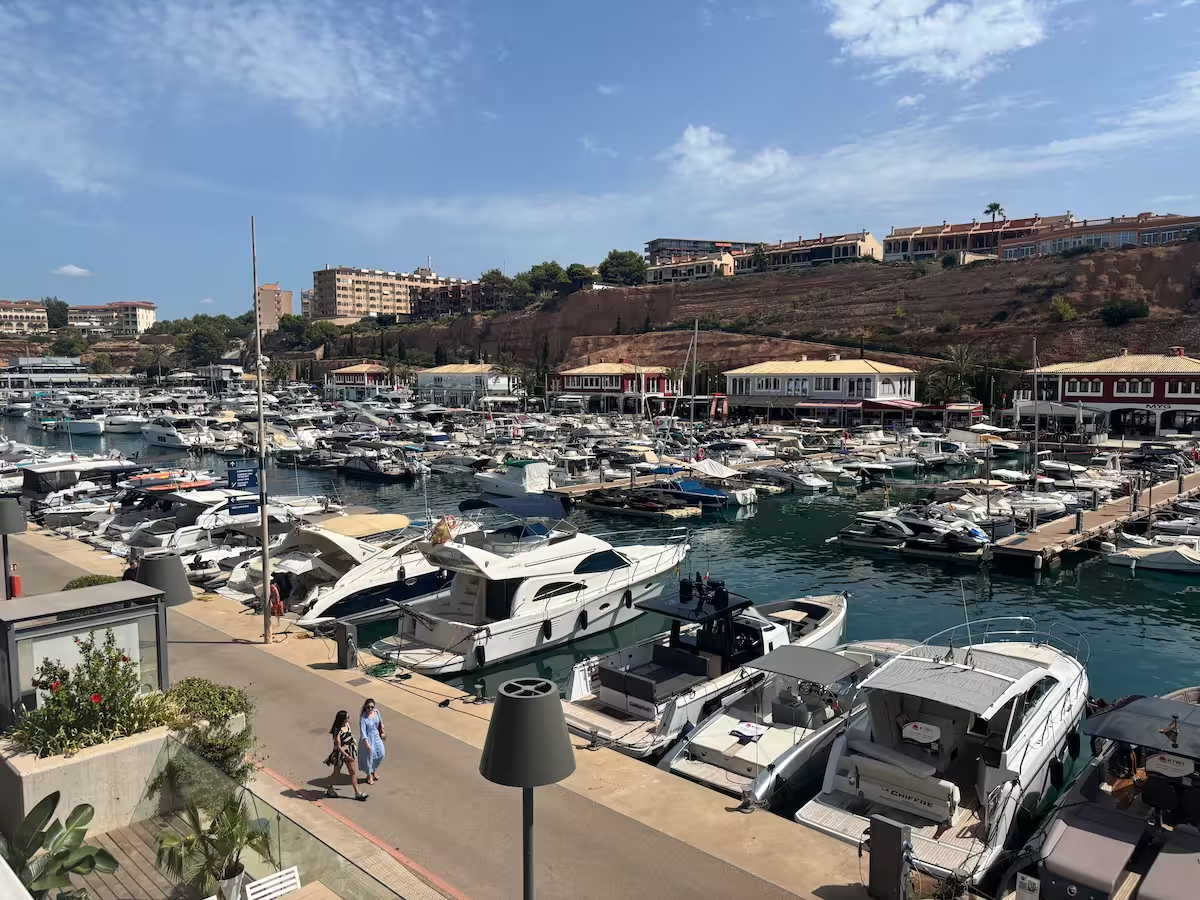
In my many conversations with marina owners and managers around the world, I have learned that the marina industry is largely heading in one direction, and that is towards increasingly bigger boats.
It is worth saying that this trend is not exactly news; people have been making this case for very many years. What has changed, however, is the desire for those with the ambition and the capital to take advantage of these changes in the global recreational boating fleet.
The tensions created in the market - and where the opportunities therefore lie - are the result of a mismatch between how long it takes to build a superyacht and how long it takes to build a marina. While it might take an average of three or four years to build a superyacht, even a reconfiguration of a marina within its pre-existing physical limits can take up to a decade. Any new-build marinas could indeed take even longer to be realised, especially if their development gets stuck in delays or bogged down with legal challenges.
The global fleet is therefore changing a lot faster than yacht infrastructure is able to presently accommodate. This raises the question of whether marinas should rush to play catch-up and capture demand that exists today, or try to predict what the market might look like decades from now and plan accordingly.
These are the questions that will be explored during the inaugural Yacht Infrastructure Summit, hosted at Metstrade on 18 November 2026 in partnership with Safe Harbor. Meanwhile, during Metstrade itself, on 17-19 November, delegates will be able to walk the floor and meet with dozens of companies who are making this future possible.
Predicting the future
The chief development officer at Safe Harbor, Colby Cooper, takes the latter view. “The question isn’t whether today’s marina can accommodate today’s yacht,” he says. “It’s whether the infrastructure we invest in today will accommodate the fleet 10, 20 or 30 years from now. We have to design with the flexibility and capacity to adapt as vessels, technology and owner expectations evolve.”
The exciting nuance about this reality is that it gives marina developers a chance to approach their work from a different perspective. This approach is driven by future-forward innovations, the likes of which are exhibited across Metstrade.
Cooper continues: “Many of the world’s marinas were built for a generation of yachts that no longer represents where the fleet is going. The opportunity now is to rethink marina infrastructure from the yacht backward, understanding what the next generation of vessels will require and designing the waterfront around those needs.”
Bob Hoogendoorn of Balmaris Marinas argues that marinas are not ready for the next generation of yachts, and that the problem is not only engineering but also segmentation.
“Marinas are multi-decade assets that serve a fleet that turns over every 10-15 years, and this churn is a function of total cost of ownership, change in ownership and changing yacht specifications,” he says. “Marinas that were built for 12-metre boats decades ago often can’t take today’s 12-metre boats, and pedestals for a diesel fleet now meet hybrid propulsion.”
“The question goes beyond the technical evolution of yachts. The marina of the future must be able to address a wide range of stakeholders. Think of owners, captains, guests as well as the community surrounding the marina.”

Building the destination
The necessity for marinas to diversify their revenue streams away from the traditional berth rental model is another factor that has come to drive change in this industry. Indeed, while marinas are often located in extremely popular and highly frequented locations, comparatively few patrons (in terms of raw client turnover) will actually come from the marina.
“Marinas are part of a wider waterfront context; the trend has been for marinas to become more open and accessible,” says Gosse de Boer, a marina and nautical engineer at Haskoning. “In the future, marinas should integrate even better with surrounding communities, nature, public space, tourism, mobility, etc. to create more of a destination and add more value.”
In many respects, it is the community or “ecosystem” that makes the destination. Marinas are dynamic spaces with many simultaneous, overlapping and often interdependent stakeholders in which one part’s success can drive the success of another part. A successful marina with plenty of boats to admire is always a much more enjoyable place to eat dinner than a lifeless, empty marina. Similarly, unless you are deliberately searching for isolation and relaxation, a marina is more likely to attract clients if it is known to be in an already vibrant and attractive destination.
Jamaine Campbell, CEO of Elite Dynamics, who are platinum partners of the Yacht Infrastructure Summit, recognises the challenges that overlapping verticals can pose to a marina. “The next generation of yachts will arrive in a marina sector that is already changing quickly,” he says. “We are seeing marina groups attract billion-euro valuations, putting far more focus on how these businesses are run, how they scale and where future value comes from.
“For marinas that want to attract these yachts, the obvious investment is in the physical infrastructure. The less visible part is the technology sitting behind it all. As yachts become more advanced, the marina has more to coordinate across services, maintenance, customers, revenue and day-to-day operations. If that information sits across disconnected systems, the physical investment can only take the business so far.”
“Preparing for the next generation of yachts means making sure the technological infrastructure is every bit as sophisticated as the physical infrastructure built to serve them,” he concludes.
Safe Harbor’s Colby Cooper sums it up neatly: “The world’s best superyacht marinas will be destinations people cross an ocean to experience. That requires extraordinary marine infrastructure paired with equally thoughtful architecture, hospitality, amenities and shoreside experiences.”

Finding the funding
The vision put forward by the likes of Safe Harbor, patron partners at the Yacht Infrastructure Summit, is a bold one. But these changes do not come cheap. The wholesale reorganisation and reimagination of marinas can scarcely be done by small family businesses or municipalities operating on threadbare budgets. Unless being undertaken as nation-building projects with governmental backing, as is often the case in the Middle East, it is increasingly up to private equity to provide the funding to make this vision become reality.
“That is where institutional capital changes today’s marina landscape,” says Bob Hoogendoorn. “Most marinas are single assets in family or municipal hands with a limited balance sheet for a reconfiguration, a new lift or an upgrade. Readiness is not a question of ambition. It is a question of who can fund it and the vision behind the funding.”
To this end he cautions against underserving one stakeholder at the expense of others. Rather one should investigate where certain members of the community are “locked out” and “invest against the bottlenecks” they find.
Flexibility
The key lesson learned is the importance of flexibility. The next generation of marinas need flexibility in design, flexibility in amenities, flexibility in services, flexibility in climate resilience and flexibility to grow as businesses. The paradox is that marinas and yacht infrastructure in general are inherently inflexible. The model has long been that the boat is berthed in the marina, and not the other way round.
And yet, with the changes in the global fleet progressing as quickly as they are, and with yacht infrastructure struggling to keep up, perhaps it is a distinctly future-forward approach that the industry needs. Perhaps it is time to start adapting the marina to the boat.
A challenging feat it may be, however it is one that dozens of exhibitors at Metstrade, taking place at RAI Amsterdam on 17-19 November 2026, are busy tackling. Whether it be stronger pontoons, more powerful electrical infrastructure, climate-resilient decking or sustainability-driven innovations, you will find the next generation of marina and waterfront infrastructure at Metstrade.
Meanwhile, to hear from the leading voices behind this change across marina and waterfront industry, attend the inaugural Yacht Infrastructure Summit, taking place on 18 November 2026 at Metstrade, and organised by SuperYacht Times and Marina World in partnership with Safe Harbor.
While free registration for Metstrade for the general public closed on 31 October, Marina World readers can continue to register free of charge right up to and during the event via this exclusive link here.