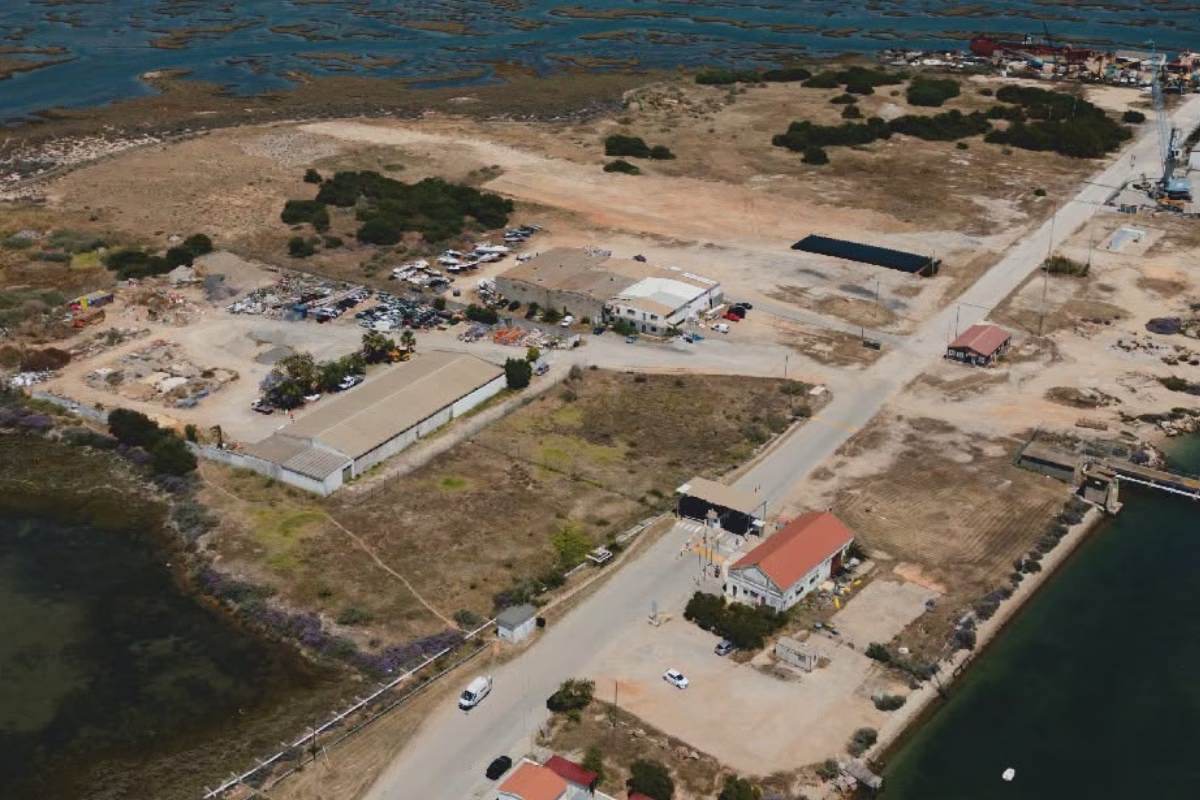
On 30 March 2026, Team Perry’s, an international consortium led by the Japanese firm Index Consulting and including Spanish company Ocean Capital Partners, was selected as the successful bidder in Yokosuka city’s tender for the development and management of the new Uraga Marina, located south of Tokyo. Centred on a planned superyacht marina, the project forms part of a wider mixed-use waterfront scheme that reflects Japan’s gradual move towards infrastructure better suited to larger yachts.
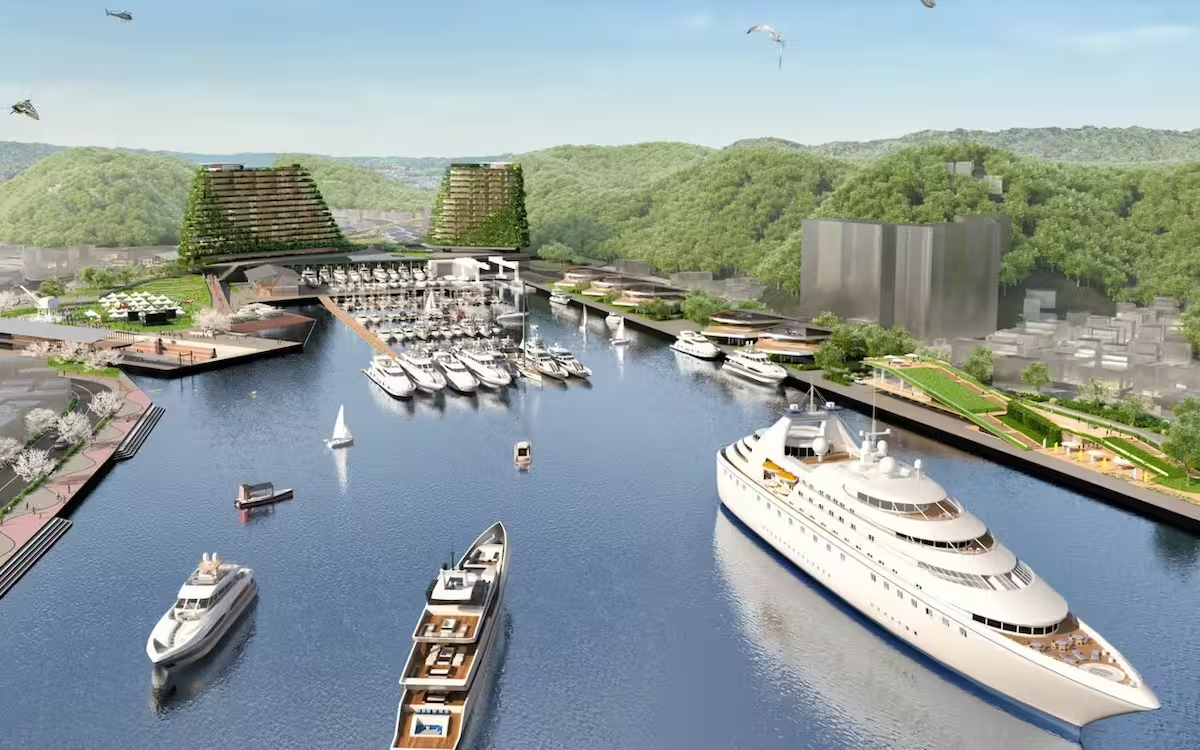
The consortium’s selection comes as Japan begins to lower some of the barriers that have historically constrained larger-yacht activity, through regulatory changes affecting foreign-flagged vessels and a small but growing number of marina projects intended to support bigger yachts. For Ocean Capital Partners, a Spanish maritime infrastructure group active across port and marina advisory, investment and asset management, Uraga marks its first marina project in Asia.
Marina World spoke with Sara Blanco, partner at Ocean Capital Partners and head of advisory services, to understand what led the company to become involved in a superyacht marina project in Japan, why it entered the market through Uraga and how it believes the development could differ from existing marina facilities in the country.
How Ocean Capital Partners became involved
Blanco framed Ocean Capital Partners’ involvement in Uraga as both a strategic and an operational decision. She described the project as “a rare opportunity”, not only because of its scale, but because it could contribute to “a future change in the yachting sector in Japan”.
Explaining how the company became involved in the consortium, Blanco said the partnership was shaped by a clear division of expertise. While Index Consulting was “very experienced in very large-scale infrastructure projects” in Japan, it lacked a background in superyacht marinas. Ocean Capital Partners, she said, brought international experience and specialist knowledge in that area, making the collaboration a logical fit.
Uraga also marks the company’s first marina project in Asia. Blanco described it as Ocean Capital Partners’ “first experience in Asia” and said it had been involved from a very early stage of the project, beginning with the feasibility study three years ago. In her view, that early involvement has helped the company build the experience and context needed to add greater value as the project progresses.
That expertise is reflected in Ocean Capital Partners’ responsibilities within the development. Blanco said the company is responsible for the marina-related elements of the project, adding: “We are in charge of the feasibility study, the master planning, the risk assessment, the business plan and finally the operations.”

Positioning Uraga for local demand and international ambition
Uraga Marina is intended to serve both domestic and international demand. “On one side, what we see is that there is a strong domestic demand, especially in the Tokyo area,” Blanco said, suggesting this would be important in underpinning the marina’s base business. She added, however, that “a big part of our vision is to position Uraga internationally”, with the aim “not just to serve the local market, but to connect Japan to the global yachting circuit”.
For Blanco, location is central to that ambition. She noted that Uraga sits “at the entrance of Tokyo Bay, very close to Tokyo”, giving it access to one of Japan’s most economically significant regions. She also argued that, although there are already marinas in the area, many are saturated and there is “a lack of slips for big yachts”, which she identified as an important driver behind the project’s focus on larger yachts.
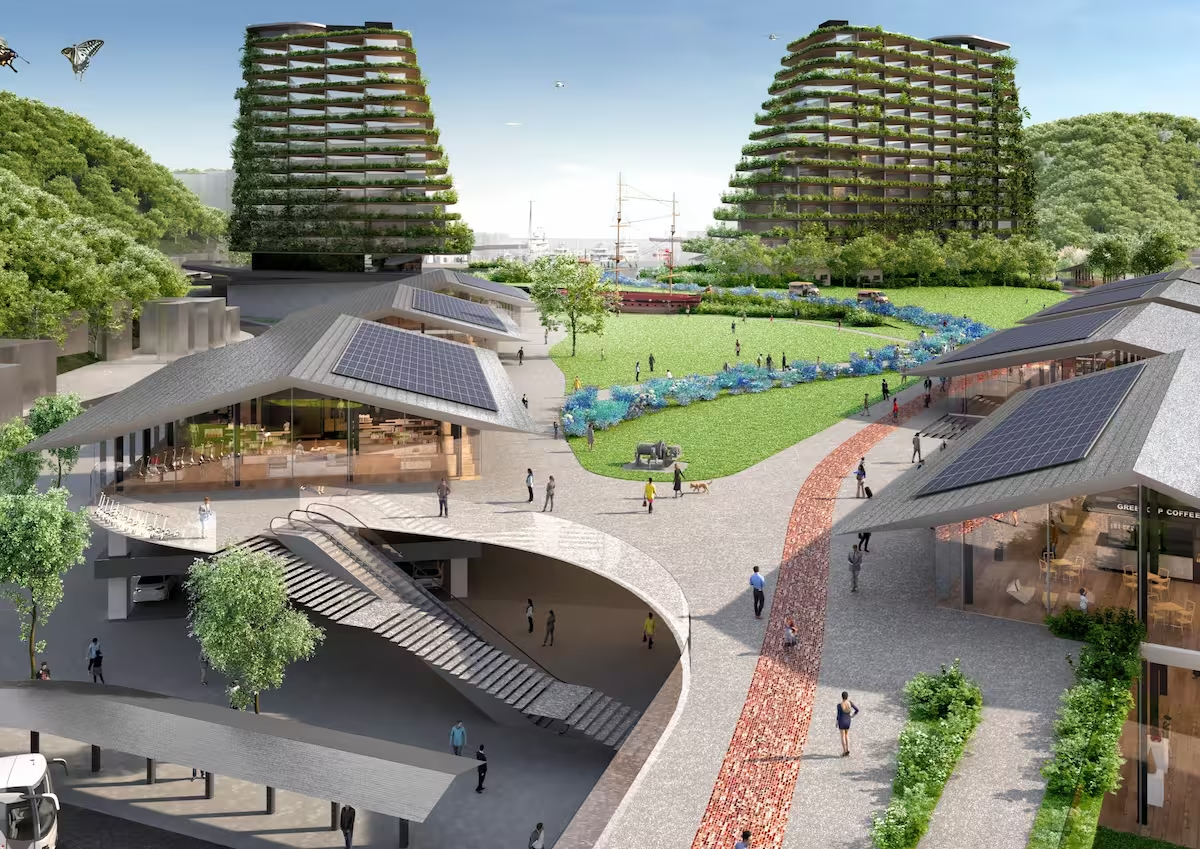
Blanco also suggested that Uraga is intended to distinguish itself not simply through berth capacity, but through the broader proposition surrounding the marina. In her view, the project is being conceived as “an overall destination, not only like a marina”, combining the ability to accommodate larger yachts with more international standards of service and management. She also pointed to the wider mixed-use character of the scheme, including hotels, a museum and villas, arguing that the ambition is to create “a new benchmark for the region” rather than a standalone marina. Blanco added that the scheme is currently expected to include around 200 berths, although the masterplanning process may still lead to adjustments in berth lengths to reflect future demand.
Navigating regulatory and operational challenges
Among the main obstacles, Blanco pointed first to the need to adapt to a different business environment. As she put it, “the Japanese culture is very different from us”, adding that Ocean Capital Partners had spent the past few years working to build a better understanding of the wider context surrounding the project.
Regulation, she noted, may present another challenge. Blanco argued that the framework currently in place in Japan may require further development as larger-yacht activity becomes more established, since handling such vessels involves different manoeuvring procedures, safety requirements and coordination with harbour authorities from the smaller-boat activity more commonly seen today
As a result, Blanco said Ocean Capital Partners may need to “work very closely with the administration” to ensure standards are adapted to “the reality of the operations” associated with larger yachts.
From masterplanning to delivery
Looking ahead, Blanco described the agreement signed in March as “the key milestone” for the project, marking the transition into the next phase of planning. She said the immediate focus is now on the masterplanning process, while site preparation works, including land cleaning, demolition and soil remediation, proceed in parallel.
Those early works, she added, will be “essential” both in preparing the site and in informing the masterplan itself. While the masterplanning process is expected to take “three months more or less”, the ground works are likely to take longer, placing the wider development on a longer horizon.
Based on the current schedule, Blanco indicated that construction could begin “about 2029”, with operations “more or less” expected to start by 2030. Uraga’s longer timeline reflects a broader, if still early-stage, shift in Japan’s marina landscape, from infrastructure geared mainly towards smaller boats to projects increasingly designed to accommodate larger yachts and support more international patterns of use.