This article was also published in issue 154 of Marina World magazine. Click here to read the online version.
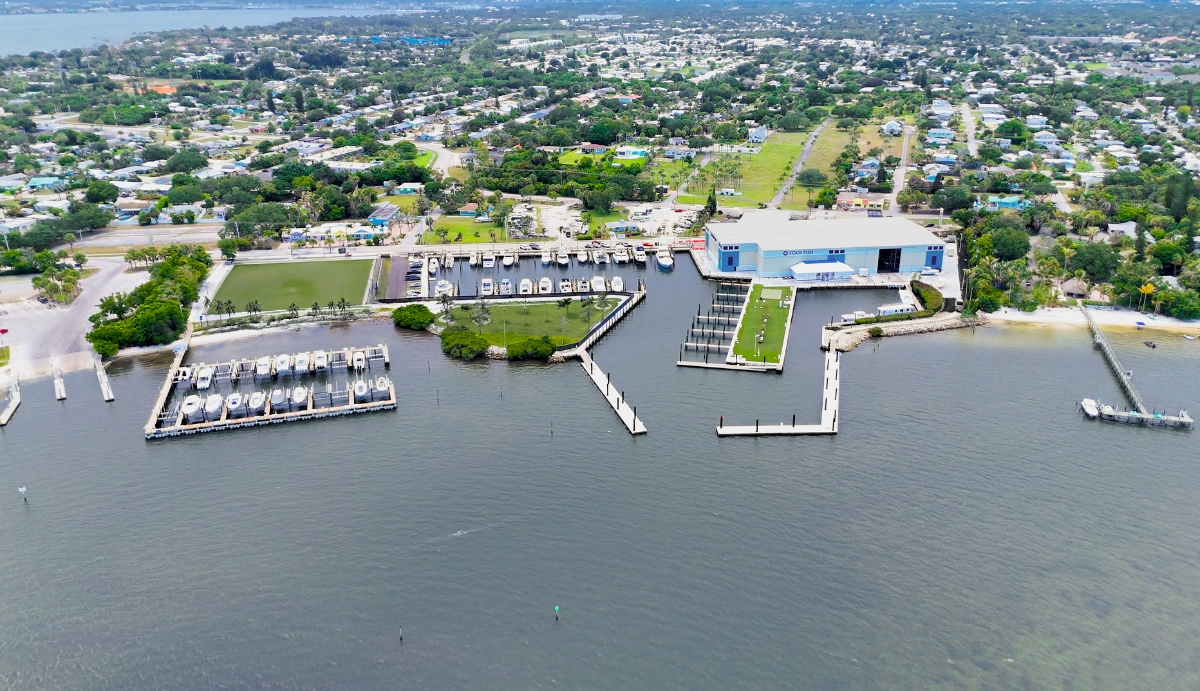
In the first article of its kind in Marina World, the managers of New Zealand’s Westhaven Marina and Suntex’s facility at Marina del Rey in California discuss their unique journeys into the industry and share their experiences about working with local government, protecting the environment, shared boating and organising events.
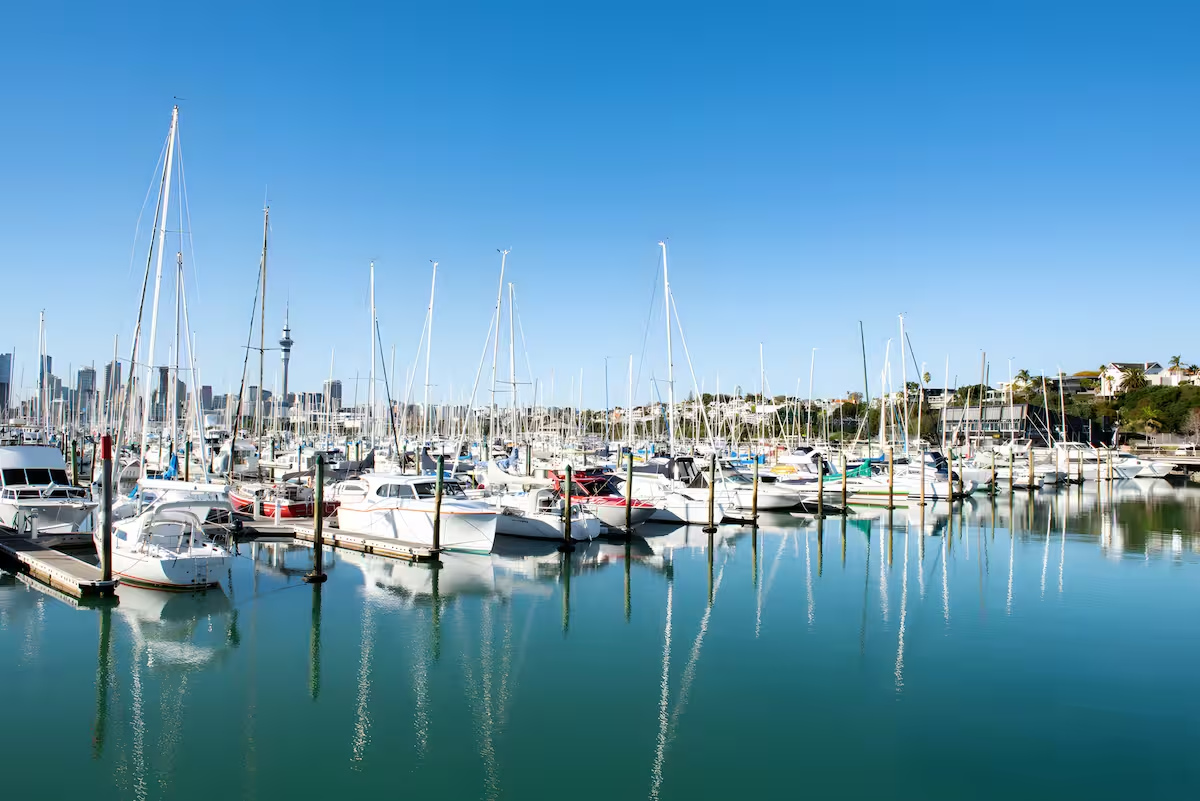
Gareth Wilson, Westhaven Marina, Auckland: I come from a boat-building family and am a fifth-generation New Zealander – my family arrived in New Zealand in 1862. Water and sailing have always been in my blood, and although I spent a lot of time around marinas growing up, I never imagined becoming a marina manager.
I joined Westhaven Marina in 2020 as the maintenance and asset manager, with the intention of progressing within the organisation. Over time, I became the marina manager for not only Westhaven, but also the neighbouring council-owned Auckland Central and Silo marinas. Transitioning from privately owned to council-owned marinas has been an interesting experience, as they differ significantly in how they are run.
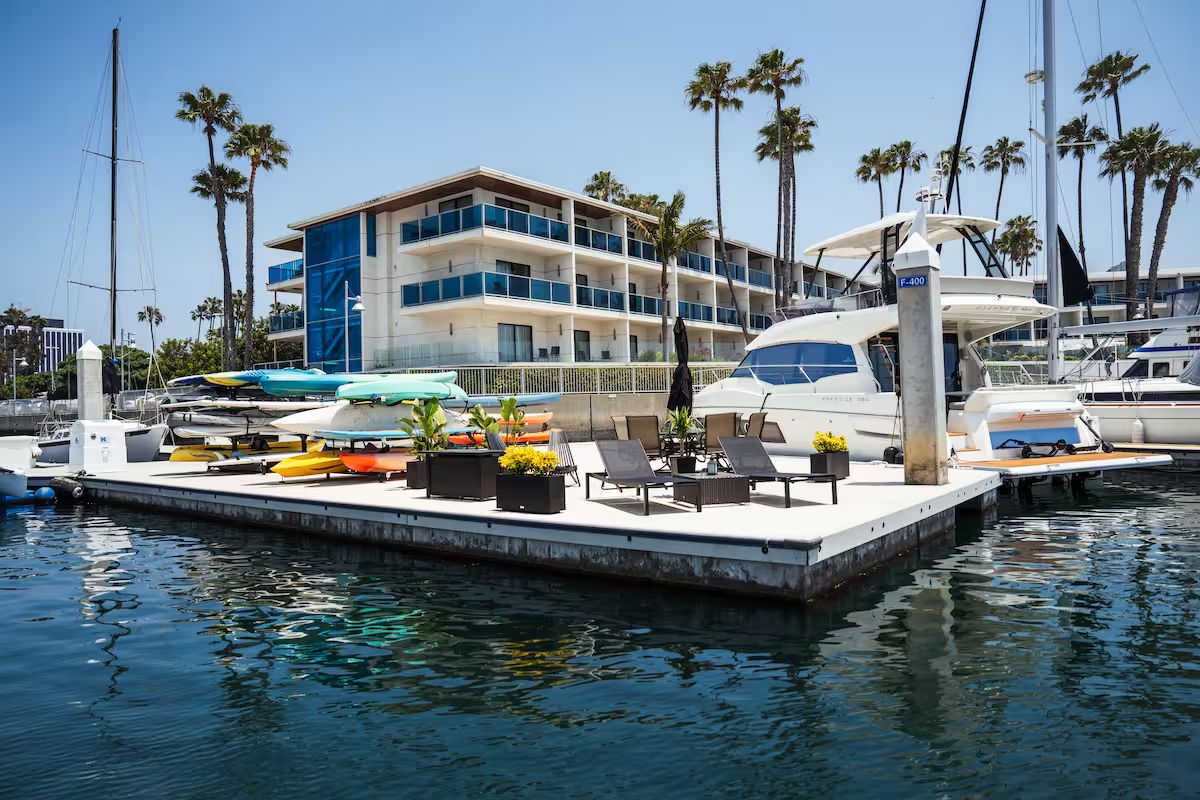
Jackie Zolnierowicz, Marina del Rey (Suntex), California:
My background in marinas is definitely not as extensive! The way I started working in the industry is pretty different. I was racing sailboats at the time and my friend suggested I try and get a job at a marina, which is when I started at Marina Harbor Anchorage in 2013.
I applied to where I am now while on a surfing trip in Nicaragua. I have now worked within the wider Marina del Rey harbour for 13 years and at the Suntex Marina del Rey facility for eight years. But there are 21 marinas in the whole harbour, the Suntex marina is only one of these.
.avif)
Working with local government
GW: When I first stepped into the marinas manager role, I wondered how I would oversee multiple marinas all at once. One of the advantages of working within local government is the strong connection we have with the wider Auckland Council Group. If we have a question – for example about consenting – I can go directly to the relevant team and request assistance. While council responds to requests as they receive them and there isn’t preferential treatment, it helps knowing who to contact. In a private marina setting, that process can take significantly longer.
That said, public organisations come with multiple layers of approval and we must follow structured processes, particularly for maintenance and capital works. Ultimately, the relationship between the marinas and local government comes down to forward planning and recognising the scale of Westhaven. With around 1,800 berths, careful year-by-year planning is essential.
JZ: It is a similar situation at Marina del Rey, but still quite different. The entire Marina del Rey harbour is actually run by the Los Angeles County Department of Beaches and Harbors, and they have their own rules and regulations that all 21 marinas have to follow, including us. Beyond that, each marina at Marina del Rey has their own pricing, all the docks are different, and some rules and regulations will differ from marina to marina.
GW: For us, there are a number of layers when it comes to pricing and regulation. At Westhaven, we currently have two trusts in place – one due to expire later this year and the other in 2029. Following the first expiry, Auckland Council has decided to move to a full rental model for that section of the marina. Given Westhaven’s significance as a council asset, this decision was made at the highest levels of council.
As far as annual rental rates are concerned, these are decisions we can make ourselves, although they still require sign-off from Auckland Council’s head of marinas. Our operational expenditure is also managed by our team, with council approval required. That said, senior leadership maintains a strong interest in rental rates and projected income. Encouragingly, this process has never created roadblocks, which I see as a reflection of the confidence Auckland Council has in our team.
JZ: Our local government is also pretty hands off, each marina at Marina del Rey can more or less do their own thing, especially concerning rates and who rents where. They have their rules on certain things but once they lease the property line, you’re good to do whatever you want so long as you stay within their rules. They don’t have a say on how much rates increase each year, although they do of course collect their share.
%20(1).avif)
Boating demographics
GW: Another thing we are very conscious of is our customer demographics as they say a lot about the future of boating in New Zealand. Our largest group is over 50. While we still see some representation in the 40–50 group, it drops off more noticeably in the 20s. What we are seeing among younger boaters is growing interest in shared boating. We have operators like Freedom Boat Club and Skipperi, as well as local providers, offering a more flexible way to access boating without the commitment of full ownership.
JZ: My boating demographic at Marina del Rey is actually a lot more varied. I have a lot more younger people, especially 20-somethings who are liveaboards, and then all the way up to 80 years old, like you have at Westhaven. But most of them are indeed under 60 years old all the way down to their 20s. We also have a lot of people who have partners in boat ownership and I have seen more women coming into boating too.
There is also a Freedom Boat Club across from me, and then another one called Care Free Boat Club. These are so good for getting people into boating because people can try out lots of different boats.
GW: We see shared boating as an important pathway into the industry, and exploring what the future of this model might look like is a priority for us.
At present, Tāmaki Makaurau has a significant number of smaller runabouts for recreational use and only a relatively small proportion of Auckland’s population actively engages with berthing a vessel in a marina. A key question for us is how we work with our shared boating companies to connect people coming through shared boating with longer-term involvement in marinas. Affordability is a factor for younger boaties, and I think that’s why the entry level boating will increasingly involve shared or joint ownership.
JW: I totally agree with that. I have several boaters that jointly own a vessel, splitting the costs between a few of them. I absolutely think that is one good way to do it. What is not so good is if people buy a boat, use it in the very beginning, and then forget that they have it and neglect it. Owning a boat can definitely be hard on your pocket sometimes and people don’t know how much time and effort go into gas, maintenance, top clean, bottom clean and so on.
Keeping clean and invasive species
GW: In the past, particularly during Auckland’s racing heyday of the 1960s through to the 80s, yacht racing was a major community activity on the Waitematā Harbour, with spectators lining the seawall. That level of participation is far less common today, across both weekday and weekend racing. These days, many vessels remain in marinas for extended periods without regular use, which can contribute to marine growth and maintenance challenges.
In New Zealand, there is now a strong focus on managing invasive species attached to vessel hulls. Many of these species arrive via international vessels entering Tāmaki Makaurau, and strict controls are in place to prevent their spread to other regions. Boats may be restricted from travelling elsewhere in the country unless they have recently been antifouled or cleaned.
Auckland Council also operates a biosecurity team that conducts in-water inspections across Auckland, identifying marine pests and issuing notices requiring vessels to be cleaned before they can be moved. The system is tightly managed to protect New Zealand waters.
JZ: Wow, that’s crazy! Los Angeles county is trying to encourage people to use anti-fouling paint and they are very strict about lake-to-ocean and ocean-to-lake transfers of invasive species. We have divers that will mark if you need new paint, but nothing like this! Boats that don’t really leave the marina can certainly cause problems with bottom growth, yes.
GW: And you have liveaboards in your marina? Is it normally allowed in California?
JZ: I know that my neighbouring marina, Pier 44, doesn’t allow liveaboards. So it will depend on if the individual marina allows it, and Suntex does allow it. However, if a marina within Marina del Rey does allow liveaboards, they must limit it to only 10 percent of the boats.
GW: We only have a small number of liveaboards at Westhaven – around five or so. As a general rule, we don’t allow liveaboards unless there are specific circumstances, such as on compassionate grounds. Liveaboards can bring both positives and challenges, but at Westhaven the expectation is that vessels are actively used. When a boat becomes more of a floating home, it can also contribute to maintenance challenges, including increased bottom growth.
Activities and events
JZ: I am pretty strict at my own marina about top cleaning and bottom cleaning, so if I do see growth we will send them a notice. But we try very hard to get people to come down and enjoy their boats, and to do that we throw a lot of events. Some events will focus on skills that they will need, for example tying knots or splicing. I also organise exercise classes, swap meets, monthly parties, etc. We also do an Earth Day harbour cleanup to try and get people to come down to the marina, engage with the community and enjoy their boats.
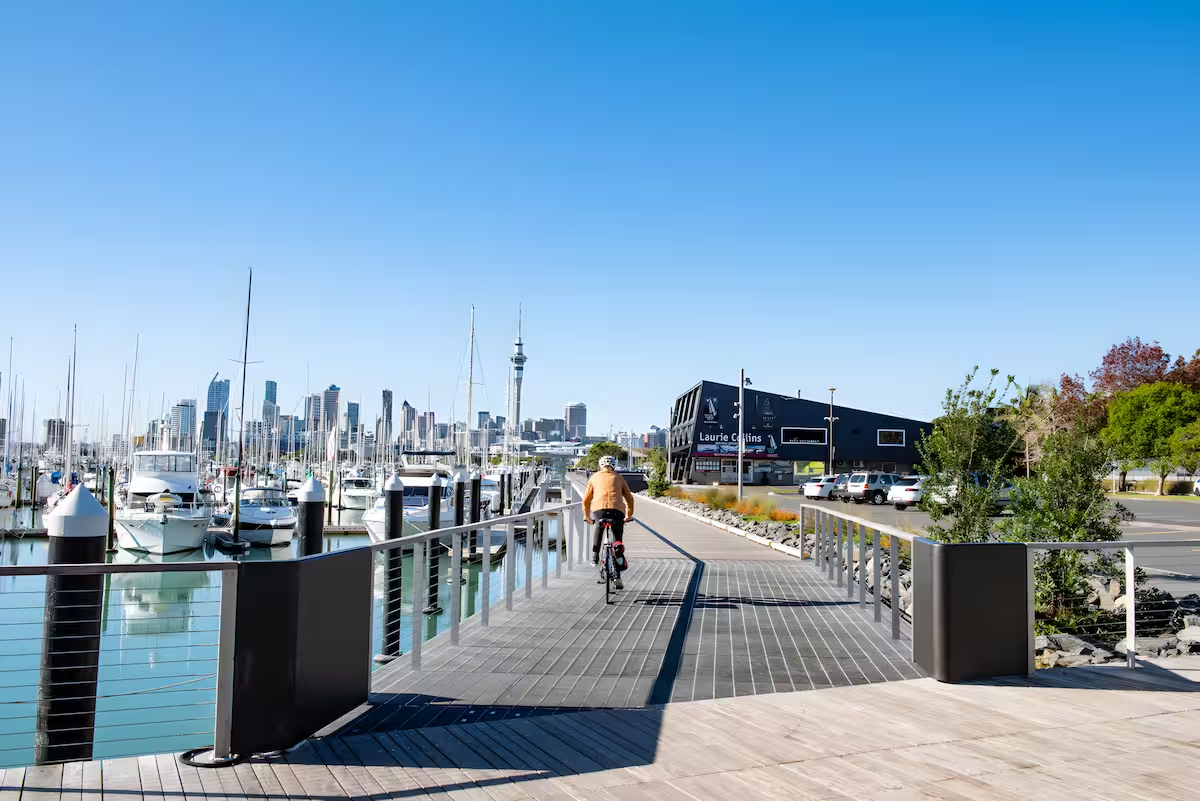
GW: I find this really interesting. The Auckland waterfront is an incredibly popular destination for locals and visitors alike and a popular walking and cycling destination. The idea of creating a vibrant atmosphere through specific events to encourage people to come down and enjoy the marina in different ways is a good one.
JZ: Absolutely, it’s about creating additional amenities and getting people involved. But it’s also a way to get people from different marinas to come to mine, because they realise that we organise fun activities to create that community.
GW: Westhaven used to host a number of open days and swap meets, but since COVID we haven’t quite got back into that rhythm. We still have strong yacht club and hospitality partners around Westhaven, and we’re keen to continue strengthening those relationships. There is a clear opportunity to work more closely together and better understand each other’s needs. The yacht clubs are intrinsically linked to the success of the marina – when they are thriving, it flows through to Westhaven as well, particularly through the events and activity they generate.