The 2026 programme of the Smart & Sustainable Marina Rendezvous is out and it reads like the agenda of an industry that has finally decided what it wants to be.
.avif)
The marina has been treated as a piece of hardware for most of its history. It has long been a place to leave a boat, priced by the metre, judged by its proximity to a good restaurant, useful, unglamorous and largely invisible to anyone who did not own something that floated.
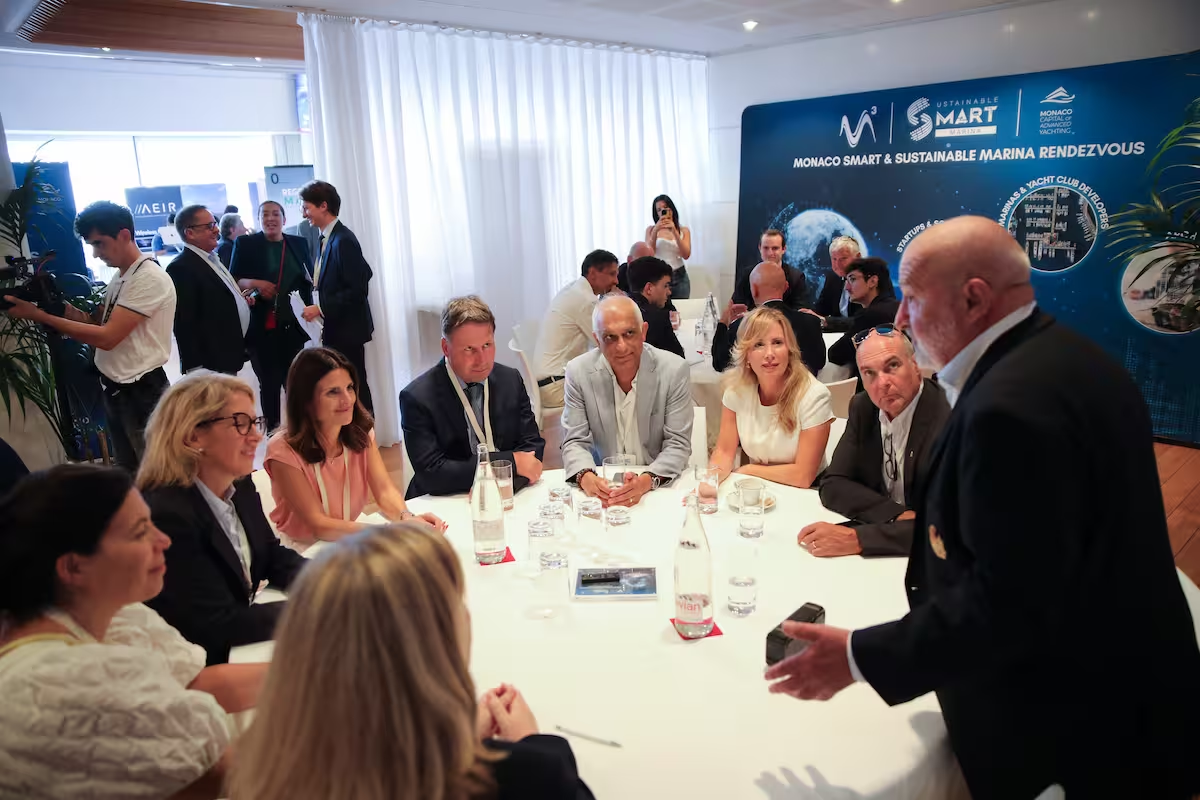
That framing is now obsolete. Published today by M3 Monaco, the programme for the sixth Smart & Sustainable Marina Rendezvous, taking place on 20-21 September at the Yacht Club de Monaco, is built around the three forces that made it so: capital, nature and technology.
Capital has noticed
The most consequential session of the two days may also be the least nautical. The Trillion-Euro Asset Class starts from a simple observation, namely that the world's marinas sit on roughly a trillion euros of waterfront real estate, regulated concessions and recurring revenue, and the investment community is only just starting to take notice.
Every part of that sentence matters. Waterfront land cannot be replicated, concessions have defined terms and public counterparties, and revenue arrives whether or not the owner shows up in August. Assets with those characteristics do not stay off the institutional radar for long, and the arrival of that capital is reshaping who builds marinas and to what standard.
The practical counterpart to this session comes on Monday afternoon in Marina Projects, where operators, architects and financiers discuss what actually gets a project delivered, from site selection to ribbon-cutting. Ambition might be cheap, but permitting, financing and delivery are not.
Nature has moved onto the balance sheet
The Bio-Positive Marina takes the argument that has circled the sector for a decade and inverts it. Biodiversity has long been filed under compliance, consisting of costs, conditions, consents and boxes. The session's premise is that marinas hosting genuinely thriving marine life command premium berths, unlock ESG-linked finance and convert that cost into a revenue driver.
This is not a moral appeal. It is an asset-management argument and it is the reason the environmental conversation in this industry has changed tone. The question is no longer whether to do it but who can prove it.
The proof, in part, is structural. Beyond Sustainable: The Architects, Engineers and Innovators Redrawing the Marina addresses a design brief that would have seemed absurd twenty years ago: regenerative, climate-adaptive, energy-positive and beautiful, all at once. On Sunday afternoon, architects present their entries to the annual Smart & Sustainable Marina architecture competition, alongside marinas presenting their destinations.
Technology has arrived, along with its bill
Three workshops on Sunday afternoon deal with the things that get built and the things that get attacked. Cybersecurity and the Connected Marina takes on what the programme calls the attack surface no one wants to talk about: ransomware, OT exploits and what operators are actually doing about it. Although connectivity is being sold as a service upgrade, it also represents a vulnerability and the sector has been slower than most to say so out loud.
The New Construction Materials Reshaping Marinas looks at the materials that will form the next generation of pontoons, breakwaters and berths, such as bio-concrete, recycled composites and upcycled sediment. And After the Refit confronts the least comfortable subject in marine decarbonisation: not the new-build showpiece, but the existing fleet, its refit economics, its retrofittability and whether owners actually want any of it.
Monday's workshops continue the thread. AI & The Waterfront narrows a sprawling topic to three concrete jobs - yards on the refit floor, marinas at the front desk, captains on the bridge - and asks what works. The Modern Berth covers how berthing infrastructure is being reinvented for electric yachts, connected services and rising demand.
And the newcomers get the floor twice
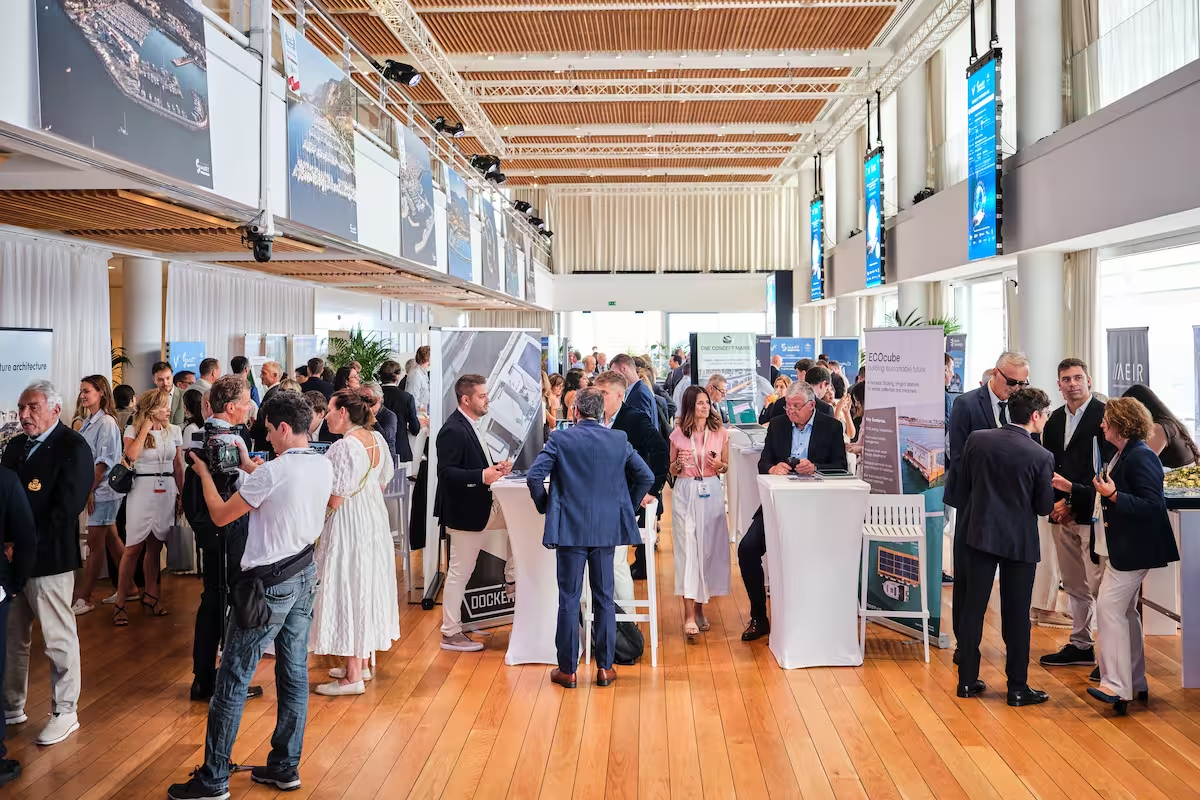
Two Innovation Top 5 sessions on Monday put ten jury-selected startups and scaleups in front of the room to pitch live, once mid-morning and once before lunch. M3 Monaco has always built the Rendezvous as a place where a small company with a good idea can leave with a pilot project. The programme reflects that, with the pitching sitting in the main conference room in prime time and not in a side hall. The two days close with the award ceremony on Monday afternoon, followed by cocktails on the terrace.

.avif)