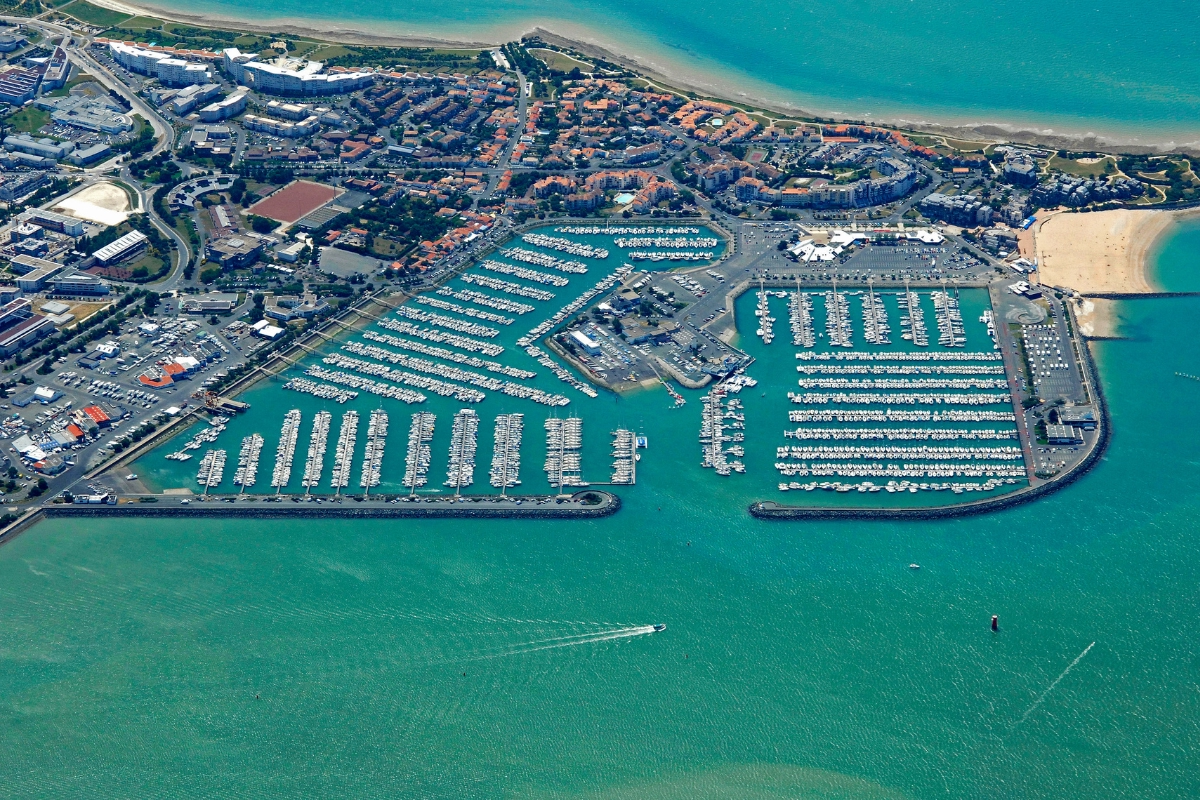
Over the past few years, the marina industry in Montenegro has attracted substantial investment, especially in Boka Bay, arguably one of the Adriatic's key hotspots. However, the real growth is yet to come as the yachting industry looks forward to the benefits of the upcoming Schengen accession.
.avif)
Montenegro is home to several dozen marinas scattered along its 295km coastline. Quite a few of these facilities have undergone transformation over the past several years, with the modernisation of the industry's crown jewel, Porto Montenegro, undoubtedly being the key part of the industry's evolution.
By 2025, Porto Montenegro had added around 150 new berths, bringing total capacity to over 580 berths, including facilities able to host very large yachts up to 250m. This expansion is part of a phased roll‑out under long‑term concession planning, with the ultimate marina masterplan targeting up to 850 berths as development continues.
Still, industry development is not limited to Porto Montenegro. Other marinas in Kotor, Herceg Novi and Budva have also been investing in modernisation and streamlining operations.
The growing yachting industry has been a key driver of growth in Montenegro's marina industry over the last few years. According to data from the statistical office of Montenegro, in 2024 a total of 4,693 foreign vessels for leisure, sport and recreation entered Montenegro's internal sea waters, compared to 4,432 yachts in 2023.
"A significant number of new clients are choosing Montenegro for its outstanding strategic position in the Adriatic, exceptional customer service and modern, well-maintained marinas and facilities," commented Zvonimir Tomić, marina director at Lazure Hotel & Marina.
Steady growth
Despite the traffic growth, the existing marina capacity in Montenegro is currently sufficient, commented Aleksandra Janičić, the secretary general of the Montenegrin Sailing Federation. "Recent marina developments have tangibly improved facilities," she added.
Yachting business officials note that Montenegro attracts yachts of all sizes, ensuring growth among different segments.
"We observe a healthy mix of private yachts, charter fleets and superyachts," Janičić said. "Montenegro offers competitive services and pricing, while maintaining a more intimate, less crowded atmosphere than larger hubs."
Against this background, Montenegro's marinas have few reasons to complain. Over the past three years, Lazure Hotel & Marina has performed exceptionally well, with each new year and season proving to be record-breaking in terms of occupancy, Tomić said.
"The marina has consistently reached 100 percent occupancy and has established a waiting list exceeding half of its total capacity, accommodating yachts of various sizes. Clients arrive from all over the world, including the USA, the UK, Australia, Germany and Russia, as well as from neighbouring countries, further highlighting the marina's strong international appeal."
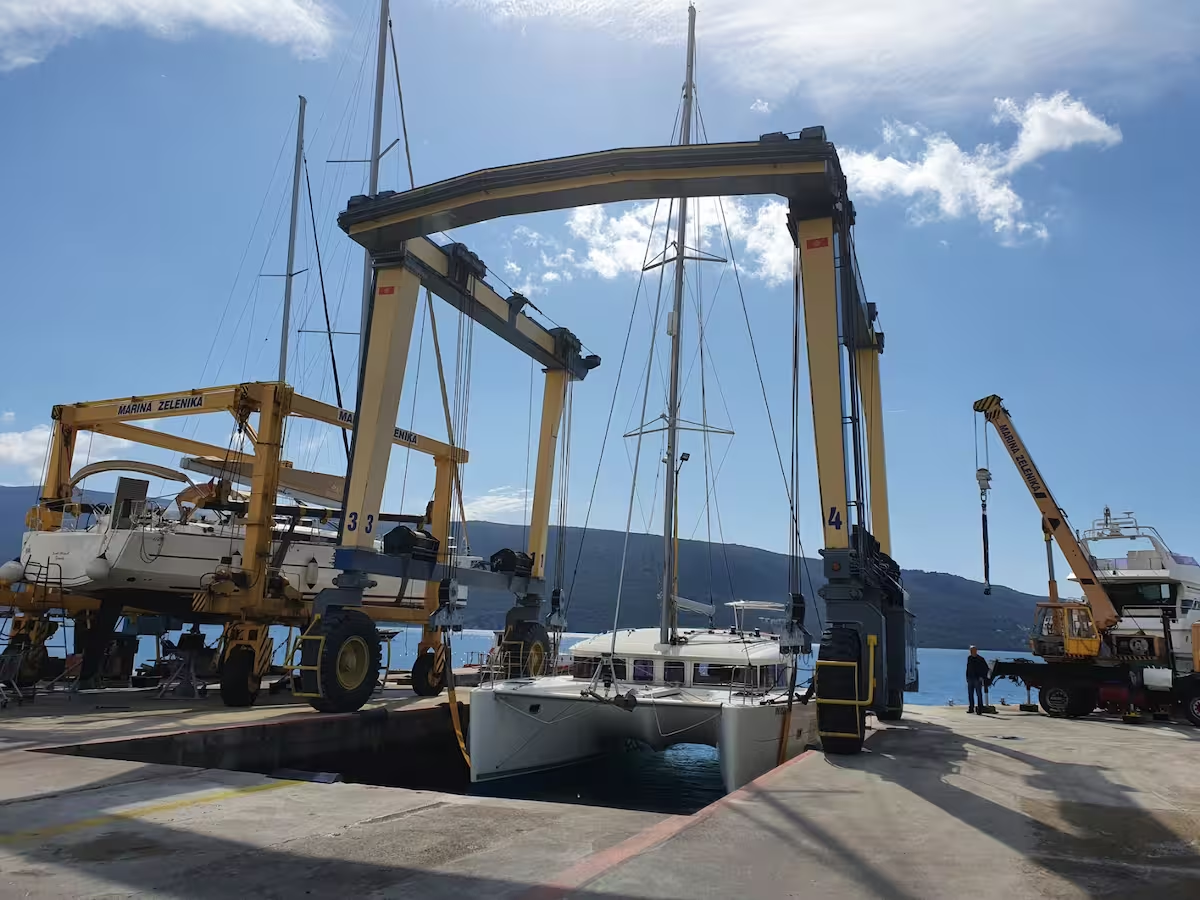
"Montenegro's yachting sector continues to grow and become even more professional," agreed the press office of Marina Zelenika, a dry dock marina in Herceg Novi.
"While much of the government attention is on luxury marinas and waterfront developments, there is also a growing need for dependable service facilities that support yachts behind the scenes," Marina Zelenika's press office added.
The rise in demand is felt along the value chain in the yachting industry. Business for Naval, a yacht refitting company from Tivat, for instance, has been generally positive over the past few years, even despite global challenges such as supply chain disruptions and rising operational costs, commented Antonio Zgradić, naval architect at Navar.
"Demand for maintenance, refit and technical services has remained strong, particularly from owners seeking reliable, high-quality support in the Adriatic region," Zgradić said.
Montenegro's yachting and marina industry in recent years has transitioned from a seasonal tourism segment into a year-round high-value service economy, according to Radule Dragovic, director of DRM Maritime Services, a Kotor-based yachting firm.
As Dragovic explained, business has been robust especially following the pandemic, though the industry sustained a heavy blow when the government decided to abolish tax-free fuel. At the end of the last season, however, the tax-free fuel was reintroduced resulting in the yachting industry growing again.
On Schengen's threshold
Montenegro's pending Schengen accession is viewed as a major milestone for the yachting industry. The country aims to close EU negotiation chapters by the end of 2026, with the goal of joining the EU by 2028.
"Montenegro's upcoming Schengen membership will primarily ease crew and passenger mobility, making nautical operations smoother and more attractive for charter companies and private yachts," Janicic said.
Beyond mobility, Janicic continued, Schengen status signals Montenegro's integration into European standards, which strengthens investor confidence and enhances the country's reputation as a safe and reliable destination. For the marina industry, the most important impact will be the opportunity to upgrade administrative frameworks and emergency management systems in line with EU practices, Janicic stated.
Marina Zelenika expects Schengen membership to have a positive impact on its business, the marina's press office stated, as easier border procedures would make Montenegro more accessible for yacht owners.
"For many, fewer administrative steps will make a real difference when deciding where to store or maintain their boat. But the most important thing for us is that improved logistics for spare parts and yacht-related products would make our process much smoother," the press office added.
Despite some improvements, Montenegro's Schengen accession will not result in a dramatic shift in the market for privately owned yachts, Tomic said. "It is realistic to expect that a certain percentage of private clients may reposition further south, towards Albania or Turkey."
Nevertheless, it is likely that the vast majority will remain in Montenegro due to its established infrastructure and service quality, he said. The charter segment is likely to experience growth and the yacht market overall is expected to expand, with larger international companies potentially selecting Montenegro as their home port.
"With bigger yachts and improved access to the EU market, an increased flow of high-net-worth visitors can be anticipated," Tomic added.
The integration of Montenegro into the Schengen area and the EU will be a turning point for the country's yachting and marina industry, Dragovic said. "Accession will simplify vessel tracking and customs procedures through digital integration with EU systems."
On the flip side, Schengen accession may bring challenges. For example, the transition may challenge existing tax breaks such as the yacht fuel tax exemptions, as Montenegro aligns with EU VAT and excise duties, Dragovic said.
At the same time, Montenegro is in the process of aligning its visa regime with European Union standards, with plans to end visa‑free entry for Russian citizens by around September 2026, replacing it with a visa requirement as part of its EU accession commitments. A part of the industry is voicing fears that it might affect yachting in the country as Russians traditionally accounted for a significant share of yachts visiting the country.
.avif)
Natural constraints
However, yachting industry participants warned that Montenegro lacks sufficient capacity to expand its marina infrastructure without substantial changes to existing legislation, and particularly laws related to environmental protection.
"While Montenegro boasts world-class facilities like the iconic marinas of Porto Montenegro and Portonovi, the industry faces structural and geographic bottlenecks," Dragovic admitted. "There is a recognised need for further marina upgrades and expansion to accommodate the rising number of high-end vessels."
The existing marinas are satisfactory for now, Dragovic added, but the key issue is that only Porto Montenegro and a yacht marina in Tivat can expand and increase capacity. At the same time, in some areas the need for new capacities is already visible to the naked eye.
"The marina in the port of Kotor should improve the infrastructure for receiving larger yachts; now they can only receive a few yachts with a maximum length overall of 50m," Dragovic noted as an example.
The Montenegrin Sailing Federation, in turn, emphasised the need to maintain a careful balance between the marina industry growth and environmental protection.
"Expansion should not be pursued at any cost. Instead, the focus should be on quality of service, environmental stewardship and sustainable use of existing berths," Janicic said.
In particular, the organisation stressed the importance of protecting Boka Bay, also known as the Bay of Kotor, likely the most attractive place for investing in the country's yachting infrastructure.
"Boka Bay is a unique ecological and cultural treasure, and our priority is to ensure that its capacity is respected, its biodiversity preserved and that nautical activities remain safe and well-managed for all participants," Janicic added.
"Unlike other hubs, Montenegro must be vigilant in preserving its marine biodiversity and preventing overdevelopment," Janicic stressed.