This article was also published in issue 154 of Marina World magazine. Click here to read the online version.
The Dutch company Inter Boat Marinas shares their perspectives on the future of marinas and the value Metstrade brings to the industry.
How has your role as a marina developer and supplier evolved over the past 5–10 years?
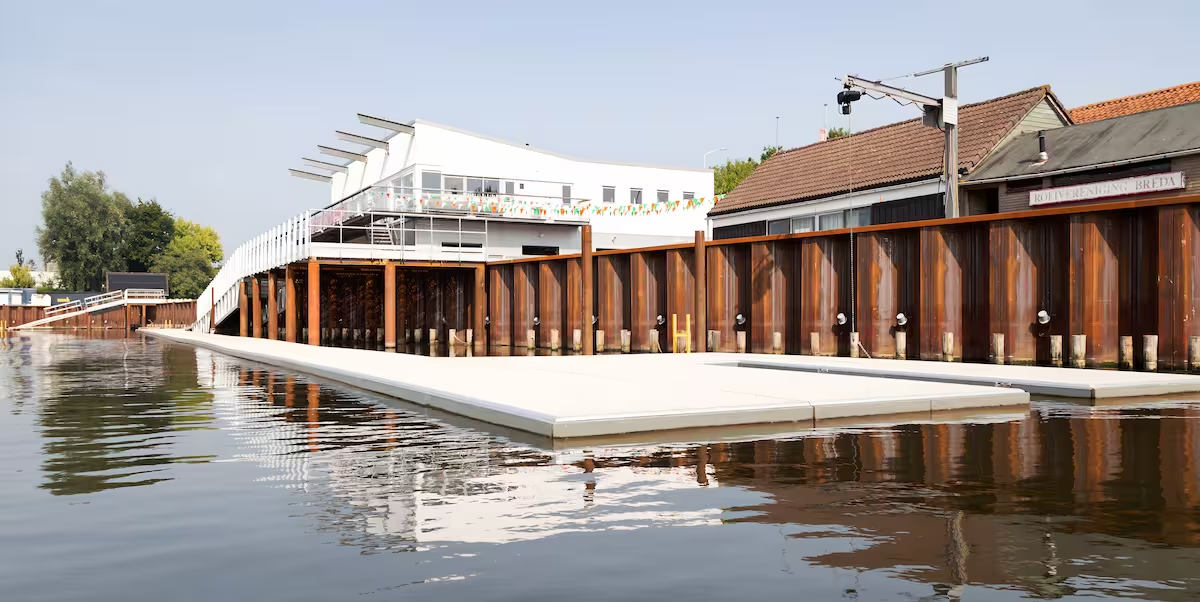
Over the past decade, our role has shifted from being a supplier of floating pontoons to becoming a development partner for complete marina infrastructure. Clients increasingly expect durable, low-maintenance systems with long lifespans, suitable for a growing variety of vessels and user groups. As boats become larger and wider, the demand for finger pontoons, wider walkways and stable floating structures has grown significantly. At the same time, marinas require a broader variety of floating systems and buoyancy options to accommodate different water conditions, vessel types and functional requirements.
Projects have also become more integrated. Marinas are looking for complete solutions that combine floating infrastructure, anchoring systems, utilities, temporary berthing capacity and logistical support. This requires a broader advisory role and closer involvement from the earliest design stages.
Industry platforms like Metstrade reflect and accelerate these developments. The themes we encounter in daily practice — sustainability, electrification, climate adaptation and modularity — are the same topics discussed internationally at the show. Metstrade provides valuable insights from other markets and helps align our work with global trends.
What does a “future-proof marina” mean in practice to you?
A future-proof marina is designed to cope with increasingly variable conditions. Water levels fluctuate more strongly, storm loads are rising and periods of low water occur more frequently. This requires robust anchoring, flexible floating systems and layouts that can adapt to changing circumstances.
Electrification is another key driver. The growth of electric boating demands new energy infrastructure and smart solutions for charging capacity. Marinas that anticipate this now will be well positioned for the next phase of the market.
At the same time, the role of the marina is expanding. Users expect more than a berth: high-quality facilities, recreational opportunities and a safe, accessible environment. This broadening of functions requires careful planning and systems that combine durability, comfort and low maintenance.
The conversations we have at Metstrade help us better understand these developments and anticipate what marinas will need in the coming years.
Which recent or flagship projects best represent your current approach?
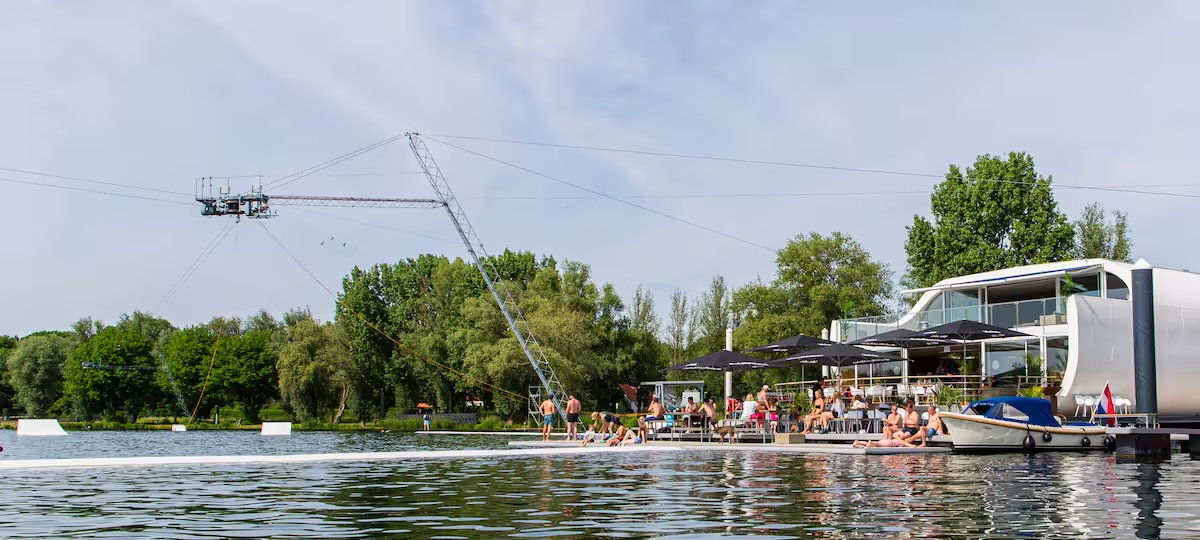
Our recent work across Europe illustrates the diversity and complexity of today’s marina projects. We support large-scale water-based events with temporary berthing capacity, using modular systems that can be installed quickly and withstand intensive use. This includes major public maritime events such as HISWA te Water and SAIL, where additional capacity, safe access and operational reliability are essential.
We also deliver long-lasting, low-maintenance solutions for marinas and recreational areas, ranging from floating walkways to specialised low-freeboard platforms. The complexity often lies in the combination of location-specific conditions, regulatory requirements, soil characteristics and tight timelines.
The lessons learned from these projects — particularly regarding flexibility, modularity and durability — are regularly discussed with international partners at Metstrade, where many of these themes converge.
How is sustainability integrated into your projects?
Sustainability is embedded in our approach. Our floating systems have long lifespans and are produced using regenerated and regenerable materials. This aligns with the growing demand for low-maintenance and future-proof solutions.
We also make conscious choices in our own operations. Our facility is gas-free and equipped with solar panels. We minimise packaging materials, work with local suppliers and continuously optimise our production and inventory processes to improve efficiency and reduce environmental impact.
Demand for sustainable solutions is driven by regulation, client expectations and our own belief that quality and longevity form the foundation of good marina design. The main challenges lie in varying regulations across regions and the higher initial investment that sustainable systems sometimes require. Raising awareness of total cost of ownership is an important part of this transition.
Industry events like Metstrade help accelerate sustainable innovation by bringing together regulation, technology and practical experience.
What major developments do you expect in the marina sector in the coming years?
In the coming years, electrification will have an impact on the sector. This development is driven by regulatory changes, the growing availability of electric vessels and increasing user demand for low-emission boating. As a result, marinas will need to prepare their energy infrastructure and make choices that remain viable in the long term.
Climate adaptation will also become increasingly important. Anchoring, buoyancy and flexibility will play a larger role as weather conditions become more extreme. Marinas that invest in robust systems now will be better prepared for the future.
We also expect marinas to continue evolving into broader recreational destinations. The combination of berths, facilities and user experience will become increasingly relevant.
One trend that remains underestimated is the impact of fluctuating water levels and climate change on existing infrastructure. This will require timely adjustments and long-term planning.
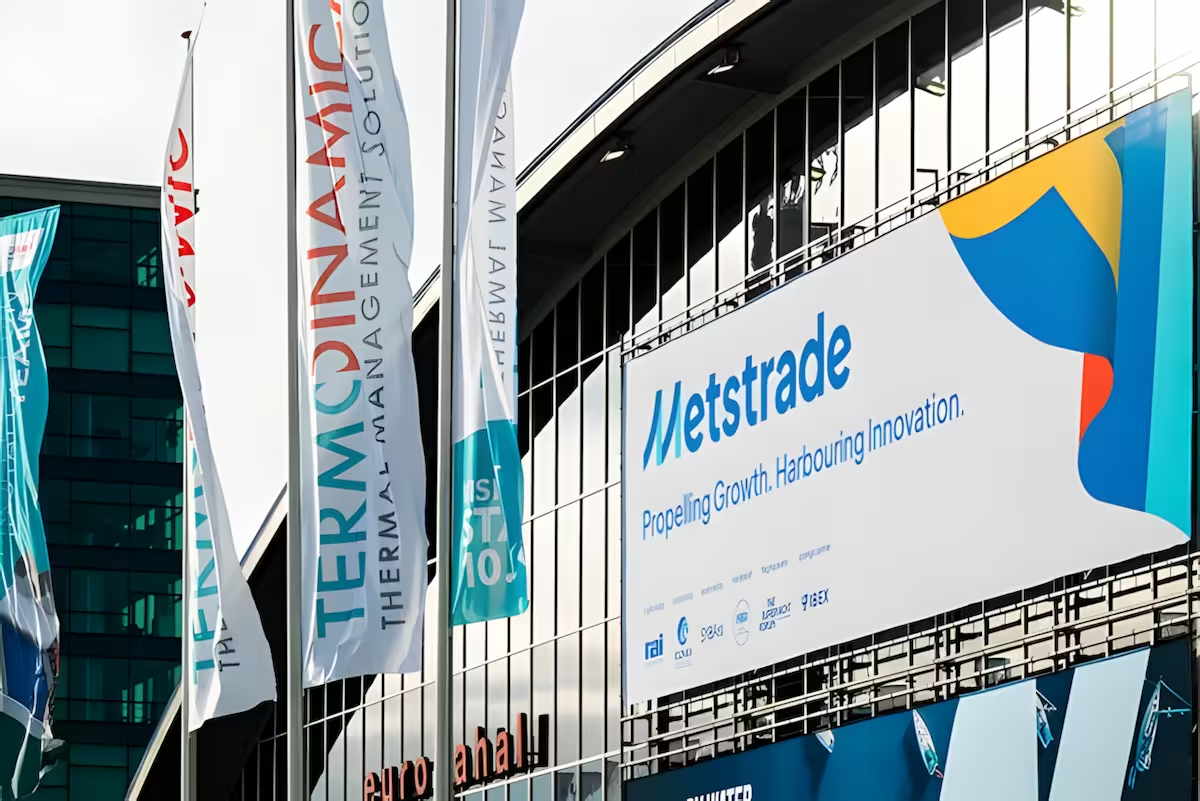
Metstrade plays an important role in shaping these developments. It is an international platform where knowledge, innovation and practical experience come together.
What value does Metstrade bring to your business?
Metstrade is a valuable platform for us. It brings together the international market and provides direct access to decision-makers in the marina sector. It allows us to present our innovations, gather market insights and strengthen relationships.
We continue to participate in the Marina & Yard pavilion because it aligns closely with our target audience and because the quality of discussions and contacts is consistently high. The segment attracts professionals who are looking for reliable, durable and future-proof solutions.
Our goals at Metstrade are clear: networking, showcasing systems and innovations, exchanging knowledge and reinforcing our position in the international market.

.avif)