This partner content article was also published in issue 155 of Marina World magazine. Click here to read the online version.
If you had asked either marina owners or pontoon manufacturers if they had heard of ReefFloat one year ago, nearly all of them would have looked at you blankly. One year on, word has spread about their EPS-free concrete floats for marinas.
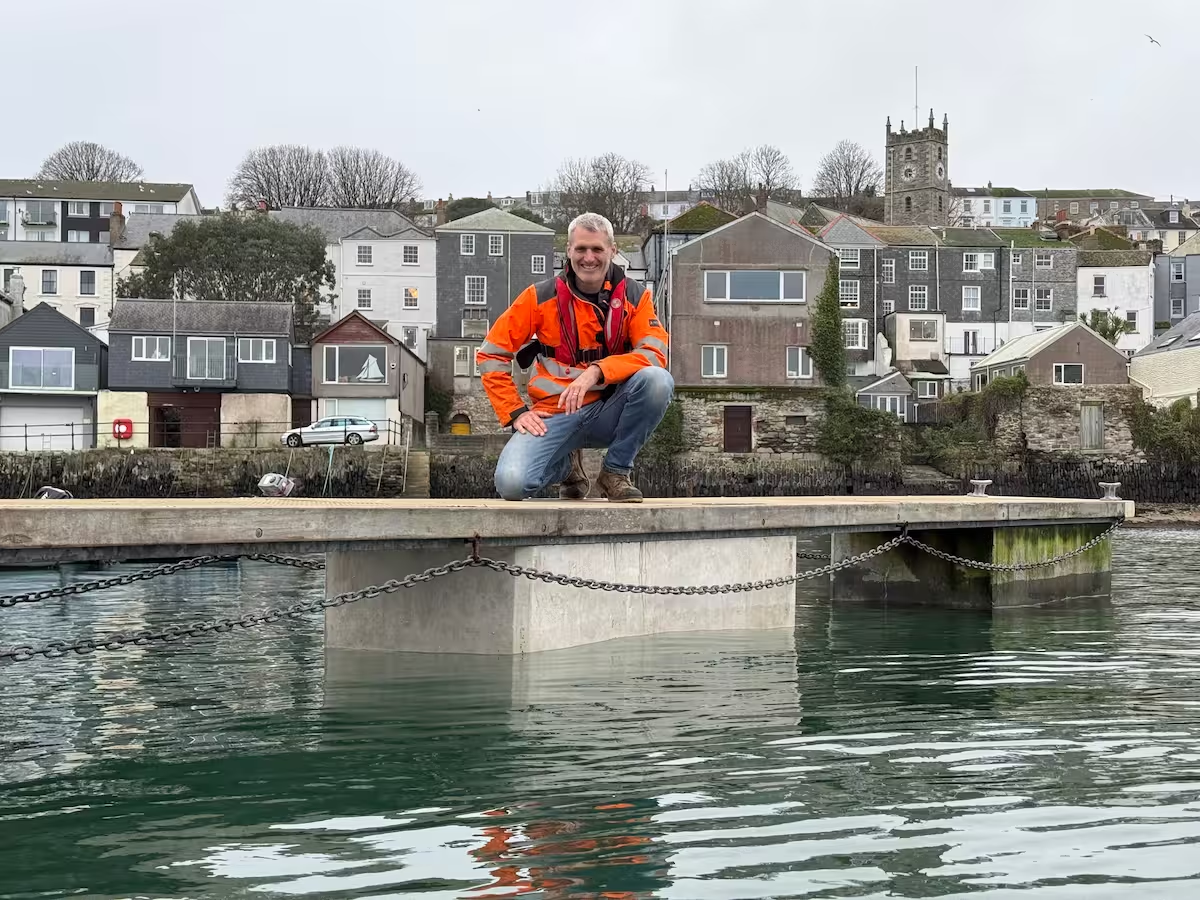
Let's start at the beginning. ReefFloat is the idea of Toby Budd, founder and managing director of a business in Cornwall, United Kingdom, called ScaffFloat. Founded five years ago, the company has developed and patented a set of bespoke plastic floats that fit into standard scaffold structures to make pontoons and workboats. Their pontoons are now hired out on a wide range of large infrastructure projects both in the UK and abroad, and the system is recognised as a well-proven, versatile and safe pontoon platform for commercial operations.
Toby has worked in the marine industry most of his life: “I have visited most of the marinas in the UK and many overseas,” he said. “It was about 20 years ago that I first noticed a cracked concrete marina float and saw balls of EPS foam breaking off and floating away. In the years since, I have seen this in almost every marina I go to and I started to think about possible alternatives to EPS.”
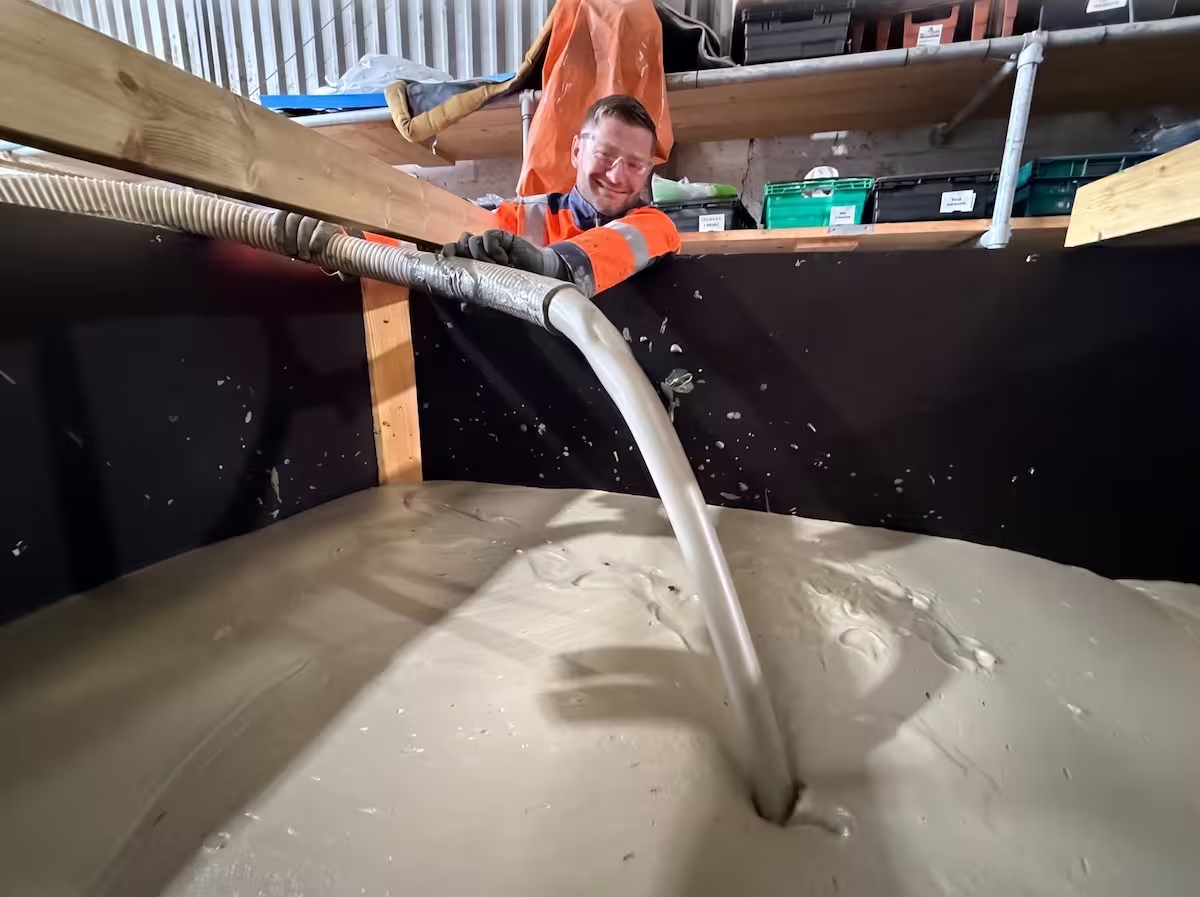
The first ReefFloat was made in the back of a dusty shed in Penryn in 2025. Toby had been watching videos online about making foamed concrete, and together with his eight-year-old daughter, he spent a Saturday afternoon in the shed mixing cement with shaving foam and other additives to make a block of concrete that floated continuously for the next six months.
The technology behind ReefFloat has come a long way since, but the concept remains the same: ultra-low-density concrete with a buoyant core instead of EPS and a full-strength structural concrete skin. Like EPS, the low-density ReefFloat core means that even when the skin is damaged, the float only loses a minimal amount of freeboard and buoyancy. But unlike EPS, which is toxic to the marine environment, often treated as hazardous waste and has to go to landfill, ReefFloat is completely inert and can be crushed and recycled at almost zero cost at the end of its life.
The first big milestone
The first big milestone for ReefFloat was in November 2025, when they installed a full-size prototype under a finger pontoon in Falmouth Harbour. It was installed to replace a failing EPS concrete float that was visibly releasing EPS whenever there was any significant wave action. The team also used a ballasted ScaffFloat to replace the float in situ, which meant no disruption or loss of revenue for the marina. The float is still there today, it hasn’t lost any buoyancy and it serves as proof of the core ReefFloat concept.
“Falmouth Harbour has made the conscious decision to move away from EPS foam pontoons in all our operations,” said Miles Carden, CEO of Falmouth Harbour. “It’s fantastic that our neighbours at ScaffFloat are the first company to offer a plastic-free alternative.”
Meanwhile, Vicki Spooner, head of sustainability, innovation and improvement at Falmouth Harbour, said: “The amount of broken up polystyrene around our creeks and rivers, particularly after this year’s storms, is awful to see. It’s very hard to clean up without damaging the delicate ecology of our shorelines.”
With full imposter syndrome, the ReefFloat team set off to Metstrade in Amsterdam. The show started with ReefFloat being awarded runners-up in the DAME Global Marine Design Awards. It was a great start as it showed that the industry recognised the problem of EPS and wanted to support ReefFloat’s search for a sustainable alternative. Over the next three days the team did not stop talking. Marina owners and manufacturers queued up to ask questions.

Michael Glanville and Marinas26
Business is all about people and Toby was delighted to welcome Michael Glanville to the ReefFloat team in early 2026. Michael has 26 years’ experience in the marina and maritime industry having previously run MDL Marinas Group. Aside from bringing a wealth of experience and knowledge to ReefFloat, Michael runs his own advisory and leadership development consultancy. Michael has helped us turn ReefFloat into a business, with business plans, pitch decks, financial modelling and a scaling plan that captures the worldwide opportunity that the solution presents. Being connected to many investors, Michael continues to help us grow.
Then Toby attended Marinas26 in Australia. This was a gamechanger event and another step forward for ReefFloat, this time being awarded the “Innovation Award” after a vote among attendees. The theme for Marinas26 was “Future Smart”, with the need to be aware of changing environmental pressures, legislation updates and future global marina industry liabilities at heart of the event. It was fantastic to have ReefFloat recognised as a pioneer in addressing these future challenges.
Chris Stone, who is the operations manager at the organisers of Marinas26, the Marina Industries Association, said that ReefFloat is a “great example of the fresh thinking that keeps our industry moving forward. Innovations that put the marine environment at the heart of their design are exactly what Australian marinas and the communities around them want to see.”
“It's no surprise delegates voted ReefFloat the winner of the Marinas26 Innovators & Start-Up Showcase,” he added. “The MIA is proud to support a supplier community that keeps raising the bar, and we look forward to seeing ideas like ReefFloat continue to shape a more sustainable future for marinas.”
Legislation and regulation
Legislation and regulation surrounding the use of plastics and in particular EPS is constantly changing, and recognition that EPS should not be used in plastic packaging is expected to extend to its use in any marine application. We continue to support the work of European Boating Industry in Europe and The Yacht Harbour Association in the UK, providing them with updates on the development of ReefFloat and being on standby to support discussions with governments and other public bodies about the alternatives to EPS.
“As recently discussed at the certified marina managers’ meeting during the Southampton International Boat Show, European governments, guided by the OSPAR Commission, are giving increasing consideration to the use and potential impact of plastics in the marine environment, with EPS being a particular area of focus,” said Jonathan White of The Yacht Harbour Association. “In 2025, OSPAR decided to ban the installation of non-coated EPS products including floats. While pontoon EPS floats are typically encapsulated in concrete or polyethylene, it is prudent for our industry to consider alternative float technologies for the future.”
The ReefFloat business is coming to life but there is still more to do. We have a passion for ensuring that the product you purchase is the very best it can be in terms of quality, buoyancy, long-term life and safe, inert disposal when you need to replace it.
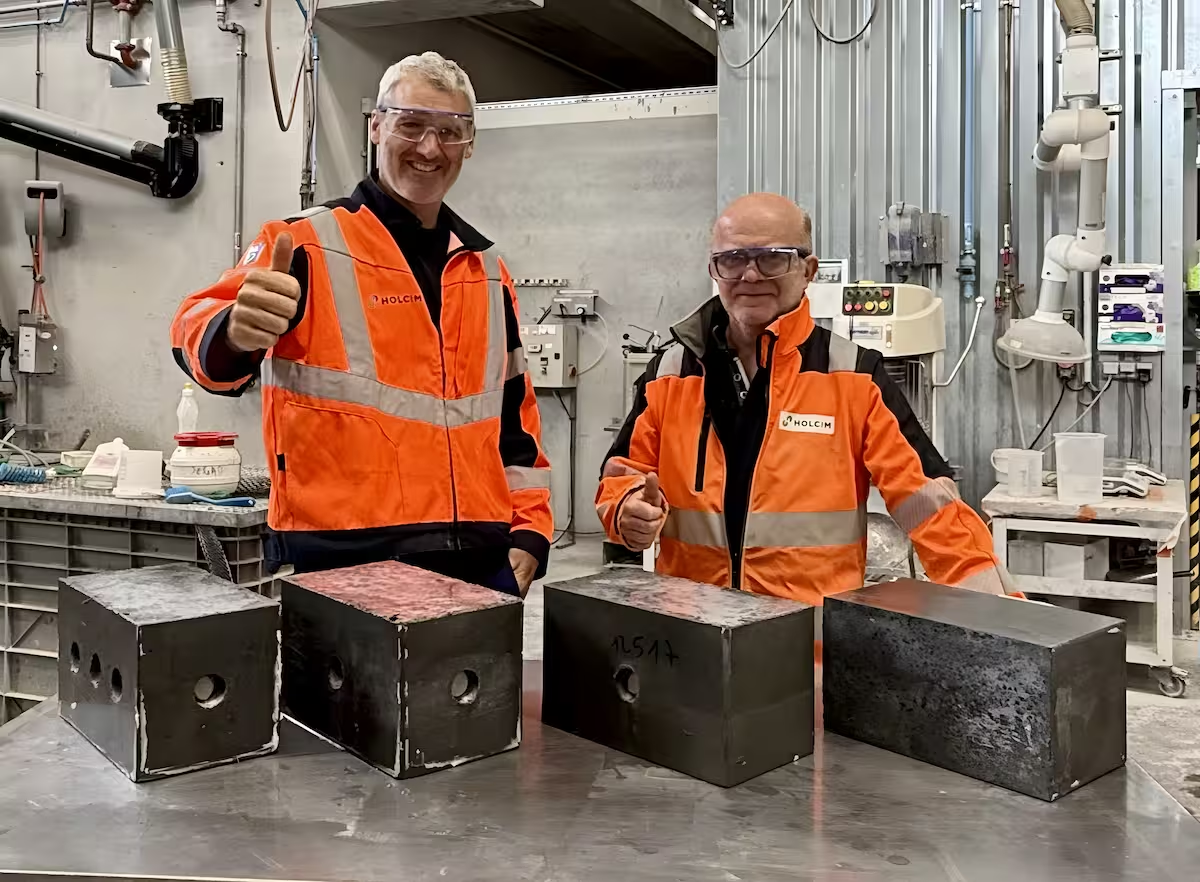
So this autumn, with the help of our technical partner Holcim, we have embarked on a rigorous programme of testing. This includes but is not limited to lab and real-world operational testing, buoyancy and absorption testing, concrete skin development, and strength and destructive testing. We have also researched the impact of different types of water oils and other potential waterborne components, as well as the connection to pontoons, strength, fit, fix and sustainability.
Alongside this work, ReefFloats for 20 new pilot locations are currently being manufactured, including Brixham Marina in Devon. Steve Russell, head of property infrastructure at MDL Marinas, said that trialling ReefFloat was an important step in reducing the impact of their marinas and supporting the innovators who make it possible.
“Removing potentially harmful materials from our water courses is something we all should be aspiring to do, so MDL welcomes the chance to work with forward-thinking businesses like ReefFloat. It is an integral part of how we continue to build more sustainable marinas for our berth holders and we’re excited to see where this goes next,” Russell said.
ReefFloat can be retro-fitted to existing pontoons or added to new pontoon decks. However, what is even more exciting is that we are embarking on the development of full-size pontoons using the same EPS-free technology, and we are excited about where that will take us.
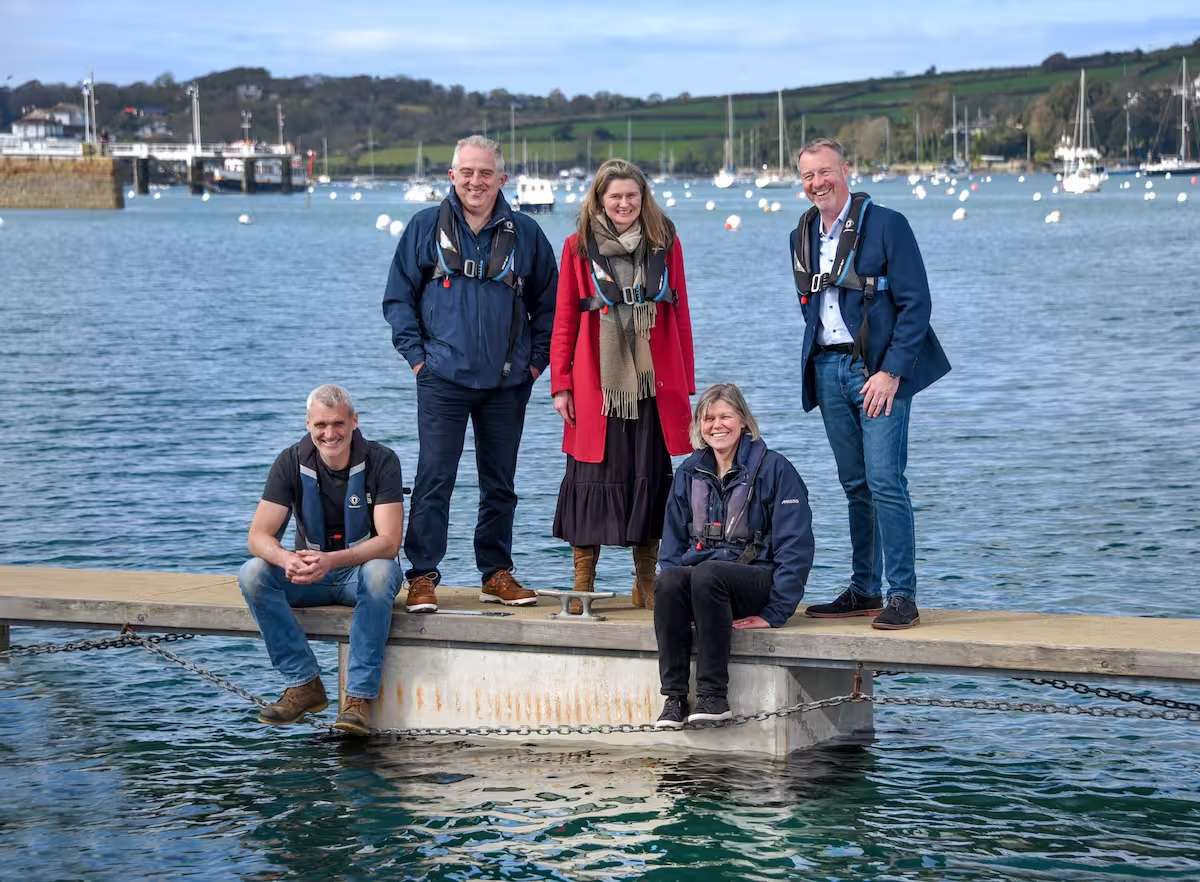
ReefFloat’s early adopter scheme
ReefFloats are being manufactured right now and mould sizes vary from walkways to finger pontoons, with attachments for various different manufacturer types, styles and designs. Could we build an entire marina with ReefFloats today? Not yet, but we can replace your aged and damaged EPS pontoon floats, in situ, using our unique swap-out system so that you can be one of the first to use this amazing, sustainable, innovative product.
We recognise the many different needs, interests and investment strategies across marina operators and geographies. We are specifically looking to work with operators who plan to undertake reconfiguration or pontoon replacement works over the next five years, as well as operators who have a passion for working with sustainable and ESG-focused, EPS-free products. If this sounds like your marina or group, then please email us using the contact details below.
Pontoon manufacturers
ReefFloat has already received a great deal of interest from pontoon manufacturers around the world who are focused on finding sustainable, non-plastic solutions to provide their customers with progressive, technologically advanced pontoons and floating solutions across marinas, ports and infrastructure projects. This has led to letters of intent and memoranda of understanding, and we are searching for more. If you would like to discuss how ReefFloat would fit with your pontoon and manufacturing model, then we would be delighted to hear from you.
Press and investors
Every week ReefFloat creates a new story and hits another newsworthy milestone. If you would like to join our PR mailing list, then please get in touch.
If you are an investor, would like to see the worldwide potential of ReefFloat, find out more about our next funding round, or meet and hear more about the business and our scaling journey, then we are keen to hear from you.
Contact us
If you want to know more about the business and our future plans, or would like to be part of the early adopter scheme, then please contact Michael Glanville directly on michael@reeffloat.co.uk.