Although there is an increasing focus on decarbonisation in the marine industry, when it comes to boatyard equipment diesel power is still king. When representatives of several leading boatyard equipment manufacturers were asked if “interest” in electric boat handling equipment was “building”, the unanimous response was “yes”. But we can all be interested in something we cannot or will not buy.
While MariaLuisa Olivero at Italian company Boat Lift reports that customers “are increasingly concerned with sustainability and carbon footprint in the working environment”, Jordan Kropf, sales manager at Kropf Industrial, Canada, says that, while the topic is becoming a regular conversation as facilities look ahead towards replacing equipment, “almost all of our enquiries currently do not even reference electric.”
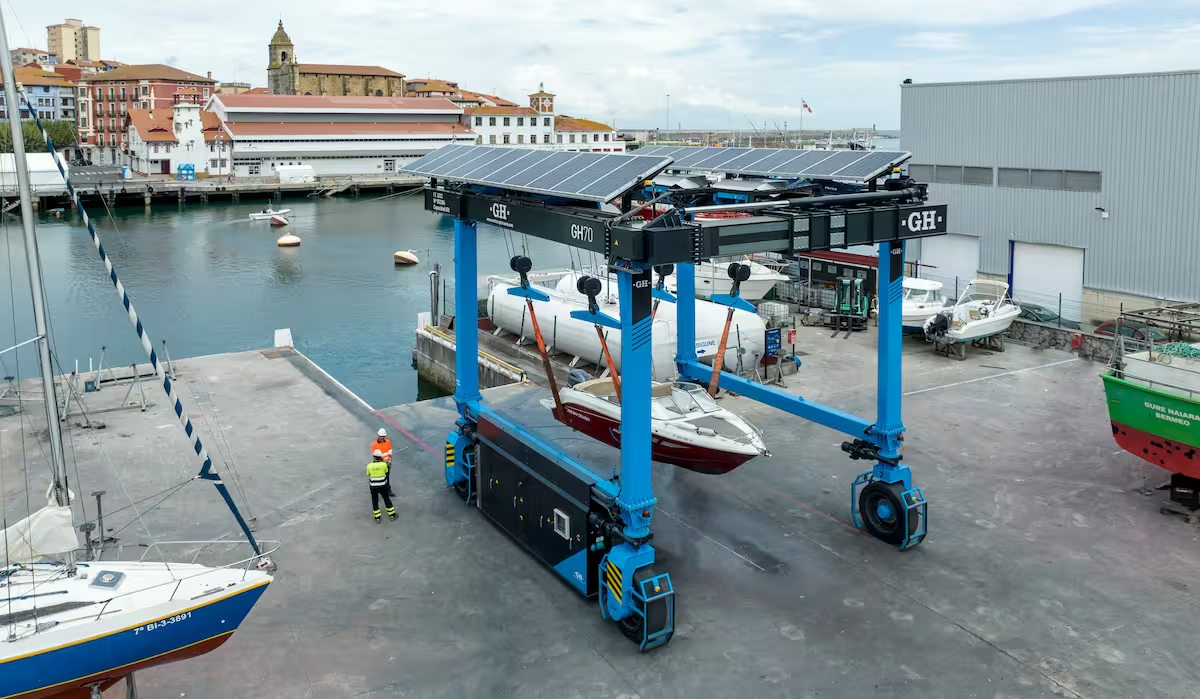
Ander Etxebarria, GH Motion director for Spanish company GH Cranes & Components, however, speaks more positively. “Interest has accelerated over the last two to three years as real-world units pass multi-year operation with stable uptime and predictable costs. Customers who have seen electric boat hoists in daily service are now more confident in lifecycle performance and residual value,” he says, adding that “battery pack pricing and availability have improved, making total cost of ownership and CAPEX more attractive versus diesel in some use cases.”
The level of interest is also regional. “It strongly depends on the country,” says Stephan Dijkstra, sales representative at Roodberg. “Here in the Netherlands, for example, the use of diesel-powered machines, such as forklifts and trailers, is no longer permitted indoors.” Brock Rubens, senior sales director at US-based Marine Travelift, adds: “Most of the interest comes from a handful of markets where there are benefits, and maybe even funding available to go electric. In most cases, however, the funding they receive is not adequate to cover the additional costs of an electric system that is designed properly for the application.”
Although Etxebarria asserts that value is better perceived by customers able to actually see electric hoists at work, cost – to purchase, operate and maintain – is nonetheless a major issue and a significant stumbling block. Carlotta Zanon in the marketing department at Cimolai in Italy, reports: “For the time being, the cost of a fully electric solution is considerably higher than that of a standard one. However, this gap is expected to narrow with technological improvements and greater standardisation. Maintenance activities and the related costs for fully electric machines are, on the other hand, significantly lower compared to hydraulic solutions, which require frequent interventions on pumps, filters, hydraulic motors, fittings and potential oil leakages.”
A key worry lies with the batteries. “Concerns are mainly the additional cost, and the service life and replacement cost of the battery packs,” says Kropf. “Batteries will need to be replaced, most likely multiple times, during the life of the machine and that is not cheap,” Rubens notes. “We still have Marine Travelift equipment operating in the field from the 1960s and battery lifecycles are said to be around ten years.” And, with a telling revelation about customer reticence, he adds: “One of the most asked questions is if the machine could easily be converted back to diesel power if needed.”
In addition to cost, Olivero cites concerns about performance of electric machines in comparison with diesel equipment, and Dijkstra, while emphasising cost, says operational planning is a further challenge. “Users must consider factors such as route planning, charging times and battery range, all of which require more foresight than simply refuelling a diesel machine. External conditions, like temperature and wind, can also affect performance and battery life.”
“For our clients, time is money. Their goal is to move as many boats as efficiently as possible each day. That’s why the convenience of a machine that can be quickly refuelled with diesel is still very appealing when compared to a machine that may be temporarily unavailable during charging.”
Etxebarria points to three reservations: skills and service readiness – “operators and yard technicians are very comfortable with diesel engines”; after-sales issues with identifying local partners for battery diagnostics; and “perceived risk around charging logistics, shift planning and cold-weather performance until teams gain hands-on familiarity”.
Electric solutions
Despite cautious uptake, manufacturers have worked hard to ensure e-versions of many machines are available, and there have been notable deliveries, too.
An undoubted pioneer in the field is Boat Lift, which delivered a fully electric boat hoist to Port of La Rochelle in France in 2022. This paved the way for electric trailers for Spanish and Norwegian customers, electro-hydraulic boat hoists – again to France – and fully electric hoists to clients in France and Italy. A 50-tonne fully electric travel hoist is soon to be delivered to Haakonsvern naval base in Norway. According to Olivero, the electric range has been the company’s primary research and development focus for the past four years.
Kropf Industrial has also been active, delivering its first all-electric mobile hoist last year and offering all-electric power for its towed hydraulic trailers, and Roodberg offers electric versions of most of its diesel-powered machines. “We also have the capability to build 100 percent electric hoists,” Dijkstra notes. “We’ve developed a hoist for industrial purposes in Norway which has provided valuable insights and experience…and we’ve recently completed the engineering of a very compact and highly manoeuvrable electric transporter, which we plan to start building in the coming months.”
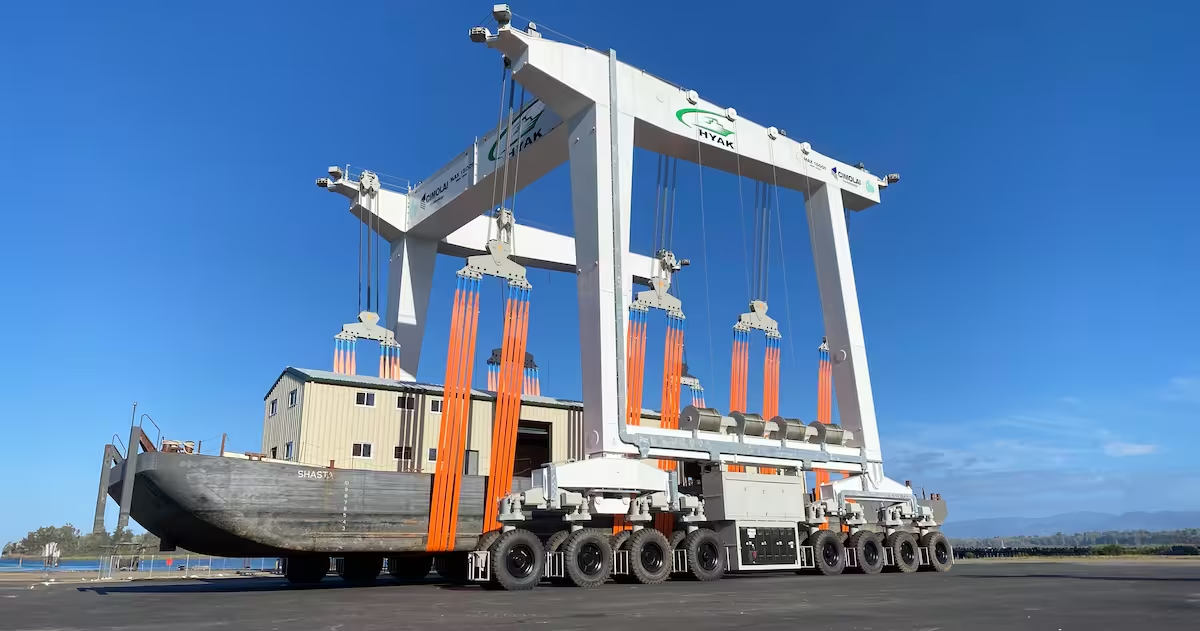
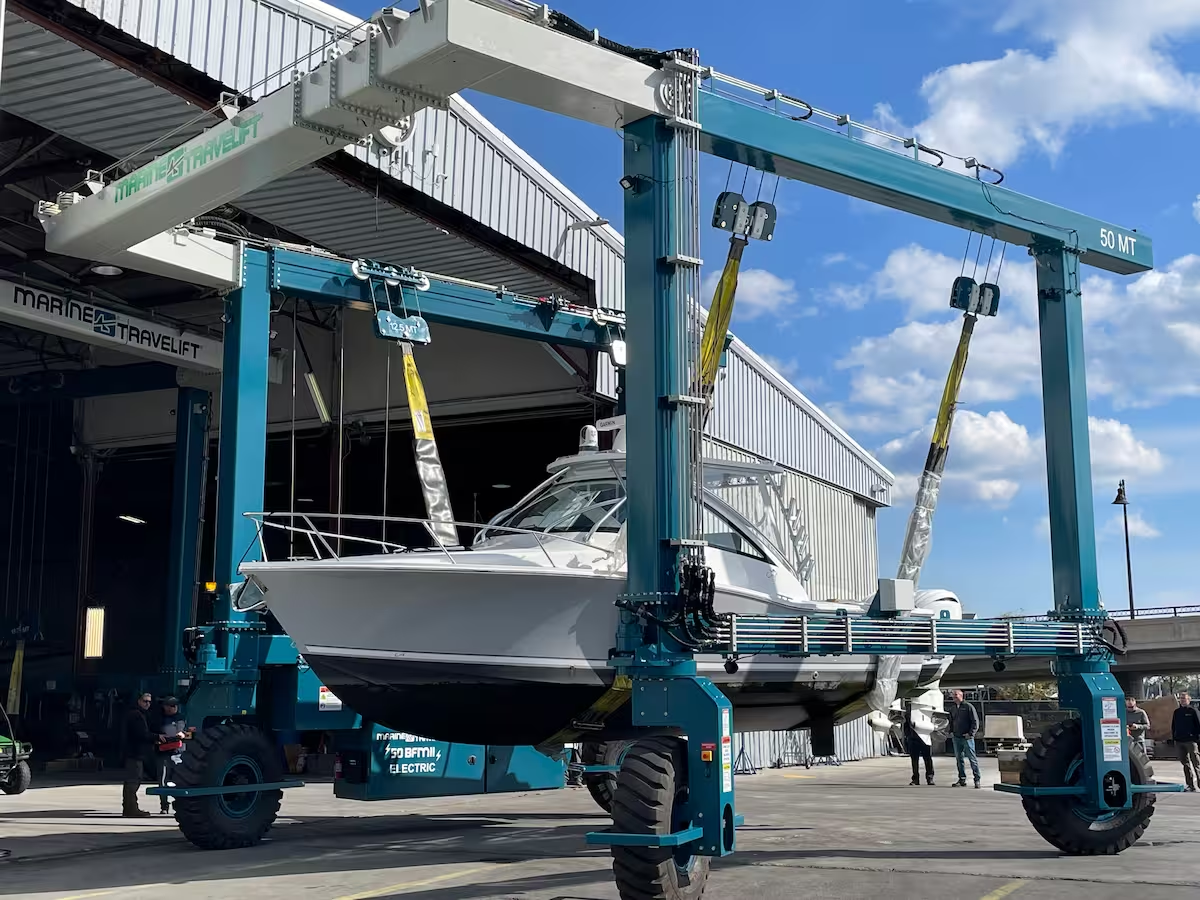
Meanwhile, Cimolai has delivered a variety of electric machines, including boat hoists and straddle carriers, for both marine and industrial applications. Marine Travelift can equip any of its hoists with electric power but only officially announced its “Electric Series” less than a year ago after roughly two years of testing. “We currently have a 50BFM11 boat hoist with over 500 hours of testing, which has been used at local marinas for real-life feedback. We believe in testing new designs and options before we make them available to our customers,” Rubens says.
Multiple electric projects are currently being manufactured by GH Cranes, including a marine unit for St Malo, France, scheduled for handover in 2026.
Looking forward
So, are we likely to see significant uptake in the next five to ten years?
Boat Lift (MariaLuisa Olivero): Yes. Tighter regulations on emissions and high-capacity grid connections, smart chargers and energy management systems will become standard. Boat hoist manufacturers will evolve into full-service solution providers – offering integrated electric systems, smart fleet management and long-term service models.
Cimolai (Carlotta Zanon): There will be steady growth driven by automation, stricter safety standards and the push for energy-efficient solutions. Market development will also be supported by potential government funding aimed at replacing diesel with electric, and advances in smart technologies will also play a key role in shaping the market.
GH Cranes (Ander Etxebarria): Battery systems will continue to improve and after-sales for battery packages will mature. Adoption might be driven by noise and emissions targets at marinas/ports, predictable energy costs and operator preference for simpler daily checks and reduced fluid handling.
Kropf Industrial (Jordan Kropf): We will see a slow increase. A significant majority of our deliveries will continue to be traditionally powered. The rate of adoption may depend on whether incentive programmes become available.
Marine Travelift (Brock Rubens): I think the market will really depend on how regulation bodies decide to move forward on the topic and incentives they provide to shift. As battery technology advances, and they get more efficient at mining the materials and producing the batteries, one would assume the cost will start to come down, which will obviously make the option more attractive as well. Overall, I believe there have to be more advances in the electric components themselves and a price tag that is closer to a diesel engine for the market to really pick up significant steam.
Roodberg (Stephan Dijkstra): We expect demand for electric machines to grow significantly in the coming years. One of the key reasons is that the cost gap between diesel and electric is likely to narrow, making electric solutions more accessible. Advances in battery technology will help address many of the current concerns related to charging times and range limitations, and stricter emissions standards will also influence this. As a result, we anticipate a growing number of enquiries for electric equipment, a trend we’re already seeing take shape here in the Netherlands.
This article was also published in issue 151 of Marina World magazine. Click here to read the online version.