Four recent marina transactions show why sustainable earnings, infrastructure, operating complexity and buyer strategy matter as much as the cap rate.
Marinas occupy a unique position in the global real estate investment landscape, combining waterfront real estate, specialised infrastructure and operating businesses in ways that differ significantly from traditional commercial real estate investments.
On paper, valuing a marina can appear straightforward: analyse revenue and expenses, determine net operating income and apply a cap rate to estimate value. In practice, the analysis is far more nuanced. Where is the income generated? What capital investment is needed to sustain it? Which opportunities for growth are realistically achievable? And which buyer is best positioned to capitalise on that potential?
Unlike traditional commercial real estate, where value is largely driven by contracted rental income, marinas generate income from multiple revenue streams, each requiring separate analysis. Location, vessel size and type, operating structure, infrastructure and underlying real estate further influence value, and all can vary significantly from one marina to another.
For marina owners and investors, the challenge is distinguishing current cash flow from future potential, and understanding the capital required and associated risks to realise that potential.
Operating income is just the beginning
A cap rate relates income to price, but it does not reveal whether docks need replacement, utilities require upgrades, or insurance and operating expenses will change after an acquisition. Historical income only tells part of the story if substantial capital is needed to preserve it.
SVN Marinas recently advised on the sale of a 200-slip marina in the Mid-Atlantic to an institutional investor. As part of a broader redevelopment, the seller had spent millions upgrading the docks, utilities and upland facilities. Even after those improvements, occupancy remained well below that of comparable marinas.
The earnings supported the seller’s initial asking price, but the buyer still had to factor in the cost of bringing the property up to the standards of competing marinas to retain existing slip holders and attract new ones.
Recent investment does not always eliminate future expenditure. A clear record of what was done, supplemented by market research and feasibility, helps a buyer evaluate the capital investment required for new improvements. When assessing earnings, buyers look closely at the condition of the income-producing assets and consider what it will cost to maintain those earnings.

Multiple revenue streams behind one operating business
A marina that generates income from multiple ancillary businesses, including boat sales, food & beverage, marine service and repair, boat clubs and rentals, can present an attractive opportunity for the right buyer. However, underwriting these operations can be far more complex than valuing a marina where income comes primarily from vessel storage.
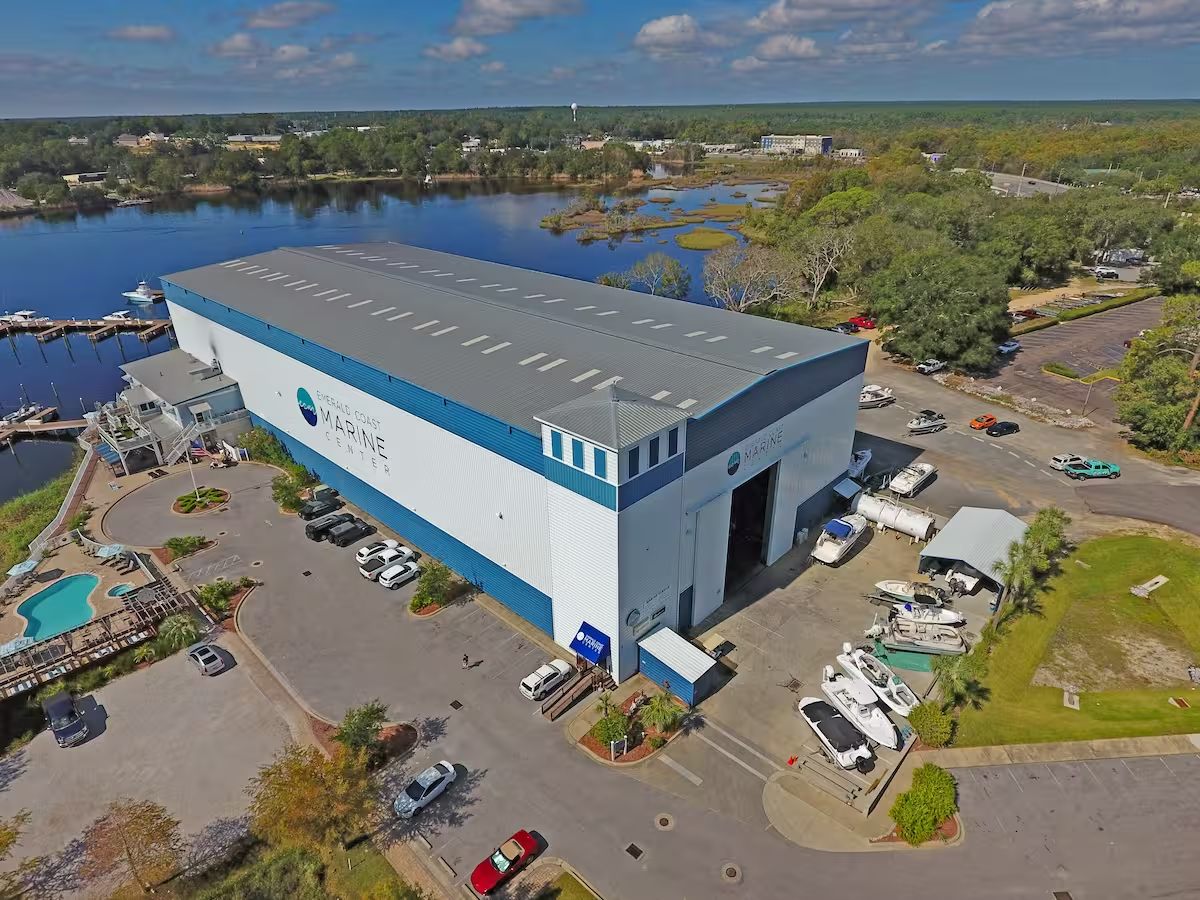
I encountered this while advising on the sale of a large marine center that included a full-service dealership, restaurant, sales offices, showroom, service center, boat club and over 340 wet and dry storage slips.
The owner had recently commissioned an appraisal that applied a relatively high multiple (11x) to the business income and a conservative cap rate to the marina income. While this approach may have been acceptable for refinancing purposes, it did not accurately reflect how buyers would value the property in a sale.
To position the property for a sale, we separated the real estate income from the operating businesses, applied market-based rents to the various business components and normalised the resulting income. We then applied an appropriate cap rate to the real estate income and a more conservative multiple to the rent-adjusted business earnings.
The resulting opinion of value was substantially higher than the appraisal. More importantly, the analysis gave us a credible basis to present and defend our valuation to institutional buyers. The property ultimately sold for nearly 60 percent more than its previous appraisal.

The infrastructure behind the income
Marina infrastructure comes with unique challenges. Bulkheads, seawalls, docks, electrical systems, fuel infrastructure, dredging requirements and storm resilience can represent significant future capital obligations. Physical infrastructure also contributes to the scarcity value of the underlying real estate. Significant barriers to entry exist to obtaining approvals to develop a new marina or materially expand an existing facility.
Existing permitted infrastructure, protected dockage and established access to the water may therefore represent competitive advantages that are difficult to replicate.
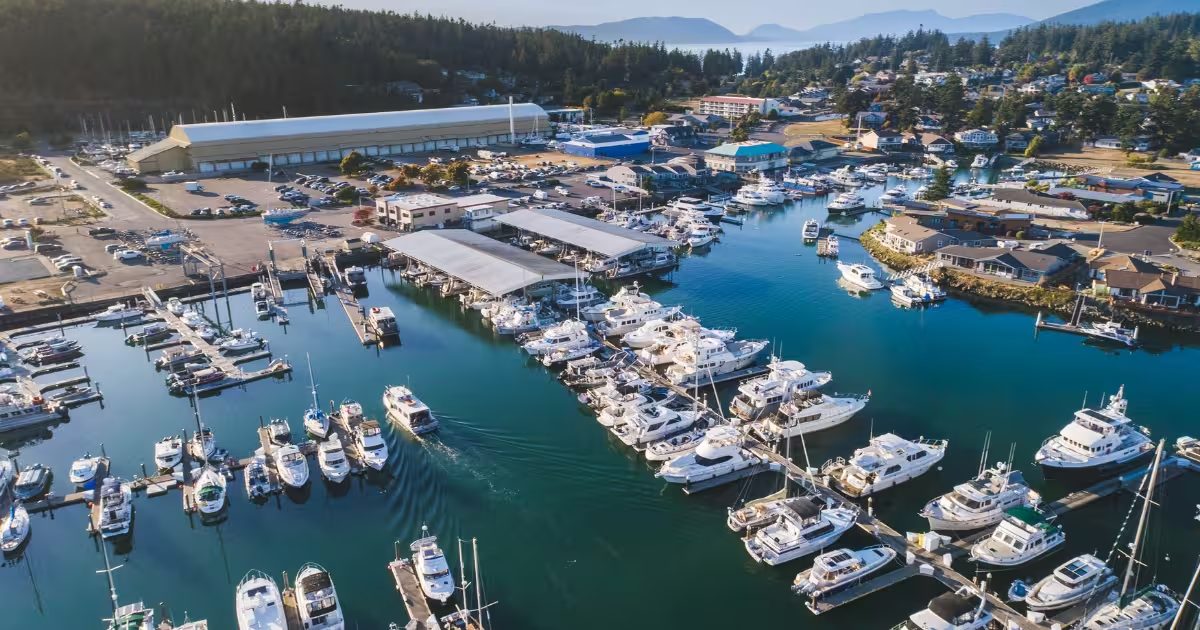
Take, for example, Skyline Marine Center in Anacortes, Washington, which changed ownership in the first quarter of 2026. Situated on approximately 15 acres near the San Juan Islands, Skyline offers 67 protected wet slips, outdoor dry storage, a 94,000-square-foot indoor boat-storage building, marine services, commercial suites and a fuel dock.
Skyline is the closest mainland marina to the San Juan Islands and a gateway to the Inside Passage, a 1,000-mile route of protected waters that extends to Alaska. Its mix of moorage, vessel storage, commercial buildings and marine services is irreplaceable and difficult to replicate in an established boating market where building a new marina is unlikely.
While scarcity matters, it does not remove the need to study physical condition, permitting, operating demand and the cost of keeping an asset productive.
From legacy owner-operated marina to transferable investment
As the marina investment market evolves, buyers bring increasingly diverse acquisition strategies and investment objectives. National marina platforms often prioritise geographic expansion, operational efficiencies and integration of existing networks. Regional operators may place greater value on proximity to existing facilities and shared resources.
An often-overlooked distinction is the difference between a successful marina and an investment that can sustain financial performance under new ownership.
Many legacy marinas benefit from decades of owner-established relationships, customer loyalty, experienced employees and strong local reputations. While these advantages may contribute to profitability, buyers must determine whether these advantages will survive beyond the current owner.
When SVN Marinas advised on the sale of Cypress Cove Marina and Lodge in Venice, Louisiana, the owner had spent years building relationships that mattered to the business. Preserving those relationships through handover was an important part of setting the buyer up for success.
In a sale like this, it helps when the buyer and seller get along and trust each other. Selling a marina you’ve owned for years is personal and emotions can run high during negotiations. A good advisor helps both sides work through those emotions and stay focused on what they want to accomplish together: a smooth handover and a business that continues to perform after closing.
Ultimately, the investment value of a marina is determined not only by the current income the owner generates, but by the cash flow a new owner can reasonably expect to sustain after closing.
From potential to realised value
One of the most common disconnects between marina owners and prospective buyers is the treatment of future income opportunities. Owners often view future expansion as a significant source of value. A buyer, however, will consider how far along the project is, from an idea supported by market demand and available space to a fully approved project.
Owners may also see opportunities to increase revenue by running the marina more efficiently. While a buyer may recognise the same upside, the value they assign to that potential can differ significantly once they factor in the capital required, execution risk and the possibility that the anticipated gains take longer to realise or fall short of expectations.
The most compelling marina investments are not always those promising the greatest upside. They are those with supportable earnings, clearly understood infrastructure, ownership rights, capital needs and a credible path to growth. That is where potential becomes investment value.
David Kendall, CCIM, is a Florida-licensed real estate broker and marina investment advisor with SVN Marinas, the national marina advisory platform of SVN. Based in Jupiter, Florida, he specialises in marina and marine business acquisitions, dispositions, investment analysis and strategic advisory services throughout the United States & Caribbean. He also serves as chair of the SVN Marinas Product Council. SVN Marinas | www.SVNMarinas.com