





This article was also published in issue 155 of Marina World magazine. Click here to read the online version.
Marina World speaks to Ingemar CEO Sebastiano Pulina about how their conservative engineering principles and commitment to access for all has made the company one of the world’s most popular pontoon suppliers.
Ingemar is a proudly Italian company that bears the “Made in Italy” mark. How did you grow into becoming the global supplier of pontoons that you are today?
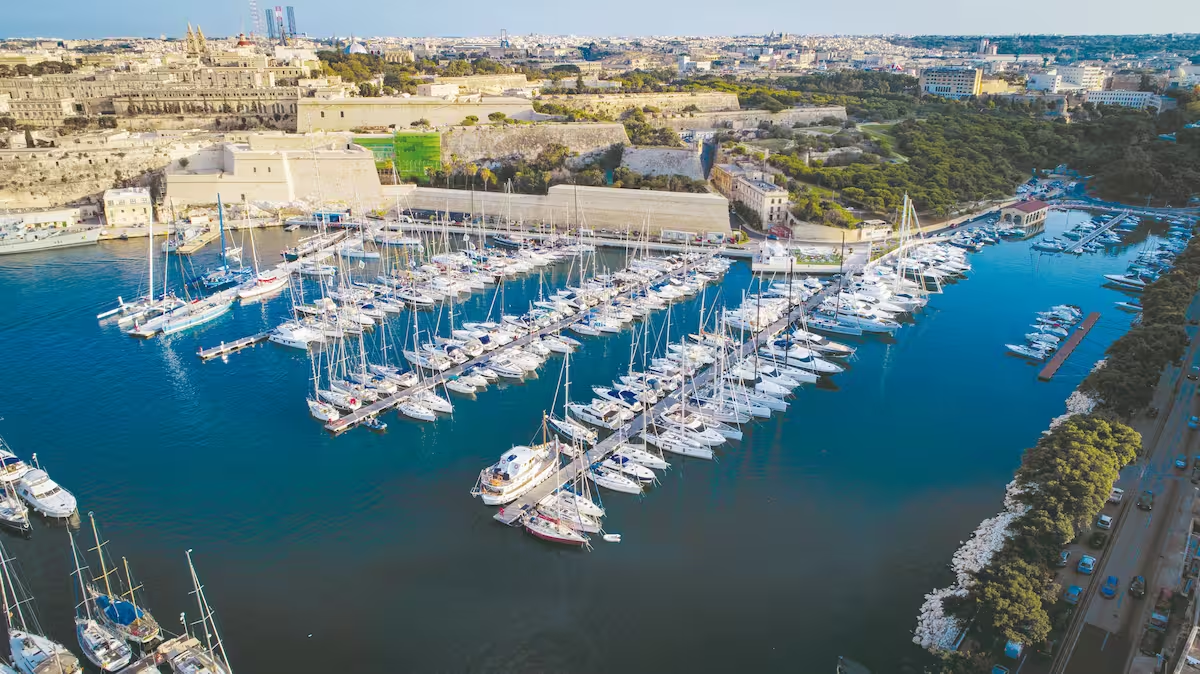
There was a progressive growth in marina infrastructure in Italy throughout the 80s and 90s, and many marinas were basically obliged to install floating pontoons because of the difficulty in getting approval for fixed structures. Then, throughout the 90s more opportunities became available abroad, we decided to compete, and in some cases we succeeded. I believe we succeeded because we put all our energy not just into winning projects, but also into satisfying the customer. Our conservative engineering approach and seriousness in design has consistently led to strong structures with a good finish.
The success of the company throughout the 90s boosted our revenue and turnover, which meant we could really invest in our engineering and our people. This set us on a good path early on. One key international project in those earlier years was for the Kuwaiti Border Guard. It was a challenging project because we had to change our mentality from working with smaller private customers to working with a large, public entity with many rules and regulations.
What do you think has been the key to Ingemar’s success, especially since you joined the company in 1989?
I would say that the key to our success in our early days was being able to invest in our staff and staying true to conservative design principles. If you feel that something is missing or there is not enough of something, then you should spend the necessary money to avoid any negative consequences. This is how we gained the trust of our customers, which is so important for growth.
For example, we have installed around 60 small stations for the Saudi Border Guard. We started out with a contract for just seven stations, but once that trust had been built and we had demonstrated our capacity to solve problems through conservative and reliable design, we were awarded more contracts. In fact we are actually close to the limits of our capacity now because we have been so successful.
We are engineers and our approach is typically engineering-first. We try to understand what the customer is looking for, what they want and need, and then we have to build it. To achieve this level of customisation, we have to be flexible. We can make everything from small plastic floats to all types of pontoons and right up to large concrete breakwaters. We also make large floating concrete pontoons for industrial and military purposes; we recently built a 160-metre-long, 10-metre-wide floating pier for the Slovenian Navy, for example.
It is in our nature to respond to the needs of the customer and solve any particularly challenging problems that they might have with their project. This philosophy is ultimately the key to our success, I believe.
Ingemar already has a wide range of global references, but what other smaller aspects are you working on to upgrade and modernise your pontoons?
We have started to look at integrating solar panels into the design and structure of our pontoons. Not only can they provide a source of renewable energy, but they also provide shade and the pillars that hold them up can also host plugs and sockets to provide boats with electricity gathered from those solar panels.
This kind of solution would be particularly valuable in the Middle East where there is strong sunlight more or less all year round, and especially in the summer when shade is so important. We have been working on this project alongside Plus Marine.
Another project we have been working on addresses the fact that pontoons represent an enormous surface area in a marina that is never really used beyond simply providing access between boats and the land. There is another startup called BetterSea Power which is developing solar decking and they recently installed some of their products near our factory. We are also working with them on how their solutions can be integrated into Ingemar pontoons.
Both of these projects raise the question of whether marinas can actually become independent from an energy point of view. This is a sector that we would like to follow closely and play a role in developing, alongside partners such as Plus Marine and BetterSea Power.
Integrating solar panels into pontoons is trying to solve one well-known problem of marina infrastructure. What other examples do you have of this problem-solving mindset?
One problem that we have been trying to solve for many years concerns floating breakwaters. Anchoring floating breakwaters with piles can be quite rigid, so it’s not suitable for every situation. Chains might give a little more leeway in the beginning, however they gradually become more and more rigid over time, which puts stress on the concrete anchors and the joints of the pontoon. So we have been looking for some kind of dampener for this, and the best we have found is a kind of cylinder that functions like a suspension system on a car.
The company that makes these cylinders has had several successful installations. Energy hitting the pontoon is absorbed by the spring, dampening the strength of the strongest wave action. The benefit of this is that you can have a simple spring-based system where you can change the diameter of the spring depending on the strength of the waves you are trying to break, and whether you want hard or soft behaviour from the spring. This system can also transfer data from the breakwater in real time so you can see where the stresses and strains are.
In theory you could also harness energy from this kind of system to be fed back into the marina’s power supply, but wave action that is strong enough can’t always be guaranteed. In places like the Mediterranean and the Middle East you can more or less be guaranteed sunshine for very many months of the year, making solar panels a more suitable source of renewable energy.
Ingemar is a partner of Marina4All. Would you like to tell me more about this and what it means for the company?
Marina4All was founded in 2023 by the disabled Italian sailor Marco Rossato, together with Ingemar and the Italian company Madeit4A. Working together, they developed the Marina4All concept, defined its objectives and created both the brand and its operational framework. The initiative was subsequently opened to other companies and organisations, enabling them to contribute new expertise and broaden its reach.
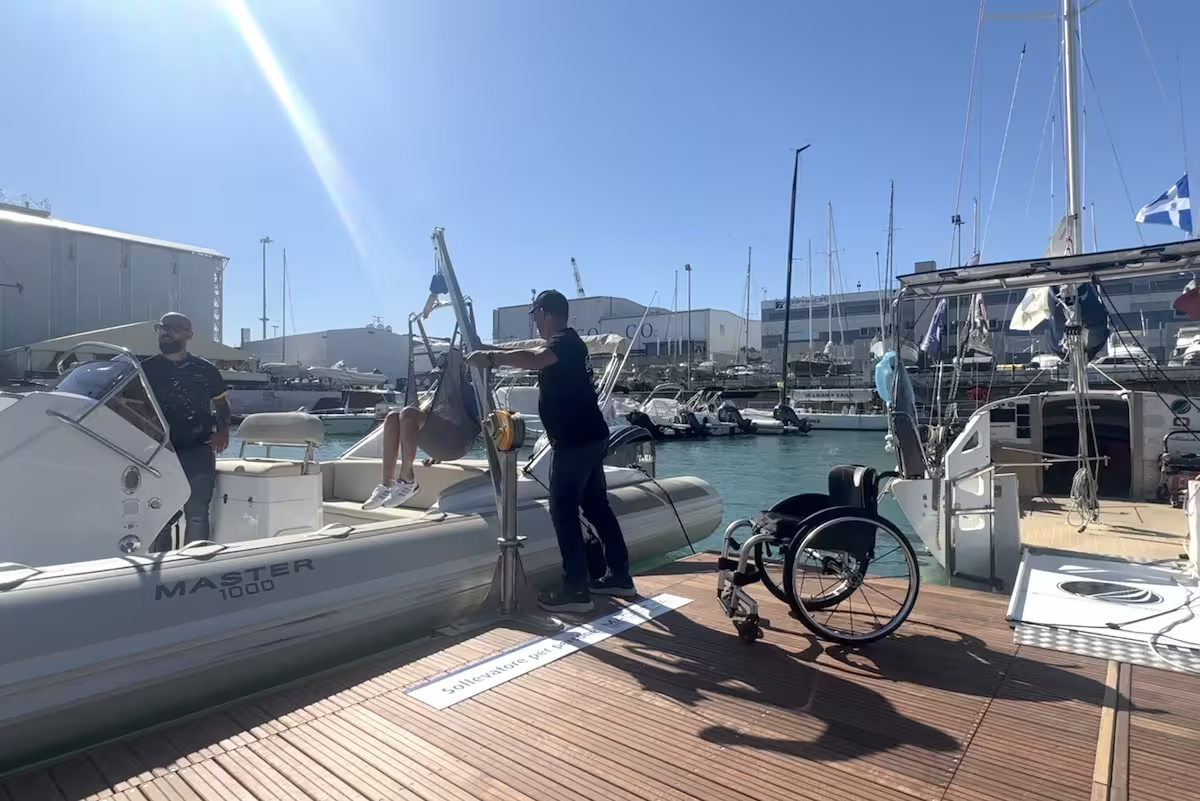
We cooperate with them to ensure high standards of access and safety to marinas for people with disabilities, the elderly and those with other restrictions on their mobility. One aspect that defines Ingemar and our philosophy is accessibility.
This is a part of marina design that is overlooked, and we are proud to focus on this as part of our philosophy. Whether it be people with mobility limitations, or maybe blind people, it is important that we construct pontoons that make access to boating and the sea as easy as possible - at least physically speaking - for as many people as possible. One outcome of our cooperation with Marina4All was an accessible floating dock that we made and presented during the 2024 Genoa Boat Show.
Ingemar is approaching the 50th anniversary of its founding, in 2029. What are the company’s priorities for the coming years?
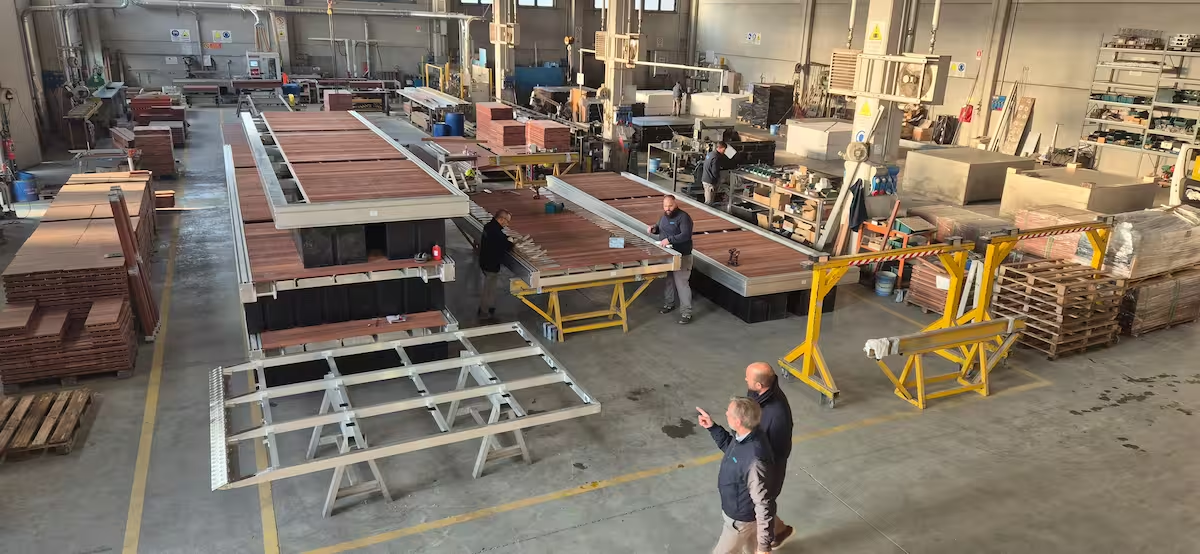
Given that Ingemar was founded in 1979, some of our first ever pontoons are reaching the end of their lifespan. For that reason we have increasingly started investigating how we can reuse, recycle or even restore our old pontoons provided they are in the right condition.
We recently conducted a test on a pontoon in Venice that was being used for public transport. It wasn’t particularly old - maybe only 15 years old - but it was very stressed given how frequently and intensely it had been used. We dismantled the pontoon in our factory, we took out the floats, the wood and the steel structures. We reused about 75-80 percent of the floats after cleaning and painting them, and we also tried to reuse some of the old wood from the decking.
However, more broadly, for the moment we are trying to keep what we have, preserve our quality and reputation, and be selective about the projects we work on. But it depends on the predicted turnover of the project. If it’s a fairly simple marina with lots of pontoons that all have the same design, then we can make quite a good turnover. But if the opportunity is a special project that requires specialist engineering, then we are limited in what we can do at the moment. So for the time being we are trying to be selective to make sure that we do a good job.
In the future, I believe that the young generation will be able to take what we have done in the past and continue to do now, and grow the business even further. We have a lot of potential but we can’t be everywhere. The most important thing is to maintain our business and keep our staff.


