Patrick Norén speaks to the Managing Director of Ingenhoven Associates, Martin Reuter, about their award-winning “Smart Spine” marina design that considers history, landscape, environment, energy and human impact.
Firstly, congratulations on winning the architects award at the Monaco Smart & Sustainable Marinas Rendezvous! Can you tell me more about Ingenhoven Associates, your work, history, ethos and past projects?
Thanks for the congratulations, it was a pleasure to be part of the Monaco Smart & Sustainable Marinas Rendezvous. Ingenhoven Associates is an architectural studio, founded in 1985, deeply rooted in the understanding that architecture emerges from deep analysis, informed decisions and collaboration. It’s an integral approach and we believe that architecture needs to try to improve the environment because we are adding something to the world that lasts for quite a long time. As such it should be responsible and benefit future generations.
We are pioneers within the field of ecological and sustainable design, and we have been working on this since we started. It is an evolving matter, you can’t stop searching and learning, you have to be open-minded. It’s collaborative, it’s a team approach, it’s about working with clients, engineers, specialists and different societal, economic and political stakeholders. We bring together specialists and perspectives to discover solutions beyond the obvious.
Have you previously worked on marina projects? Why did you decide to enter the Certosa Island Competition at the 2025 Monaco Rendezvous?
We hadn’t per se worked on marina projects before, however we had worked on a lot of waterfront developments which also included boat-decks and berths, but not a classic marina. Having said that, there is always a first time to work on a task and we did so in many fields before - always achieving outstanding designs. It is about mindset - people who are searching for sustainable, smart building solutions are exactly the clients that value our understanding and expertise. They have the same approach, they want to explore things, they want to have innovation, they search for the better. As such the Monaco Yacht Club gave us the certainty that the Monaco Smart & Sustainable Marinas Rendezvous was exactly the right competition for us.
.avif)
The Certosa Island Competition brief called for designs that integrate hospitality, cultural amenities, maritime services and heritage context within a framework that advances environmental performance and long-term adaptability. How did you approach this complex brief?
A complex brief is actually quite helpful, since it gives you something to solve.
In this case the mix was interesting. We believe that mixed use is the right approach, especially if you take a holistic view of cities and marinas – e.g. shorter distances, 24/7 activation, advantages with regard to energy demands. Even high-rise developments are better with mixed use. As such it is not unusual for us to look at different topics “under one roof”.
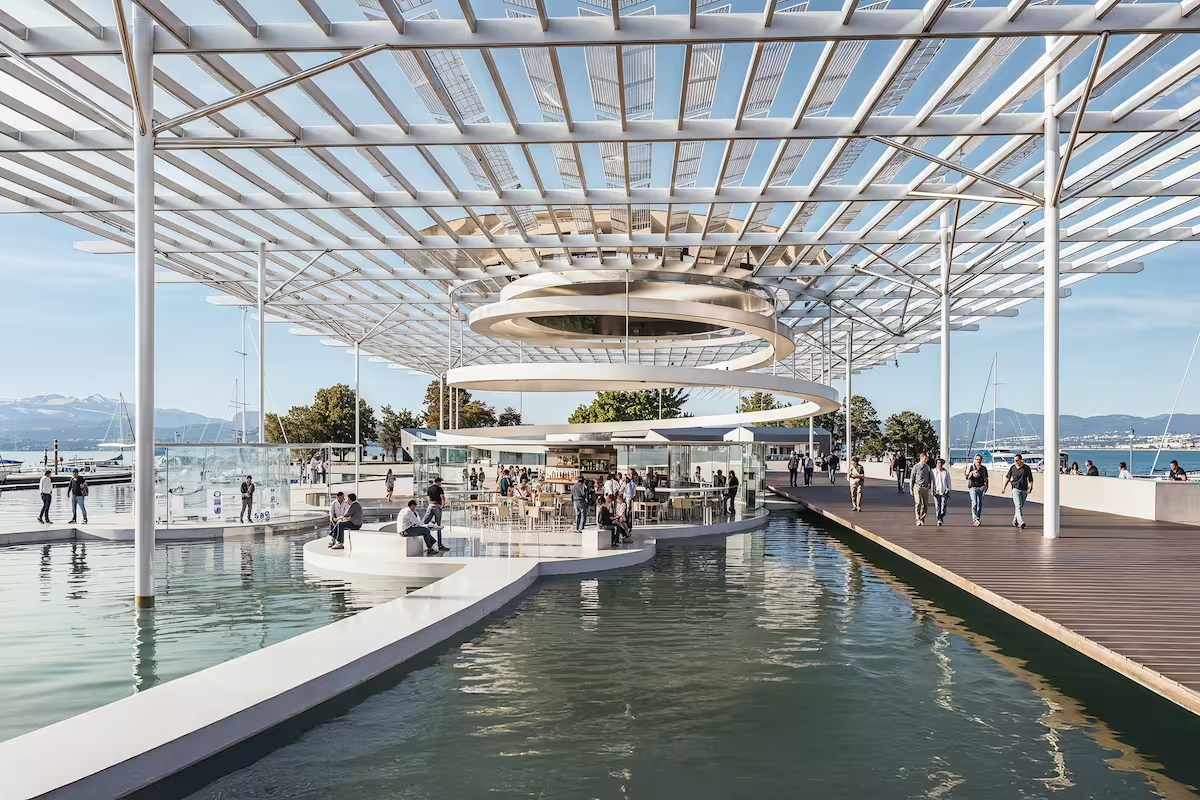
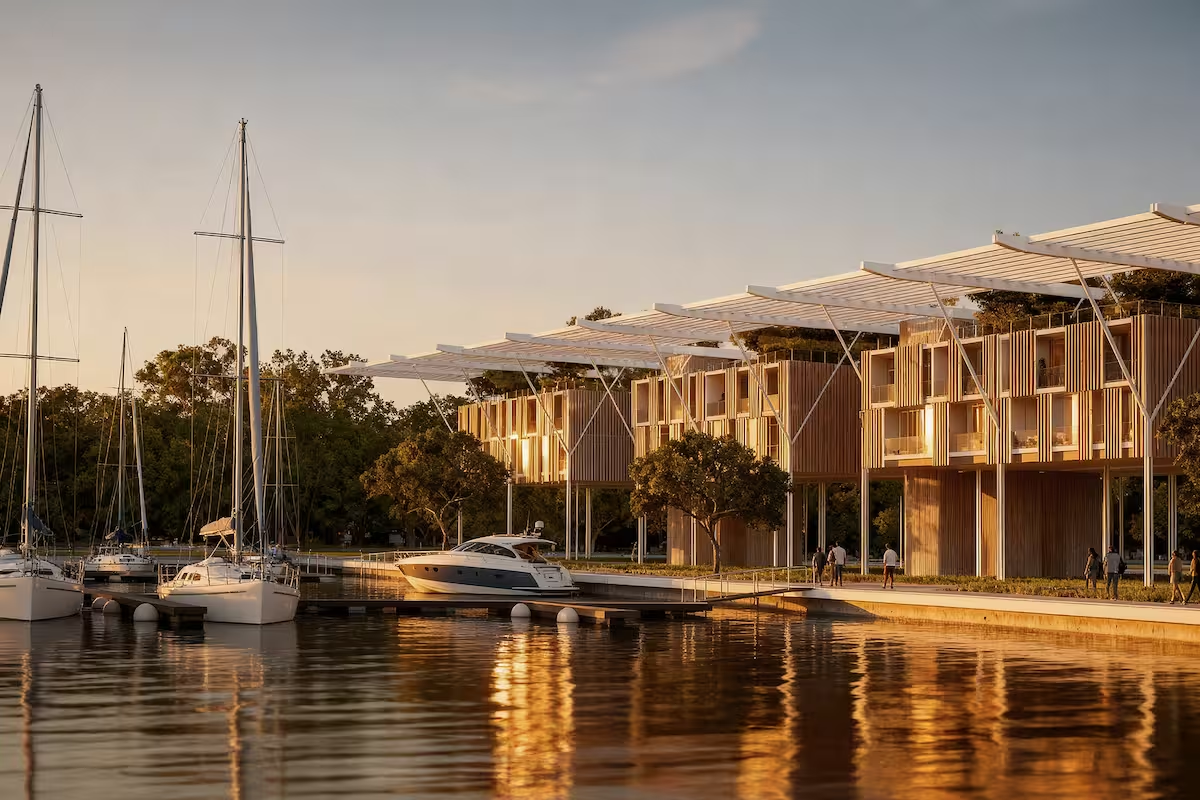
How did we approach it? We looked into the different parts of the development, we were trying to find a way to combine infrastructure and logistical considerations, we were trying to find a concept that binds these things together while still keeping them independent and modular. Our design - the “Smart Spine” - was the concept that could ensure this. It is something that can grow, react to different uses, is resilient and future-oriented.
Your winning design features a “Smart Spine” that follows the island’s shore. How did you decide on this design? What are its most valuable and unique aspects
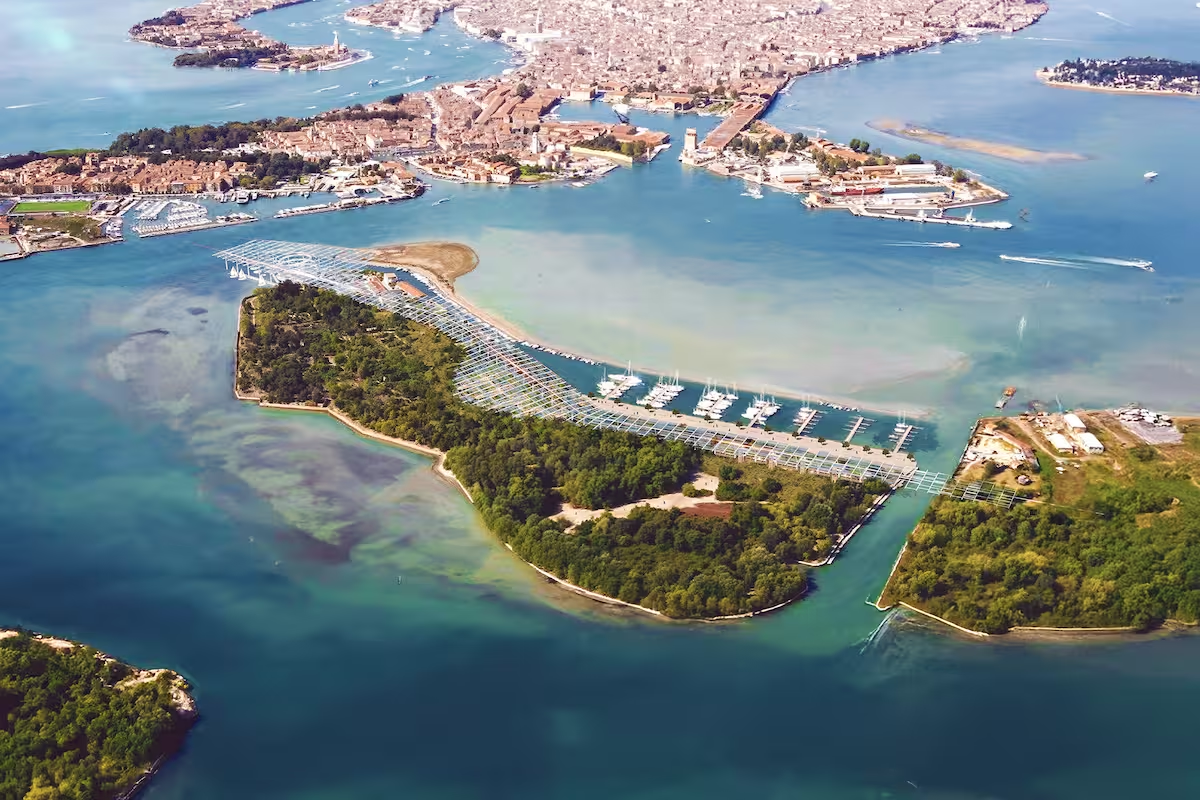
When we start to work on a project we start with analysis. So we looked at Certosa Island, at the history of the island, its current status, the existing buildings, the landscape and its potential. Based on that analysis we decided to only use the space that is currently impacted by humans instead of reimagining the build mass of the past. That is to say, the water’s edge of the marina. So we said: “Let’s put all the important basic infrastructure there, let’s make use of that wall along the channel, let’s grow from there but let’s not waste or use any other land.”
What did that mean? It meant that we literally have a spine that gives you all the infrastructure you need such as energy, connections, logistics and so on. From there you can grow into certain areas and extend via a modular approach, which allows the design to adapt to future changes and needs.
You have previously mentioned that your “Smart Spine” design ensures resilience against rising waters. How adaptable or scalable is this design? Can it be replicated in other locations vulnerable to rising sea levels, such as Venice?
The principle could be replicated. It is a design which can grow because it is modular, it can be shorter, it can be smaller, it can be narrower, it can react to changing conditions and can be scaled. The design lifts all critical infrastructure up and therefore guarantees functionality even when sea water levels rise.
The conceptual approach can be replicated in other locations, but we believe that the actual design is a particular solution for the particular location. This simply means that the resilience aspect can be copied but the solution and the architectural expression might be slightly different due to local conditions.
Your design integrates clean energy, logistics and circulation, and generates surplus renewable energy. How does it achieve this?
We do this by making use of the sun, which in Venice is stronger than in Germany or in more northern parts of Europe. But of course, our design is reducing energy demand in the first place. With our solar sail - a PV cell canopy that is branching out from the smart spine - we create huge amounts of energy – all we need. We can further make use of the water’s geothermal energy but not too much because we don’t want to destroy the ecosystem.
What does the future hold for Ingenhoven Associates? Will you be engaging more in marina and waterfront design?
The future holds further opportunities in the field of sustainability, adaptability and resilience. We as an industry have the chance to positively impact our future world as such buildings have to change and react to social, economic and ecological challenges.
Are we going to design more marinas? Yes, if you are looking into this market there seems to be the urge and the wish for more sustainability, and we are the right partners to do so. We are eager to bring our knowledge, curiosity and expertise as well as interesting, surprising and responsible answers to the table.
This article was also published in issue 151 of Marina World magazine. Click here to read the online version.

.avif)